Transporting a pet from South Korea to the UK seems quite daunting at first. But once you break it down into steps, it’s quite doable. The trick is timing: the UK process is a lot of paperwork, and depending on where you’re arriving from you’ll need to fit in a rabies blood test (titer test) 3 months before travel.
In this guide, we’ll cover the most important pet shipping from South Korea to UK requirements, the realistic timeline (from first vet visit to landing day), and the main cost factors that change your final quote.
Quick reality check: is South Korea “listed” for UK pet travel?
The UK groups countries as listed or not listed for pet travel documentation. GOV.UK provides a table of listed countries—and South Korea does not appear in that list, which means you should plan as a not listed origin.
Why does this matter? Because pets from a country not listed are required to complete further rabies actions, such as a rabies blood test and wait 3-months from the date of blood sampling before they can go to Great Britain.
Core documents for pet shipping South Korea to UK
For most dogs and cats, these are the documents you’ll prepare (your shipper can help, but you still need to understand them):
1) Microchip record
Your pet should have been microchipped and the number of this microchip should correspond exactly to every document. If a single digit is wrong, things go sideways fast.
2) Rabies vaccination certificate
Rabies vaccination must happen after microchipping (sequence matters). Then you’ll wait the required period and complete the next steps.
3) Rabies blood test (titer test) report
If you are traveling from a nonlisted country — and many countries aren’t listed — your pet must have a rabies blood test. The sample must be collected no less than 30 days after the rabies vaccination, and it must be tested at an E.U.-approved laboratory.
The outcome should be that you have at least 0.5 IU/ml of rabies antibodies and then you need to wait until 3 months from the date when your blood sample was taken before travelling.
4) Great Britain (GB) Pet Health Certificate
For pets coming from “Part 2 listed” or not listed countries, you use a GB pet health certificate (not a standard EU pet passport/AHC).
5) Dog-only: Tapeworm treatment record
Dogs must be treated for tapeworm and have it recorded by a vet no less than 24 hours and no more than 120 hours (1 to 5 days) before entering Great Britain—unless returning from Finland, Ireland, Northern Ireland, Malta or Norway).
6) Airline/cargo paperwork (Air Waybill, booking confirmation, crate compliance)
If your pet is flying to Great Britain, it flies as cargo and you need the appropriate cargo documents.
Timeline: how long does it take (really)?
For South Korea → UK planning, the timeline often looks like this because of the titer test + waiting period.
Typical preparation timeline (example)
|
Step |
What happens |
Minimum timing |
|
Step 1 |
Microchip + general health check |
Day 0 |
|
Step 2 |
Rabies vaccination (after microchip) |
Day 0 or Day 1 |
|
Step 3 |
Rabies blood sample (titer test) |
30+ days after rabies vaccine |
|
Step 4 |
Wait period after successful sample |
3 months from sample date |
|
Step 5 |
Book approved route + cargo space |
During the waiting period |
|
Step 6 |
Final vet exam + GB pet health certificate |
Usually close to departure |
|
Step 7 |
Dog tapeworm treatment |
24–120 hours before UK entry |
|
Step 8 |
Fly + UK arrival checks/collection |
Travel day |
Practical tip: even if the “minimum” looks neat on paper, add buffer. Labs, vet appointments, and airline cargo slots can shift, and they do.
Related Articles:
» Moving a Dog from the Netherlands to Norway: Crate Rules, Airline Routing, and Arrival Steps
» Pet Shipping from UAE to Spain: Documents, Timeline, and Cost Factors
» How do I prepare my pet for international relocation?
» Moving a cat from Netherlands to USA: stress reduction + paperwork checklist
» Netherlands to USA Pet Relocation Step-by-Step Guide (Dogs & Cats)
Routes and flight rules: why your pet usually can’t fly in-cabin to the UK
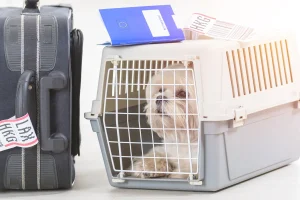
Many pet parents ask, “Can my pet fly in-cabin from Korea to the UK?” In most cases, no—because GOV.UK states that pets entering Great Britain by plane generally must travel as cargo, with limited exceptions (like chartered private planes or assistance dogs).
Also, the UK requires approved routes and authorised carriers, so route planning isn’t just about price—it’s compliance.
UK arrival: what happens after landing?
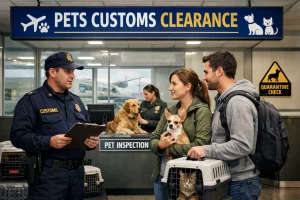
On arrival, your pet’s documents and microchip will be checked. If something is missing or incorrectly recorded, your pet can be refused entry or put into quarantine (and yes, it’s as stressful as it sounds). The best way to avoid that is a proper pre-check and document review before flying.
If arriving via Heathrow facilities, you may face service charges for collection/boarding and document-check handling. For example, the City of London (Heathrow Animal Reception Centre info) lists fees such as £99 to collect pets from the aircraft and higher charges depending on whether a paperwork pre-check was performed.
(Fees and processes can change by airport /route—so always verify the specific arrival station used for your booking.)
Cost factors: what drives the price up (or down)?
There isn’t one fixed “South Korea to UK pet shipping cost” because quotes depend on weight/space, services, and route availability. Still, these are the biggest drivers:
Main cost components
|
Cost factor |
Why it matters |
Usually increases cost when… |
|
Air cargo freight |
Often the largest chunk (priced by size/weight space used) |
Larger crate, peak season, limited cargo capacity |
|
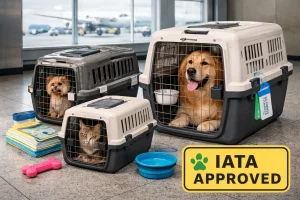
Crate (IATA -compliant) |
Must fit pet safely and meet airline rules |
Stronger build, custom size, large breeds |
|
Vet visits + vaccines |
Rabies + health exams add up |
Extra boosters, multiple pets |
|
Rabies blood test (titer) |
Required for not listed origins |
Rush lab service or repeat test needed |
|
Documentation support |
GB pet health certificate prep + endorsements |
Complex cases, short timelines |
|
Ground transport (Korea/UK) |
Pickup/drop-off, airport transfers |
Long-distance pickup, out-of-hours handling |
|
UK arrival handling/collection |
Airport reception/handling fees |
No pre-check, multiple pets |
Typical cost ranges (ballpark, not a promise)
Industry guides often show wide ranges for international pet relocation. For example, one UK-focused guide gives a rough range of £500 to £8,000 depending on distance and services.
Another relocation resource notes manifest cargo airfreight estimates that can vary significantly by pet size (example ranges in USD).
Use these only as orientation. Your real quote depends on crate size, route, season, and whether you choose door to door handling.
Common mistakes (that cause delays)
- Doing a rabies vaccine before microchip (order matters, and it can invalidate the chain).
- Booking flights too early before you’ve counted the 3-month post-blood-sample wait.
- Wrong tapeworm timing for dogs (must be 24–120 hours before entry).
- Assuming cabin travel is allowed into Great Britain on regular commercial flights.
Last-minute paperwork without a pre-check, especially on strict routes.
FAQs: Pet Shipping from South Korea to UK
GOV.UK’s listed-country table does not include South Korea, so you should plan under the not listed process.
Yes—pets from not listed countries need a rabies blood test.
You will need to postpone travel for 3 months after the date your blood sample was taken.
At least 30 days following the rabies vaccination.
At least 0.5 IU/ml.
You will typically need a Great Britain pet health certificate.
Yes, unless coming directly from certain exempt places; treatment must be 24–120 hours before entry.
Generally, pets entering Great Britain by plane must travel as cargo, except in limited cases (like chartered private planes or assistance dogs).
Yes, Great Britain requires approved routes and authorised carriers.
Heathrow handling/collection fees may apply; for example, the City of London site lists £99 aircraft collection and different boarding charges depending on pre-check status.
Biggest drivers are usually air cargo freight, crate size, added vet/testing steps, and arrival handling fees.
Start early—because the titer test timing + 3-month wait alone can push the schedule out by months.