International moving is stressful enough. Add a dog or cat to the plan and suddenly you’ve got vet appointments, travel rules, crate sizes, and a million “what if” thoughts.The good news? With a basic timeline and all the essentials, international pet relocation can be a breeze.
This guide is written for everyday pet parents. I’ll explain what matters most: pet travel documents, rabies vaccination, ISO microchip, choosing an IATA container (airline-compliant crate), airline booking tips, and a calm landing plan—so your pet settles in faster.
1) Check the Country Rules First (Before You Book Flights)
Every destination has its own entry requirements. Some countries just want standard vaccinations and a health certificate. Others require permits, extra lab tests, or specific treatment windows.
Before you spend money on tickets, confirm:
- Microchip rules (many places prefer an ISO-compatible microchip)
- Rabies vaccination timing and waiting period
- Whether you need an import permit
- Health certificate validity window (often very time-sensitive)
- Airline/route crate rules (many align with IATA guidance)
If you start here, you avoid last-minute surprises—plus you’ll feel more in control.
2) Follow a Timeline (It Stops Mistakes)
Here’s a realistic planning timeline you can copy into your notes.
International Pet Relocation Timeline
|
When |
What to do |
Why it matters |
|
8–12 weeks before |
Confirm destination rules + shortlist airlines/routes |
Some steps need waiting time |
|
6–8 weeks before |
Vet visit + update vaccines + microchip scan |
Paperwork must match microchip number |
|
4–6 weeks before |
Start crate training + buy correct crate |
Your pet travels calmer |
|
2–3 weeks before |
Gather documents + book health certificate appointment |
Certificates can expire quickly |
|
1 week before |
Reconfirm flight + review feeding/hydration plan |
Less travel-day stress |
|
24–120 hours before (if required) |
Specific treatments (example: UK dog tapeworm timing) |
Missing timing can block entry |
|
Travel day |
Calm routine + safe check-in + document folder ready |
Smooth handover |
3) Vet Prep: Health Check, Vaccines, and Microchip (Do This Properly)
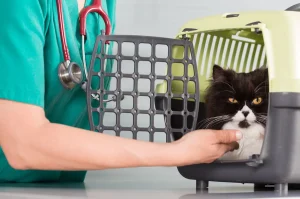
A travel vet appointment is different from a regular check-up. Tell your vet you are planning international pet shipping and ask them to review the full timeline.
Key items to confirm with your vet
- Microchip: the number must be readable and correctly printed on every form.
- Rabies vaccination: timing matters. For travel within EU, you can normally travel at least 21 days after the first rabies vaccination.
- General fitness to fly assessment such as age, heart , respiratory health and stress level.
If your pet is elderly and very nervous or brachycephalic (a flat-faced breed), ask even more questions. Better to calibrate your plans early rather than scramble down the line.
4) Should You Sedate Your Pet for Flying?
Most of the time, no.
IATA guidelines recommend avoiding sedation or tranquilizers for animals in transit except under vet’s orders for medical reasons and even then, the dose given, and the time it was administered should be indicated on the health certificate.
AVMA also notes that sedation is usually not recommended for air travel, although in some cases a vet may decide it helps.
Also, airlines may refuse pets that appear sedated. For instance, American Airlines says that it does not accept sedated dogs/cats due to the increased risk when your pet is at higher altitudes. (Policies differ by airline, so always review your carrier’s rules.)
What to do instead: Prioritize crate comfort, training and maintaining your pet’s routine as much as possible.
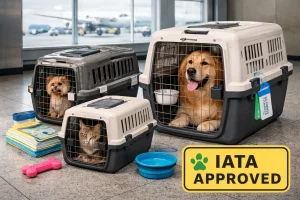
5) Choose the Right Crate and Start Crate Training Early
This part makes a huge difference. A pet that feels safe in the crate travels better—period.
What “airline-compliant” usually means
Many airlines follow IATA Live Animals guidance. Your pet should have enough room to:
- stand and sit naturally
- turn around normally
- lie down in a natural position
IATA also provides “container requirements” documents used by airlines/check-in teams. Easy crate-training plan (2–4 weeks)
- Week 1: crate stays open, treats inside, bed inside
- Week 2: feed meals inside, short door-close sessions
- Week 3: longer sessions, gentle background noise (like normal home life)
- Week 4: short car rides in the crate (if your pet tolerates it)
And yes—your pet may protest a bit at first. That’s normal. Stay consistent and calm.
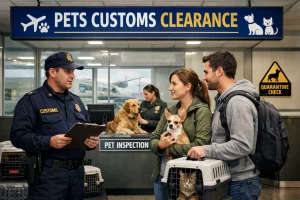
6) Paperwork: Build a “One Folder” System
Paperwork problems are the #1 reason pet travel gets delayed.
Create one travel folder (physical + phone photos) with:
- Microchip details
- Rabies Vaccination records
- Import permit
- Health certificate
- Airline booking confirmation
- Emergency contacts at origin + destination
Common documents you may need
|
Document |
Who issues it |
Notes |
|
Health certificate / animal health certificate |
Approved/accredited vet |
Often valid only a short period (some routes ~10 days) |
|
Rabies certificate |
Vet |
Timing rules vary by country |
|
Tapeworm treatment record (dogs, some routes) |
Vet |
UK timing: 24–120 hours before entry |
|
Import forms (example: USA dogs) |
Government authority |
CDC Dog Import Form required starting Aug 1, 2024 |
If you’re relocating to the U.S. with a dog, the CDC states the CDC Dog Import Form is required (starting August 1, 2024), with requirements depending on the dog’s travel history and risk category.
7) Booking Flights: Pick the Least Stressful Route
Now, the flight choice. Price is important, sure. But for pets, routing often matters more.
Try to:
- choose direct flights when possible
- avoid long layovers
- avoid extreme-heat seasons (especially for snub-nosed breeds)
- confirm your pet’s booking early (some flights cap the number of animals)
Also, read the airline’s crate requirements carefully. Many airlines will reject a crate that doesn’t meet minimum standards.
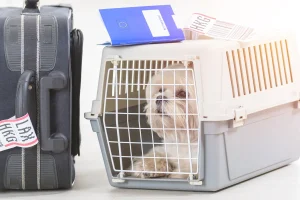
8) Travel Day: Keep It Boring (Boring = Good)
On travel day, don’t try anything new. No new foods, no new calming “treats,” no surprise long walks.
A simple plan works best:
- light exercise earlier in the day
- small meal (or as your vet advises)
- offer water and stop a bit before check-in
- line the crate with absorbent bedding
- attach labels with your contact details and destination address
- carry your documents in your hand luggage
And honestly, your mood matters. If you stay calm, your pet usually settles faster.
9) After Arrival: The First Week Sets the Tone
Once you land, your pet will need time to decompress.
For the first 7 days:
- keep your pet in one quiet room at first
- keep meals and walks on a predictable schedule
- introduce the new home slowly
- locate a nearby vet and save the contact number
- watch for stress signs (no appetite, tummy upset, excessive hiding)
Most pets adjust best with routine and patience. Give them that, and you’ll see improvement day by day.
FAQs: Preparing a Pet for International Relocation
Preferably 8–12 weeks before departure, particularly if permits are needed or waiting periods need to be taken into account.
Many destinations require a scannable microchip, often ISO-compatible—confirm your destinatioN regulations.
For EU travel, you generally wait at least 21 days after the primary rabies vaccination.
In many cases, yes — particularly for air travel and crossing borders. Validity windows can be short
No, IATA discourages it for medical reasons and some airlines may refuse sedated pets.
Most pets will adjust in 1–3 weeks, however nervous pets may take longer time to adjust. Scheduled and quiet space help a lot.
According to IATA guidance: the crate must be sturdy, ventilated, secure and sized so the pet can stand/turn/lie naturally.
Our pet should be able to stand up and turn around in the crate, and also lie down without being constricted.
Sometimes, but rules vary and safety comes first—check airline guidance and your pet’s size/temperament.
Sometimes yes, and timing is important: not fewer than 24 hours and no more than 120 hour before arriving in Great Britain.
CDC states the CDC Dog Import Form is required starting Aug 1, 2024, with additional rules depending on travel history.
Start crate training early, keep routines steady,say no to sedation unless a vet instructs it and pick shorter routes.