Moving a Pet from India to Oman seems like an easy task until you come in contact with the paperwork. But once you figure out that order (microchip → rabies vaccine → titre test for rabies → permits → health certificate), the process becomes predictable (and way less stressful).
This practical update is written for Indian pet parents moving to Muscat, Sohar, Salalah, Nizwa, or anywhere in Oman with a dog or cat. I’ll keep it clear, current, and action-based, with a few real-world notes (because yes, flights get rescheduled and labs take time).
What’s new in the “rules update” (what people miss in 2026)
Two requirements keep catching travellers off-guard:
- Oman requires a prior veterinary import permit (you apply before your pet arrives) and you do it through the Customs Bayan system.
- Oman requires a rabies antibody titre test (RNATT/FAVN) from an authorized laboratory, and Oman also has a waiting period: results must be at least 3 months old but not older than 12 months when you travel.
On the India end, AQCS still wants you to show up with your pet and papers to obtain an export NOC/certificate near date of travel (expiring in only 10 days).
So basically: Oman needs planning early, India needs finishing late.
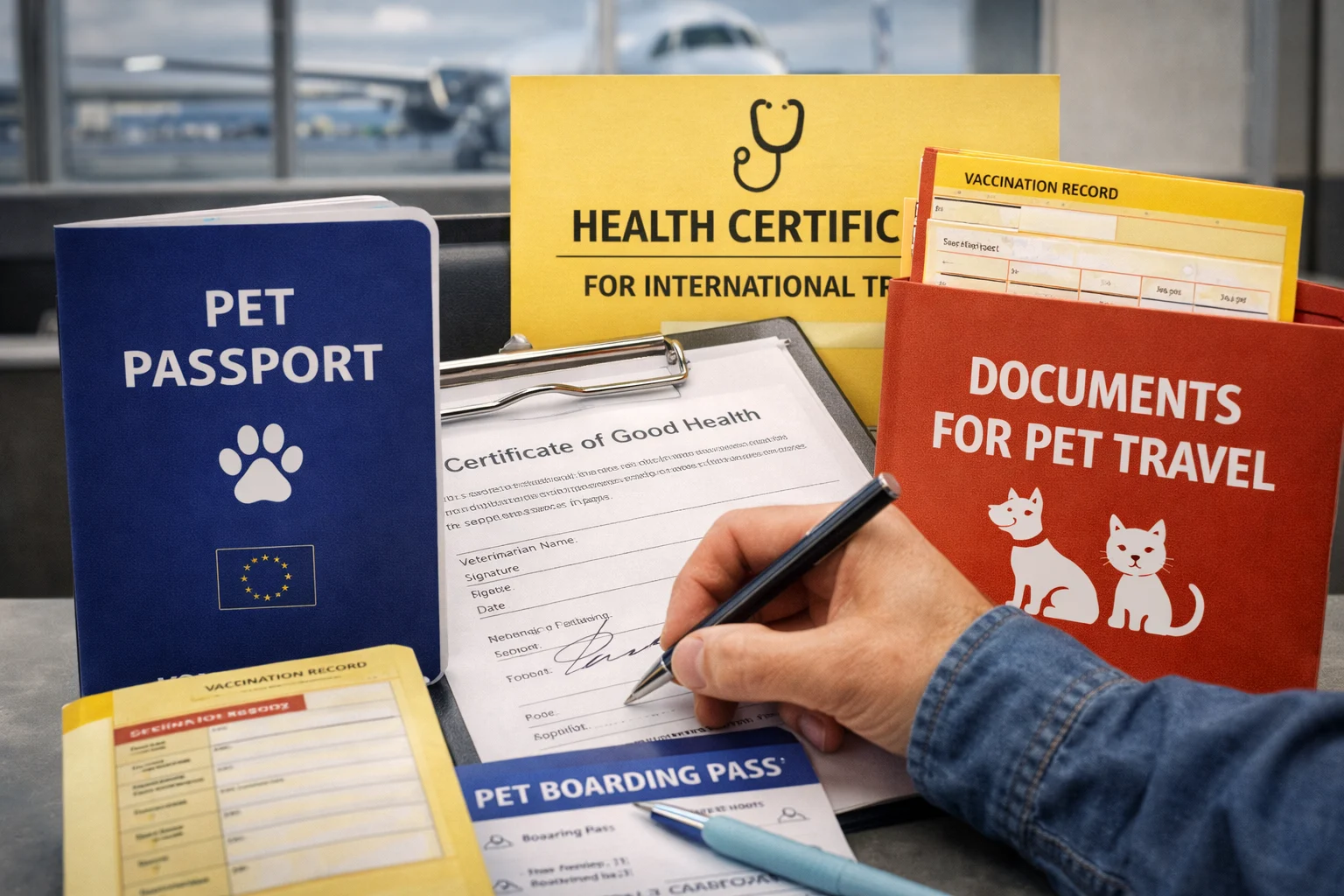
Quick rule summary (India → Oman)
To enter Oman, your dog/cat must:
- Have an electronic microchip recorded in the vaccination/immunisation record
- Be vaccinated for rabies after 12 weeks of age and within 12 months of travel
- Be more than four months old
- Have a rabies titre test (RNATT/FAVN) done 21–30 days after last rabies vaccination, and then wait 3 months after results
- Hold a PRIOR veterinary import permit (before arrival), plus a government veterinary health certificate from India
India export requires AQCS examination + export paperwork, plus your passport and travel docs.
Step-by-step process (the order matters)
1) Microchip first (mandatory)
Start with an ISO microchip and make sure the chip number appears on:
- your pet’s immunisation record
- your vet certificate
- lab paperwork
Oman checks the microchip details against the immunisation record when you apply for the permit.
Tip: Don’t “fix” typos later with overwriting—airline staff hate that. If there’s a mistake, re-issue the page properly.
2) Rabies vaccine timing (don’t cut it close)
Oman there is a requirement for rabies vaccination to be done after 12 weeks of age and not more than one year prior to entry.
So, if your rabies shot is more than 12 months old when you land, you require a booster and then one must restarting the timing process for things such as titre steps.
3) Rabies titre test (RNATT/FAVN): the big gatekeeper
Here’s the exact sequence Oman lists:
- Draw blood 21–30 days after the last rabies vaccination
- Use RNATT or FAVN testing
- Travel only when the result date becomes ≥ 3 months old and ≤ 12 months old
This is why most “last-minute” plans fail. Therefore, if you’re relocating for a job in Oman, start this part first.
4) Apply for Oman import permit (before arrival) via Bayan
Oman Customs says you must obtain a prior veterinary permit through the Customs Bayan System.
You upload/attach items like:
- immunisation record from birth + pet photo on the record
- microchip identification in the record
- rabies titre test from an accredited lab
Fees & speed (good news): Oman lists the permit fee as OMR 20, and mentions approval within two hours during official working hours.

Related Articles:
» Pet shipping from Sweden to Oman: documents + timeline + cost factors
» Moving a dog from Netherlands to Malaysia: crate rules, airline routing, and arrival steps
» Pet shipping from South Korea to France: documents + timeline + cost factors
» Pet shipping from Thailand to Bahrain: documents, timeline & cost factors
» Moving a dog from France to South Korea: crate rules, airline routing, and arrival steps
5) India export (AQCS) NOC/export certificate (final 7–10 days)
AQCS lists the requirements for exporting pets from India, including:
- pet for examination
- fit-to-fly health certificate from a local registered vet
- microchip certificate
- vaccination details
- owner passport copy + air ticket copy
- airway bill (if cargo)
- importing country requirements (import permit, titre test etc.)
- pet photographs
AQCS also states:
- bring originals + photocopies
- export certificate validity is 10 days
- submit documents and pet 7 days prior (with prior appointment)
So, you plan Oman early, but you finish India near departure—otherwise the 10-day window expires.
Banned dog breeds: check before you spend money
Oman Customs lists dog breeds prohibited under Resolution 222/2019, including (and any mixed breed of them):
Pitbull, Staffordshire Terrier, American Bully, Mastiff, Fila Brasileiro, Dogo Argentino, Japanese Tosa, Rottweiler, Doberman Pinscher, Presa Canario, Boxer, Boerboel, Caucasian Shepherd Dog, Anatolian Karabash, Great Dane.
If your dog resembles these types, airlines and authorities may reject travel even if you believe it’s “not exactly that breed”. So, don’t gamble.
Table: India → Oman pet relocation timeline (realistic)
|
Phase |
What you do |
Minimum time you should allow |
|
Start |
Microchip + baseline vaccines |
1–3 days |
|
Rabies |
Rabies vaccine (if not current) |
Day 0 |
|
Titre prep |
Blood draw 21–30 days after rabies |
3–4 weeks |
|
Waiting rule |
Wait until titre result is ≥ 3 months old |
3 months |
|
Oman permit |
Apply for prior veterinary import permit (Bayan) |
3–10 days buffer |
|
India AQCS |
AQCS exam + export certificate (valid 10 days) |
Final 7–10 days |
|
Fly |
Travel + arrival checks |
Flight day |
Table: Document checklist (dogs & cats)
|
Document |
Who issues it |
Where you’ll need it |
|
Microchip certificate |
Vet/microchip provider |
AQCS + Oman permit |
|
Vaccination / immunisation record (from birth) + pet photo |
Vet/clinic |
Oman permit + arrival |
|
Rabies titre test (RNATT/FAVN) |
Accredited lab |
Oman permit + arrival |
|
Oman prior import permit |
Oman Veterinary Quarantine (via Bayan) |
Boarding + arrival |
|
Government veterinary health certificate |
Govt/authorised channel in India |
Arrival in Oman |
|
AQCS export certificate/NOC |
AQCS India |
Airline + exit from India |
|
Passport + ticket + photos |
Owner |
AQCS |
Flight booking notes (to avoid last-minute rejection)
- Match names exactly: owner name on ticket, passport, and AQCS documents should align.
- Keep one clean folder: printed copies + PDFs (airlines love paper).
- Choose your route carefully: fewer transits = fewer checks, therefore fewer problems.
- If you ship as cargo, you’ll need the airway bill for AQCS.
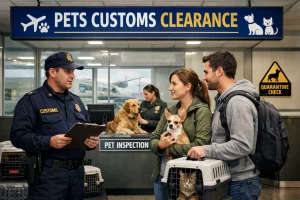
Arrival in Oman: what happens at the airport
Oman Customs lists what you present “upon arrival at the port (land/sea/air cargo or passengers)”:
- veterinary import permit
- government veterinary health certificate
- passport/immunisation record
- accredited lab rabies titre certificate
If all documents match and your pet looks healthy, clearance usually goes smooth. Still, keep calm—pets read your stress fast.
FAQs; India to Oman pet relocation
You need an Oman import permit prior, with a rabies vaccination and titre test falling within timing regulations plus AQCS export papers from India.
Yes—Oman lists a blood test to calibrate rabies antibodies (RNATT/FAVN) as part of the permit/arrival documents.
Begin at least 4 months prior to your flight if rabies/titre doesn’t have to be done – Oman has a 3 month wait post titre results.
Oman says pets can be no younger than 4 months old.
Oman requires rabies vaccinations be given from no LESS than 12 months and not more than 12 months prior to date of import.
Oman: take blood 21-30 days after the last rabies vaccination.
Oman says that titre results should not be over 12 months when exporting the pet.
Yes. Oman in particular does require a PRIOR animal permit from Bayan before departure.
Oman lists the fee as OMR 20.
Veterinary health certificate, microchip certificate Vaccinations— Copy of passport/ticket Photos Import country requirements ( AQCS)
AQCS mention that the export certificate is valid for 10 days.
Yes. Oman Each emirate in Oman has its own rules and regulations, but basically what the country does is ban the breeds under Resolution 222/2019 plus hybrids like Rottweiler, Doberman Pinscher, Pitbull etc.