Moving a pet from Doha to India looks simple on paper. In real life, it’s a chain of small steps that have to happen in the right order — microchip, vaccines, paperwork, airline booking, then India AQCS NOC clearance. If you line it up early, though, it’s very doable (and way less stressful for your dog or cat).
Have a write-up or timeline you can follow that is practical and humanlike. Qatar with India (Doha to main terminal such as Delhi, Mumbai, Bengaluru, Chennai, Hyderabad Kochi etc) Rules vary not just by airport but by airline too, so data in this guide might shape overall behavior, then double check your exact route for specifics.
First, understand what India usually checks at arrival
India’s Animal Quarantine & Certification Service (AQCS) typically focuses on:
- Identification: ISO microchip (and the number must match your documents)
- Rabies vaccination: up to date, with correct timing and proof
- Health certification: an official vet certificate (with disease-free declarations for dogs/cats)
- Pre-arrival permission: AQCS NOC process (submitted before travel)
Also, India treats pet import as a restricted category in general, and the process can differ depending on whether you are relocating/returning or importing under another purpose. DGFT’s FAQ notes pets are generally allowed without authorisation for people shifting residence permanently (under baggage rules), while others may need import authorisation/licensing.
Your ideal Qatar → India timeline (8 weeks to travel day)
Some people pull it off in 2–3 weeks, but that’s where mistakes happen (wrong dates, missing stamps, last-minute flight refusal, etc.). A clean plan is 6–8 weeks.
Timeline table (simple view)
|
When |
What you do |
Why it matters |
|
6–8 weeks out |
Vet check + scan microchip + review vaccines |
Fix gaps early (no panic later) |
|
4–6 weeks out |
Update rabies + core vaccines (dogs/cats) |
Meets India + airline expectations |
|
2–3 weeks out |
Confirm airline route + crate size + booking method |
Airline capacity is limited; crates must be compliant |
|
7–15 days out |
Submit AQCS NOC application + docs |
AQCS SOP says apply before travel (commonly at least a week) |
|
5–10 days out |
Obtain Qatar export steps (export health certificate / permits) |
Qatar export documents are time-limited |
|
48–72 hours out |
Final vet exam + official health certificate |
Many authorities/airlines want recent clinical exam |
|
Travel day |
Arrive early, calm routine, AQCS documents ready |
Smooth check-in + smoother arrival |
Week 8 to Week 6: Start with a “paperwork health check”
Book a longer vet appointment and do these things in one go:
- Microchip scan + photo
Ask the vet to scan the chip in front of you and record the number exactly. Tiny number mistakes cause big airport dramas. - Vaccination history audit
Confirm dates for:- Dogs: rabies, DHPP/distemper-type core, leptospirosis where relevant
- Cats: rabies, FVRCP-type core
India expects rabies and a clean health status statement.
- Choose your arrival airport in India
AQCS clearance happens at the airport quarantine station, so procedures can feel slightly different by city.
Real talk: if your documents are messy, fix them now. Don’t wait and hope it “works out” at the counter — it won’t.
Week 6 to Week 4: Vaccines and (optional) blood tests
Rabies timing (the usual safe window)
Indian guidance commonly expects rabies vaccines to be valid and given with appropriate timing (often more than 30 days before entry for a new rabies vaccine, unless your pet has continuous valid boosters).
Do you need a RNATT (rabies titre test)?
For India, RNATT is not always mandatory, but it can be requested depending on your itinerary (especially if you transit through countries with extra requirements) or if an airline/agent wants extra assurance. Some relocation resources explicitly note it’s not mandatory but still “important” in practice.
If you’re routing through a strict transit country, do the blood test early. Otherwise, many Qatar→India moves proceed without it.
Week 3: Pick the flight method early (cabin vs checked baggage vs cargo)
Airlines control the experience more than people realise. Before you pay for tickets, confirm:
- Whether pets are accepted in cabin or only as checked baggage/cargo on your sector
- Weight limits and carrier rules
- Temperature/breed restrictions (some breeds are restricted due to heat stress risk)
If you look into Air India onward connections, please note they have cabin pet capacity limits (they publish at least once a small amount of pets per flight in cabin).
And, Air India pet-in-cabin rules have made the headlines lately (so do check your exact route/date for latest terms and conditions).
Related Articles:
» Moving a dog from France to South Korea: crate rules, airline routing, and arrival steps
» India to Oman pet relocation rules update (dogs & cats)
» Australia to New Zealand pet relocation timeline (dogs\& cats)
» Pet shipping from Qatar to India: Documents + timeline + Cost factors
» Pet shipping from Sweden to Oman: documents + timeline + cost factors
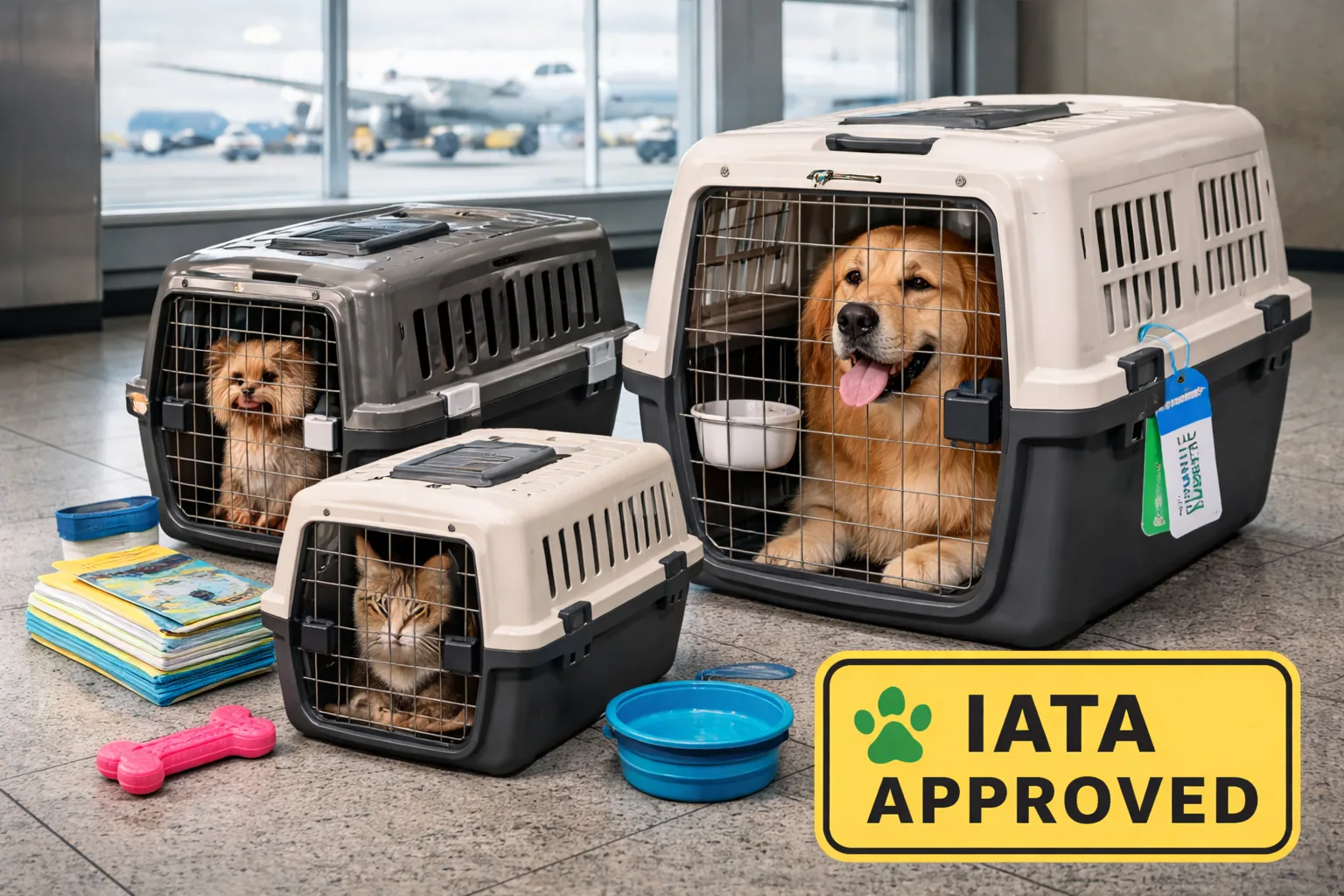
Crate/carrier rules (non-negotiable)
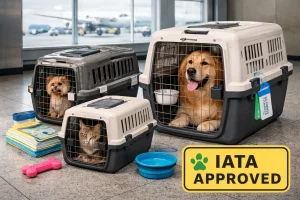
Most airlines align with IATA Live Animals Regulations (LAR), the industry standard; the 2026 edition came into effect on 1 Jan 2026.
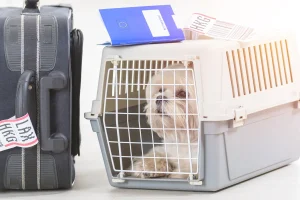
So: correct size, ventilation, absorbent bedding, water access, labels, and “stand-turn-lie down” space.
Week 2: Apply for India AQCS NOC (this is the big milestone)
AQCS has a published SOP that says you should submit your application before embarkation (commonly at least 7 days prior) along with supporting documents such as vaccination + microchip proof, official health certificate/annexures, flight details, passport copies, etc.
What you’ll usually prepare for the NOC pack:
- Microchip + vaccination certificate (rabies clearly shown)
- Passport/ID + travel proof
- Flight booking / AWB (if cargo)
- Vet documents (and any required annexure format)
Tip: Print two full sets and keep one set in your carry-on. I’ve seen people arrive with only a phone PDF and then the battery dies… nightmare, honestly.
Week 1: Qatar export documents (don’t do these too early)
Qatar-side export paperwork is often time-limited, so you time it close to departure.
What Qatar commonly needs
- A veterinary exam and export health certificate
- Any export permit/clearance steps required by the competent authority
There are signs Qatar is actively digitising this: a February 2026 report noted new e-services including export health certificates for cats and dogs, via the Ministry of Municipality.
Local guidance also mentions export documentation validity periods and presenting documents through airport/cargo processes, so plan this inside the final week.
48–72 hours before flight: Final vet exam + health certificate
This is where you keep it simple:
- Confirm your pet is fit to fly
- Dogs require an official health certificate with the required disease-free statements (wording for dogs vs cats differs);
- Administer parasite prevention (fleas/ticks, deworming) if your vet advises
Keep your pet’s routine normal. Don’t switch food at the last minute, and don’t do a “big bath + new shampoo + new treats” the day before. The worst time to get a stomach upset.
Travel day: smooth check-in and a calmer pet
- Arrive earlier than you think you need (especially for cargo/checked baggage)
- Freeze a small water bowl (it melts slowly, less spill)
- Keep a worn t-shirt with your scent (comfort item)
- Stay calm — pets read your stress fast, like scary fast
And please don’t sedate unless a qualified vet specifically instructs it for your pet. For many animals, sedation + altitude stress isn’t a great combo.
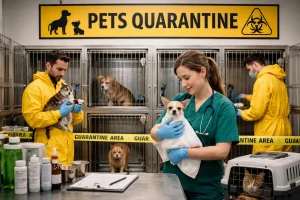
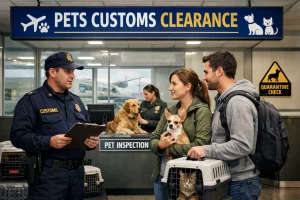
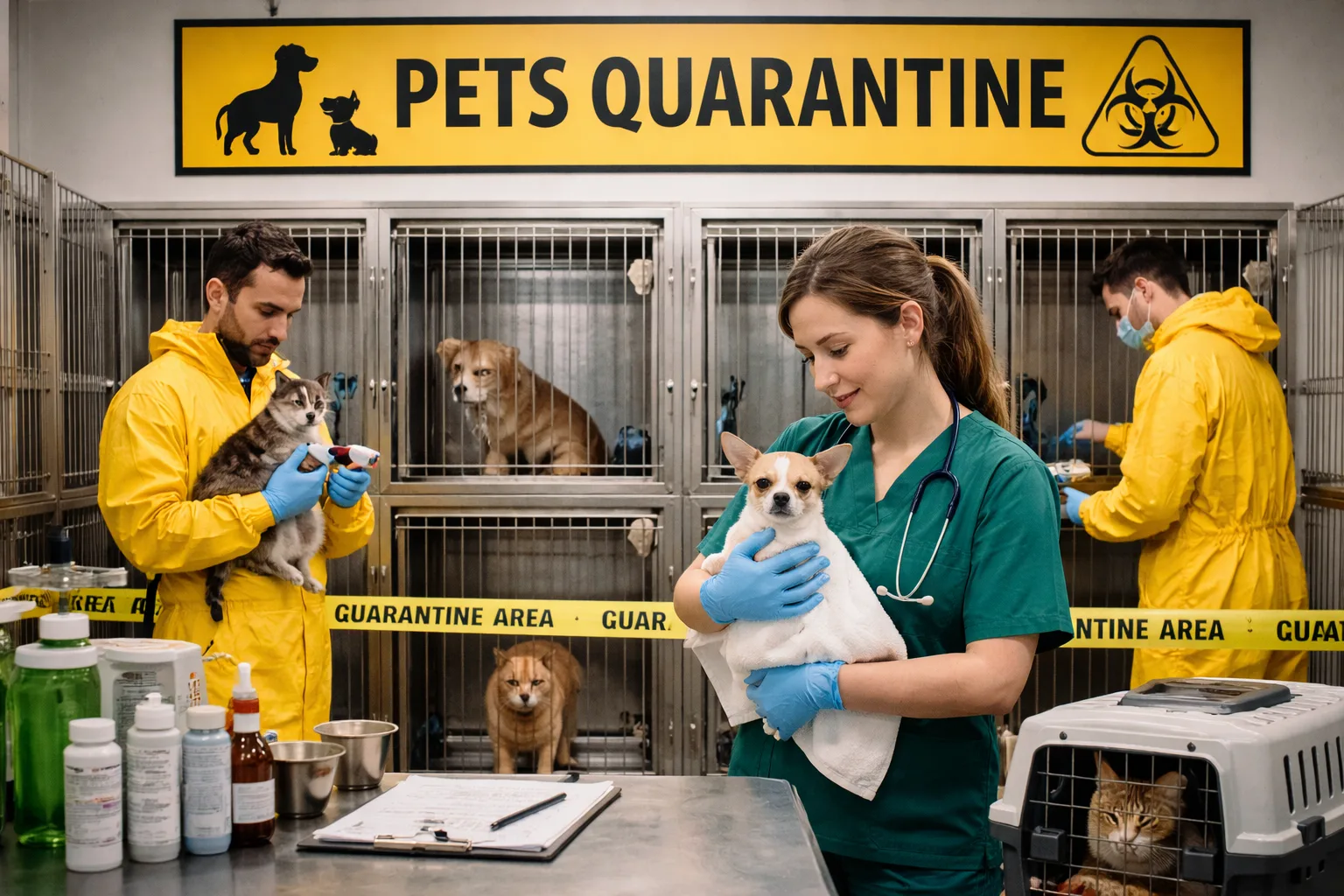
Arrival in India: AQCS clearance and “welcome home”
At arrival, AQCS/quarantine officers may:
- Check microchip (sometimes physically scan)
- Verify NOC, vaccine proofs, and health certificate
- Complete clearance paperwork
If your paperwork is in order and your pet appears healthy, it’s generally a relatively easy process. When something does not match, delays occur (and that is when people wish that they had printed backups).
Common timeline mistakes (learn from other people’s pain)
- Rabies date is inside the “too soon” window (or booster gaps aren’t clear)
- Microchip number differs by one digit across documents
- NOC applied too late (AQCS SOP expects pre-arrival submission)
- Crate is not compliant with IATA/airline standards
Export papers done too early and expire before the flight
FAQs: Qatar to India pet relocation timeline
Most moves take 6–8 weeks to prepare comfortably, mainly for vaccines, documents, and NOC processing.
In most standard airport arrivals, yes — it’s a core step in the process and is referenced in AQCS guidance and related official info.
AQCS SOP indicates submitting before travel (commonly at least 7 days prior) with required supporting documents.
Commonly yes — microchip identification is part of standard documentation expectations for pet entry.
Not mandatory and not applicable to travel only within India, but may be required on certain transit routes or requested by airlines/agents.
According to the Indian embassy, dogs and cats should be vaccinated against rabies and distemper, but these must be certified by a local vet.
It varies by airline, aircraft and route. Note that Qatar Airways states pets can fly checked baggage or cargo depending on the route/destination. Always confirm per flight.
Air India’s pet FAQs/guidelines mention limited cabin capacity (only a small number per flight).
Most airlines base requirements on IATA Live Animals Regulations (LAR). Use an IATA-compliant crate sized correctly.
Airport guidance says household pets generally won’t be allowed in the passenger cabin and advises checking airline rules (routes vary).
DGFT said pet import is normally restricted and that it varies by case; someone changing residence permanently may import a pet under the baggage rules, while others may need permission.
Close to travel, because export documents can have short validity periods and Qatar is managing export health certification through official channels (including e-services).]