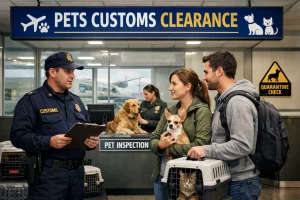
If you’re moving a dog from the Netherlands to Norway, it can feel “easy” because it’s Europe-to-Europe. But the truth is, one small mistake—usually the tapeworm treatment timing or a crate that doesn’t meet rules—can turn a calm trip into a stressful mess at the airport .
So here’s a proper, real-life guide. No fluff. No textbook tone. Just the steps people actually need: documents, crate rules, flight routing, and arrival process in Norway.
1) The Basic Rules: What Norway Wants Before Your Dog Enters
Norway follows strict Pet entry rules even for nearby countries. The good—news is: it’s straightforward once you know the order.
* Microchip (First, always)
Your dog must have an ISO microchip . The chip has to be readable and it must match what’s written in the passport.
Small but important tip: ask the vet to scan it in front of you and show the number. Sometimes passports have typing errors, and that’s where problems start.
* EU Pet Passport
For travel from the Netherlands, you’ll typically use the EU pet passport. It should include:
- Microchip number and date
- Rabies vaccination details
- Tapeworm treatment record
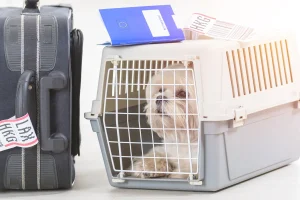
Keep the passport in your hand luggage. Don’t pack it away “safely” in a suitcase. That’s how people lose time at customs .
* Rabies Vaccination + the 21-day wait
If it’s your dog’s first rabies—vaccine, there’s a waiting—period. Norway requires at least 21 days after the shot before your dog can enter.
If your dog is already vaccinated and you’ve done boosters on time, it usually stays valid. Still, check the dates. Don’t assume.
* Tapeworm Treatment (Echinococcus)
This is the step that catches people out.
For dogs entering Norway, a vet must give a tapeworm treatment and record it in the passport.
Most common rule:
* Must be done 24 to 120 hours before arrival in Norway
That means you can’t do it a week early “just to be safe.” It has to be inside that window.
2) A Simple Travel Timeline (So You Don’t Miss Anything)
Here’s a practical—plan you can follow without overthinking:
|
Time Before Travel |
What to Do |
Why It Matters |
|
4–6 weeks before |
Check microchip + passport info |
Fix mistakes early |
|
3–4 weeks before |
Confirm rabies vaccine dates |
Need 21-day wait if it’s first shot |
|
2–3 weeks before |
Pick airline + confirm pet slots |
Flights have limited pet capacity |
|
1–5 days before |
Vet does tapeworm treatment |
Norway checks timing carefully |
|
Travel day |
Keep papers ready + crate prepared |
Avoid airport delays |
|
Arrival |
Declare at red channel |
Norway expects it |
3) Crate Rules: What Airlines Usually Reject (and What They Accept)
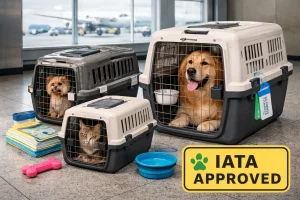
Crates are a big deal. Even if your paperwork is perfect, the airline can still refuse your dog if the crate looks—wrong.
What an airline normally expects
A travel crate should:
- Be hard plastic or sturdy airline-approved type
- Have strong ventilation (usually on 3 sides, often 4)
- Have a secure—door
- Be big enough for your dog to stand, turn & lie down
- Have absorbent—bedding
Avoid this: soft crates for cargo/hold travel. Those are mostly for cabin use.
How to pick the right size (easy method)
Instead of getting lost in formulas, do this:
- Make your dog stand naturally
- Measure from nose to base of tail
- Add extra space so they can turn comfortably
- Height should allow them to stand without ears pressed to the top
If you’re stuck between sizes, go bigger. A slightly larger crate is rarely a problem. A smaller crate can get rejected immediately.
Crate setup tips that actually help
- Put a worn t-shirt inside (your smell calms them)
- Attach a water bowl that clips to the door
- Add an “absorbent pad” on the floor
- Label crate clearly: LIVE ANIMAL, your phone number, destination address
Also: don’t feed a heavy meal right before the flight. A light meal earlier is fine. Too much food = nausea risk.
4) Airline Routing: Best Way to Fly Netherlands → Norway with a Dog
The route you choose matters more than people think.
Option A: Direct flights (best choice)
Direct flights mean:
- Less time in transit
- Less crate handling
- Lower chance of delays causing pet stress
If you can fly Amsterdam → Oslo directly, do it. Even if it costs a bit more, it often saves you money in the long—run .
Option B: One-stop routing (good backup)
If you can’t get a direct route, a single stop is okay. Choose airport known for good handling and short walking distances.
What you want:
- One connection only
- Enough connection time (not tight)
- Avoid overnight layovers if possible
Cabin vs Hold vs Cargo (what’s best?)
This depends on your dog’s size.
In-cabin:
- Only for small dogs that fit under the seat in a carrier
- Less stressful for many dogs because you’re nearby
- Strict airline rules on size/weight
Checked baggage (in the hold):
- Common option for medium dogs
- Must use approved crate
- Still travels on your flight
Cargo:
- Usually for large dogs or if airline doesn’t allow pets as checked baggage
- More paperwork, but sometimes better handling and planning
5) Arrival Steps in Norway: What Happens After Landing
This part is simple if your documents are correct.
Step 1: Go through the Red Channel
In Norway, you should declare your dog at customs . That means using the red channel, not walking out like you have nothing to declare.
Step 2: Show documents quickly and clearly
Have these ready:
- EU pet passport
- Rabies details
- Tapeworm treatment entry with date/time
- Your ID and flight details (just in case)
Step 3: Quick inspection and you’re done
Usually, it’s fast. They check the passport, confirm treatment timing, and you’re cleared.
If there’s a problem (wrong timing or missing vet stamp), that’s when things get stressful. So double-check your tapeworm window before flying.
FAQs: Netherlands to Norway Dog Travel
Yes, in most cases you’ll use an EU pet passport for this route.
Yes. If it’s the first vaccine, you must wait at least 21 days before travel.
Yes, dogs entering Norway usually need tapeworm treatment recorded by a vet.
Normally 24–120 hours before arrival.
Not if all paperwork and timing are correct.
Only if your dog fits the airline’s cabin—rules.
A sturdy, well-ventilated, lockable—crate that allows standing & turning.
Airlines can refuse to check you in, even if your documents are flawless.
Yes, direct flights usually reduce stress and handling risks.
Yes, you should use the red channel and show documents.
Only if your vet advises it. Sedation can be risky during air travel.
Wrong tapeworm timing or missing vet stamp in the passport.