International Pet Shipping
(Dogs & Cats) – Safe, Compliant, Door-to-Door Options
Moving countries is stressful. Moving with a pet can feel ten times harder. That’s why our international pet shipping team keeps the process simple, legal, and safe—so your dog or cat reaches your new home comfortably and without surprise delays.
We handle the steps that usually cause problems: pet travel documents, IATA-compliant crate sizing, flight planning, airline rules, and customs clearance. And yes, we guide you clearly from the first call to the final delivery.
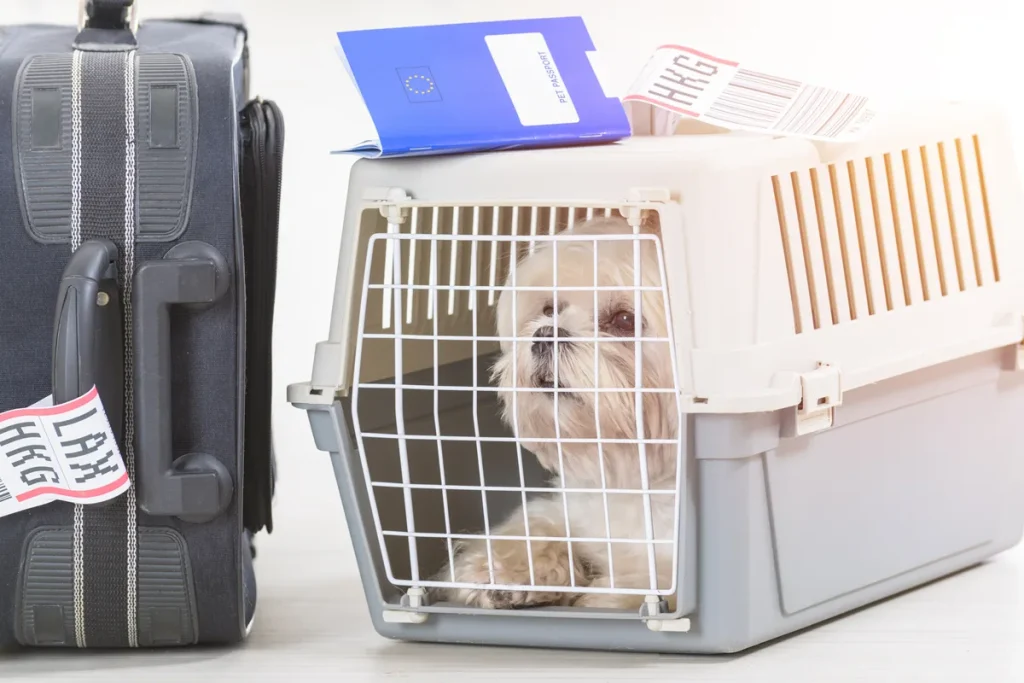
International Pet Shipping (Dogs & Cats) – Safe, Compliant, Door-to-Door Options
Moving countries is stressful. Moving with a pet can feel ten times harder. That’s why our international pet shipping team keeps the process simple, legal, and safe—so your dog or cat reaches your new home comfortably and without surprise delays.
We handle the steps that usually cause problems: pet travel documents, IATA-compliant crate sizing, flight planning, airline rules, and customs clearance. And yes, we guide you clearly from the first call to the final delivery.
What is international pet shipping?
International pet shipping is the organised process of transporting your pet from one country to another using airline-approved methods and the correct import/export rules.
It’s a planned process: documents, crate, flight booking, customs, and safe delivery
A successful move doesn’t happen “last minute.” Instead, you plan early, prepare documents, choose the right crate, book the right flight route, and follow the destination’s veterinary rules. Then, once your pet lands, customs checks the paperwork before release.
Who needs it: families relocating, expats, students, and long-term travel
You may need international pet relocation if you are:
Relocating for work or family
An expat moving back home
A student studying abroad long-term
Moving permanently (or for a long contract)
Bringing a rescued pet to your home country
Why Choose Professional International Pet Shipping
You can do parts yourself. However, professional support reduces risk—especially with strict countries, peak travel seasons, and airline restrictions.
Reduced risk at airport check-in and customs
Airports follow strict rules. If the crate, labels, paperwork, or timing is wrong, airlines can reject travel at check-in. We help you avoid these painful last-hour issues.
Correct documents so your pet doesn’t get delayed
Most delays happen due to missing signatures, wrong vaccine dates, incorrect microchip info, or incomplete permits. We keep your pet shipping documents aligned with the destination rule set.
Support for special cases (large breeds, senior pets, snub-nosed breeds)
Some pets need extra planning:
Large dogs / giant breeds need correct crate size and flight suitability
Senior pets may need calmer routes and vet planning
Snub-nosed breeds have airline limits and seasonal restrictions
We guide you with safe options, not guesswork.
International Pet Shipping Services We Provide
We offer flexible shipping choices based on your route, budget, and destination rules.
Door-to-door pet relocation
We collect your pet (where allowed), handle pre-travel steps, manage airport processes, and support release and delivery at destination. It’s the smoothest option if you want a single team managing the full move.
Airport-to-airport pet shipping
If you prefer to manage pickup and drop-off yourself, we can organise everything from the departure airport to arrival airport. This option can reduce local transport cost.
Pet travel documents & permit support
We help you prepare and validate:
Import/export requirements
Airline forms
Vet certificate checklist
Permit steps (if required)
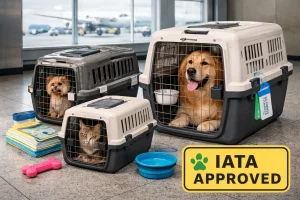
IATA-compliant crate supply and sizing
We supply IATA-compliant pet crates and confirm sizing based on your pet’s measurements. We also guide you on crate training, bedding, and ventilation rules.
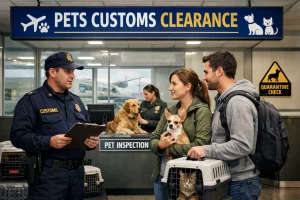
Customs clearance and arrival assistance
At arrival, customs may review documents and release timing. We guide the steps and help reduce waiting and confusion.
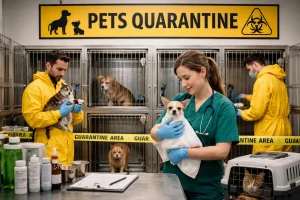
Quarantine guidance (only where required)
Some destinations require quarantine or government-approved processes. We don’t scare you—we simply explain the exact steps and timeline, early.
How the International Pet Shipping Process Works
Here’s the real-world flow (simple, but strict).
Step 1: Share pet details and destination
You share:
Pet type (dog/cat), breed, age, weight
Microchip status
Destination country and city
Estimated travel date window
Step 2: Document checklist and timeline
We build a checklist based on your destination rules, including when each item must be completed.
Step 3: Vet checks, microchip and vaccinations
Most countries require:
ISO microchip
Rabies vaccine (and core vaccines)
Health check near travel date
We help you avoid the most common error: vaccinating before microchip (often invalid).
Step 4: Crate selection and crate training tips
We confirm crate size, help you choose the right model, and share crate training tips so your pet feels safer on travel day.
Step 5: Flight planning and booking
We choose routing based on:
Airline pet policies
Temperature rules and seasonal embargoes
Transit limits and safe layovers
Destination entry timing
Step 6: Airport handling and customs clearance
We assist with:
Airport check-in timing
Labeling and crate checks
Cargo terminal steps (if cargo travel)
Arrival clearance and release guidance
Step 7: Delivery, follow-up, and post-arrival tips
After arrival, we guide:
Feeding/water routines
Rest and adjustment
Vet visit timing if needed
And yes, we follow up, because moving day is not the end of the story.
Documents Required for International Pet Shipping
Document rules change by country, but these are common worldwide.
Microchip certificate (ISO compliant)
Your pet often needs an ISO 11784/11785 microchip. The microchip number must match every document exactly.
Vaccination records (rabies + core vaccines)
Rabies is usually mandatory. Core vaccines vary by country, but good records always help.
Health certificate (fit-to-fly)
A licensed vet issues a fit-to-fly health certificate within a specific time window before departure.
Import permit / export permit (if required)
Some countries require an import permit, and some departure countries require an export permit. We guide this clearly.
Rabies titer test (FAVN) for certain countries
Some regulated destinations require a rabies titer test (FAVN) plus waiting periods. This is a big timeline item—so we plan early.
Airline forms and crate compliance documents
Airlines may request:
Shipper/consignee details
Feeding instructions
Crate compliance confirmation
Live animal labels and routing notes
Quick checklist table (typical):
| Document / Requirement | Who issues it | When it’s needed (typical) | Notes |
|---|---|---|---|
| ISO Microchip proof | Vet / microchip registry | Before rabies vaccine | Must match all paperwork |
| Rabies vaccination certificate | Vet | Weeks/months before travel | Some countries require minimum age/wait |
| Health certificate (fit-to-fly) | Government-approved vet | Close to departure | Valid window depends on destination |
| Import permit | Destination authority | Before booking/flight | Not required for every country |
| Export permit (if needed) | Origin authority | Before departure | Varies by origin country |
| Rabies titer (FAVN) | Approved lab | Early planning | Often includes waiting period |
IATA Pet Crate Requirements (Avoid Rejection)
Airlines follow IATA Live Animals Regulations and their own rules. If your crate is wrong, they can reject your pet at check-in.
How to measure your pet for the right crate
Use simple measurements (standing position):
A: Nose to base of tail
B: Ground to top of head/ears (whichever is higher)
C: Shoulder width
D: Ground to elbow joint
Basic sizing guidance (common method):
Crate Length: A + (½ of D)
Crate Height: B + bedding allowance
Crate Width: 2 × C (so your pet can turn comfortably)
Ventilation, locking, absorbent bedding rules
Most airlines expect:
Ventilation on multiple sides
Strong door lock / metal hardware (depending on airline)
Absorbent bedding (no loose straw that can spill)
Water container attached (and sometimes food container too)
Clear “LIVE ANIMAL” labels and arrows
Common crate mistakes that cause flight rejection
Avoid these issues:
Crate too small (pet can’t stand/turn)
Weak plastic door or broken locking mechanism
No absorbent bedding
Wheels left attached (some airlines reject wheeled crates)
Missing labels or unclear shipper/receiver contact details
Using a crate that airline does not approve for that route
International Pet Shipping Cost (What Affects Pricing?)
Pet shipping costs vary widely. Still, you can estimate pricing once you know your route, pet size, and destination rules.
Pet size, breed, and crate size
Bigger pets need bigger crates, and that changes airline pricing and handling.
Destination rules, permits, and tests
Permits, lab tests (like FAVN), and government vet endorsements can add cost.
Flight type, season, and airline policies
Peak travel periods often reduce space availability and increase rates. Also, airline pet policies vary a lot.
Door-to-door vs airport-to-airport
Door-to-door includes local transport, handling support, and sometimes more documentation help.
Transit time and layovers
Direct routes can cost more but reduce transit stress. Multi-stop routes may be cheaper, but they add risk and time.
Sample cost range table (illustration only):
| Service Type | Typical Suitable For | Example Range (USD) |
|---|---|---|
| Airport-to-airport (small cat/small dog) | Simple routes, flexible pickup | 900 – 2,500 |
| Airport-to-airport (medium/large dog) | Larger pets, crate upgrades | 1,800 – 4,500 |
| Door-to-door (standard routes) | Families, busy schedules | 2,500 – 6,500 |
| Regulated destinations (tests + permits) | Strict import countries | 3,500 – 9,500+ |
Note: These ranges depend heavily on route, crate size, airline, and regulation level.
How Long Does International Pet Shipping Take?
Typical timelines (fast routes vs regulated countries)
Some routes move quickly, while others require long lead times due to testing and approval steps.
Timeline table (general planning guide):
| Destination Type | Planning Time (Typical) | Why |
|---|---|---|
| Standard destinations | 2–6 weeks | Documents + flight availability |
| Countries requiring permits | 4–10 weeks | Permit processing + approvals |
| Countries requiring FAVN + waiting period | 3–7 months | Test + mandatory waiting rules |
| High-season travel | Add 2–4 weeks | Limited airline pet capacity |
What can delay pet shipping (documents, titer tests, embargoes)
Common delays include:
Incorrect vaccine dates or missing microchip proof
Waiting periods after rabies or titer test
Temperature embargoes (hot/cold seasons)
Airline breed restrictions
Limited cargo space on preferred routes
Missing signatures or government endorsements
Airline Rules for Pet Shipping (Cargo vs Cabin vs Baggage)
When pets can fly in cabin
In-cabin travel is usually limited to small pets that fit in an airline-approved soft carrier under the seat. Many international routes restrict this, and many countries still require documentation even if the pet flies in cabin.
Checked baggage vs cargo: what’s allowed
Checked baggage (AVIH): Pet travels in the aircraft hold on the same flight as the owner (offered only by some airlines and routes).
Cargo (manifest cargo): Pet travels as cargo with dedicated handling processes, common for many international routes and larger pets.
We guide the correct method based on route rules, airline policy, and pet welfare.
Temperature embargo rules and breed restrictions
Airlines may stop pet travel during extreme heat or cold. Also, some breeds face extra restrictions—especially brachycephalic (snub-nosed) pets.
Special Pet Travel Cases We Handle
Brachycephalic (snub-nosed) breeds
Snub-nosed pets can face breathing challenges in heat or stress. We plan safer routes, timing, and airline options—based on what is realistically allowed.
Large dogs and giant breeds
Large crates need special handling and aircraft space. We plan early to avoid last-minute rejection.
Senior pets and pets with anxiety
We help reduce stress with calm routing, crate training tips, and smart departure timing. Also, we always recommend you follow vet advice for medical concerns.
Multi-pet family relocations
Moving two, three, or more pets? We plan as one project: aligned documents, coordinated flights, and organised arrival support.
Safety, Welfare & Handling Standards
Your pet’s comfort matters, not only paperwork.
Stress-reduction steps before travel
Start crate training early (short sessions daily)
Keep routines stable (walks, feeding, sleep)
Use familiar bedding with your scent (if allowed)
Avoid chaotic last-minute changes
Feeding and hydration guidance
Avoid heavy meals right before travel
Offer water as advised by your vet
Use airline-approved water bowls attached to the crate
Follow route-specific timing (we guide this per booking)
When sedation is not recommended (vet advice only)
Many vets do not recommend sedation for flights because it can affect breathing and balance at altitude. Only a licensed vet should advise medication decisions.
Popular International Pet Shipping Routes
We support many global routes. These are some of the most requested:
UAE to UK / UK to UAE
Strong demand from expats and families relocating for work.
UAE to Canada / Canada to UAE
Common for long-term moves and family migration routes.
India to UAE / UAE to India
Frequent relocations and return journeys—documents and timing matter a lot.
USA to UK / UK to USA
Often requires careful planning around airline policy and documentation windows.
Internal links (example):
/routes/uae-to-uk-pet-shipping//routes/india-to-uae-pet-shipping//routes/uk-to-usa-pet-relocation/
Countries We Serve (Destination Hub)
We support multiple destinations, and we guide country-specific rules clearly.
Pet shipping to Australia (strict rules)
Australia is known for strict import requirements and controlled processes. Early planning is critical.
Pet shipping to the UK (pet travel scheme guidance)
The UK process depends on your route and pet status (microchip + vaccines + correct documentation). We guide the correct steps.
Pet shipping to Canada (import steps)
Canada often has a clearer import process, but airline rules and documentation still matter.
Pet shipping to the UAE (permits and approvals)
UAE routes can require permits and specific approvals depending on the route direction and pet type.
Internal links (example):
/destinations/australia//destinations/united-kingdom//destinations/canada//destinations/uae/