Relocating a cat across the Atlantic sounds dramatic, and honestly it can feel that way on travel day. However, with proper timing, appropriate documentation, and a peaceful approach, most cats manage quite well. In this article, I will lead you through the documentation checklist, airline procedures, and straightforward routines that help eliminate tension before, during, and after the flight.
This article is written from scratch for the “pet shipping ” website and aims to be practical, duplication-free, and easy to follow.
The most important thing to know (before you print any forms)
Here’s the twist: the U.S. federal government usually does NOT require a rabies certificate or a federal health certificate for pet cats.
- The CDC states that cats are not required to have proof of Rabies vaccination to enter the United States, although they recommend rabies vaccination and remind travelers that your destination may have additional requirements.
- USDA APHIS also says it does not have animal health requirements for importing a pet cat into the U.S.
However (and this matters), airlines, states, and local authorities can still ask for paperwork. Also, cats must appear healthy on arrival.
So, think of it like this: Federal rules are light for cats, but travel-day rules are not.
Best Google-searched topics: what people actually ask about
To match the most common searches, this guide covers:
- “cat relocation Netherlands to USA requirements”
- “cat travel documents to USA”
- “does a cat need Rabies vaccine to enter USA”
- “cat health certificate for international travel”
- “how to reduce cat stress when flying”
- “in cabin vs cargo cat international flight”
- “IATA cat crate requirements”
Timeline: when to start planning your move
Most convenient moves are initiated 4 to 8 weeks prior to departure. If you plan at the last minute, you can still manage, but you will face a trouble
Suggested prep schedule
|
When |
What to do |
Why it matters |
|
6–8 weeks before |
Pick flight route + confirm airline pet policy |
Some routes don’t allow pets in cabin/cargo |
|
4–6 weeks before |
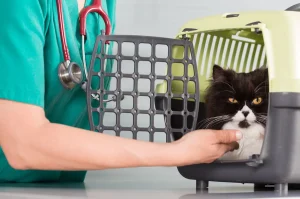
Vet visit + discuss anxiety, motion sickness, and travel fitness |
You’ll build a stress plan early |
|
3–4 weeks before |
Carrier training (daily) + practice “calm rides” |
Your cat learns the carrier is safe |
|
7–10 days before |
Get airline-required fit-to-fly/health letter if requested |
Many airlines ask for a recent vet letter |
|
48–72 hours before |
Final packing + pheromone spray + litter routine |
Keeps your cat’s scent “normal” |
|
Travel day |
Feed light, stay calm, arrive early |
Stress drops when you don’t rush |
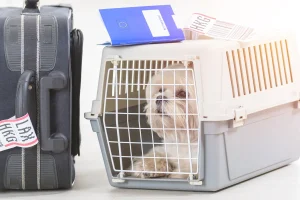
Paperwork checklist for moving a cat from Netherlands to USA
Even though federal entry requirements are minimal, smart travelers carry a complete pack. It prevents arguments at check-in, and it helps if your cat looks carsick after landing.
Core document checklist (recommended)
|
Document |
Who issues it |
When you need it |
Notes |
|
Pet passport (EU) + ID page |
NL vet |
Always helpful |
Not required by U.S., but useful proof of history |
|
Microchip details (ISO chip number) |
Vet |
Strongly recommended |
Helps if cat gets separated |
|
Rabies vaccination certificate |
Vet |
Recommended (sometimes required by state/airline) |
CDC doesn’t require it for cats, but many airlines prefer it |
|
General vaccination record |
Vet |
Recommended |
Shows overall health responsibility |
|
Veterinary health certificate / fit-to-fly letter |
Vet |
Often required by airline |
Airline rules vary—confirm with carrier |
|
Proof of ownership (invoice/adoption papers) |
You |
Useful |
Helpful for disputes or border questions |
|
Flight booking + pet reservation confirmation |
Airline |
Always |
Print it—don’t trust screenshots only |
|
Address/phone in USA + emergency contact |
You |
Always |
Put copies inside carrier pouch |
Special destinations warning
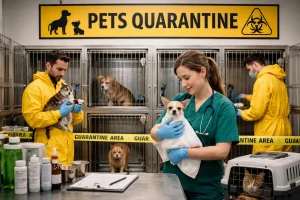
If you are flying into Hawaii or Guam, local quarantine rules apply even for cats.
For mainland U.S. states, requirements vary—some states may ask about rabies vaccination even if the federal government does not.
Stress reduction plan that actually works (no fancy nonsense)
Your cat doesn’t need a motivational speech. Your cat needs: predictability, familiar smell, and a calm human.
1) Carrier training (the #1 stress reducer)
Start now:
- Leave the carrier open at home like furniture.
- Put your cat’s blanket inside.
- Toss treats in, daily.
- Feed one meal near the carrier, then inside it.
Meanwhile, avoid the mistake of “carrier = only vet visits.” Cats remember.
2) Scent strategy (small trick, big impact)
Cats navigate life through smell. So:
- Rub a soft cloth on your cat’s cheeks and place it in the carrier.
- Use pheromone spray on the carrier 15–20 minutes before loading (not while cat is inside).
3) Practice rides
Do 2–3 short car rides before the move:
- Start with 5 minutes.
- Then 10–15 minutes.
- End at home, not the vet.
So your cat learns: “Trips don’t always end in betrayal.” (Yes, dramatic. But true.)
4) Food, water, and litter routine
On travel day:
- Offer a small meal 4–6 hours before departure.
- Make sure you have water till you leave for the airport .
- Have a folding bowl and give water during breaks.
Also pack:
- puppy pads (for carrier lining)
- wipes
- zip bags (for cleanup)
- spare liner cloth
Related Articles:
» How do I prepare my pet for international relocation?
» Moving a Cat from USA to Kuwait: Stress Reduction + Paperwork Checklist
» Pet Shipping from UAE to Spain: Documents, Timeline, and Cost Factors
» Moving a Dog from the Netherlands to Norway: Crate Rules, Airline Routing, and Arrival Steps
» Netherlands to USA Pet Relocation Step-by-Step Guide (Dogs & Cats)
In-cabin vs cargo: which is safer for a cat?
In most cases, in-cabin travel is less stressful for cats if your cat fits airline limits. You can monitor breathing, temperature, and anxiety.
Quick comparison
|
Option |
Best for |
Stress level |
Notes |
|
In cabin (under seat) |
Small/medium calm cats |
Lower |
Most preferred if allowed |
|
Checked hold (accompanied baggage) |
Some routes |
Medium |
Temperature/handling varies |
|
Manifest cargo |
Larger crates/routes |
Medium–High |
Good for some moves when managed well |
If you must use cargo, choose:
- direct flights (or the shortest connection)
- mild weather days
- a pet shipping team that handles booking, documents, and routing
Also, follow airline container rules and humane handling standards that align with IATA guidance for pet travel .
IATA crate / carrier setup (comfort + compliance)
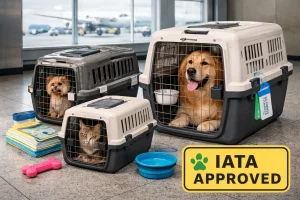
Airlines want the carrier to be secure and ventilated. IATA also describes safe, humane transport expectations and crating practices.
Use these practical setup tips:
- Ventilation on multiple sides
- Leak-proof base + absorbent pad
- No swinging bowls that drip everywhere
- “Live Animal” label if cargo (airline/shipper can advise)
- A familiar-smelling cloth (not a new fluffy bed with weird factory smell)
Also, make sure your cat can perform movements such as standing and turning around inside the carrier. If it cannot, it will be uncomfortable for them.
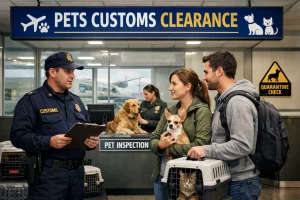
Arriving in the USA: what happens at the airport?
Typically, your cat will:
- get a visual check for obvious illness
- be allowed entry if healthy
If a cat appears unwell, officials may require veterinary evaluation at your expense.
Additionally, remember:
- CDC notes no rabies proof required for cats federally, but states/local rules can differ.
- Hawaii/Guam are the big exception because of quarantine controls.
“Pet Shipping” service angle: what we typically handle for NL → USA cat moves
If you use a professional pet shipping provider, you usually get help with:
- airline-compliant routing and pet reservation
- crate/carrier guidance
- vet document checklist (based on route + airline)
- day-of-travel handling instructions
- cargo booking coordination (if needed)
That means fewer surprises, and fewer “sir, you can’t check-in this pet” moments.
Final quick checklist (print-friendly)
Before you leave home
- Cat used to carrier
- Printed airline pet approval
- Vaccination records + microchip info
- Vet letter/health certificate (if airline asks)
- Absorbent pads + wipes + spare liner
- Treats + familiar cloth + pheromone spray
- Calm plan for airport timing
FAQs: Netherlands → USA cat relocation
No, according to the CDC, proof of rabies vaccination is not required for cats at the federal level, and they do not recommend it. However, local laws may vary.
USDA APHIS says that there are no animal health requirements for the entering of domestic cats in the United States.
On the mainland, quarantining healthy cats is rare. But, Hawaii and Guam have special quarantine regulations
They ask for documents such as pet reservation confirmation, carrier compliance, and a recent fit-to-fly/health letter. Requirements are differ by airline.
Sometimes yes, if your cat + carrier meets airline size/weight limits and the route allows it.
It will be safe if you do things correctly, such as choosing a suitable crate, considering the weather,planning the right travel route and following airline procedures that comply with IATA Live Animals Regulations.
Familiarizing the dog with its own scent, handling the dog calmly, give a crate training and avoiding last-minute changes are excellent ways to reduce stress in cats.
Administer sedatives to your pet only after consulting your veterinarian. Some sedatives can make breathing difficult at high altitudes and ask your veterinarian about safer ways to manage anxiety.
It should have enough space for your cat to stand, turn around, and lie down comfortably. Pick one that meets the airline’s standards.
It happens. Stay cool, don’t poke all the time, and focus on your breathing and routine. Cats usually settle down after taking off.
Most of the time, you can bring a small amount, but security rules differ from place to place. Make sure the food is safe packed and only bring what they need.
Leaving carrier training for the last week. Even if you only do 5 minutes a day, start early.