Moving countries is already a lot. Doing it with a dog or cat adds paperwork, deadlines, and the big question: will my pet clear checks smoothly on arrival? The good news is you can make the trip from South Korea to France pretty predictable if you follow the EU rules step-by-step and keep your documents consistent (same name spelling, same microchip number, same dates).
Below is a practical guide for Pet Shipping customers planning pet relocation Korea to France—with a document checklist, a realistic timeline, and the cost items that usually move your quote up or down.
Quick overview: what France (EU) checks first
For most owners, France follows EU pet movement rules. At entry, officials mainly verify:
- Your pet’s microchip and that the chip number matches every document
- Valid rabies vaccination (done after microchipping) with correct timing
- A rabies antibody titration test (FAVN / titer) when the pet travel from a non-listed country
- An EU animal health certificate (Annex IV model) plus the non-commercial declaration
- Entry via a travellers’ point of entry where document + identity checks happen
Now the key detail people miss:
Is South Korea “listed” or “non-listed” for EU pet entry?
The EU says the rabies titer test is not required only for pets coming from countries listed in Annex II of Regulation (EU) No 577/2013.
When you go to that Annex II Part 2 list, you will see items such as- JP (Japan), US, SG etc. but KR (South Korea) does not appear on the list. So, in practice, shipments from South Korea to France usually follow the non-listed country flow, including the rabies antibody titration test and the 3-month timing rule.
Documents checklist for pet shipping South Korea to France
Here’s the clean checklist you want in your folder (originals + one spare copy set).
|
Document |
Why it matters |
Common mistake |
|
ISO microchip certificate (ISO 11784/11785) |
Links the pet to every record |
Chip number typo (one digit wrong = big delay) |
|
Rabies vaccination record |
Must be valid, done after microchip, pet at least 12 weeks old |
Vaccine before microchip (EU can reject it) |
|
Rabies titer test report (≥ 0.5 IU/ml) |
Required for non-listed origin; sample rules apply |
Using a non-approved lab / wrong timing |
|
EU Animal Health Certificate (Annex IV) |
The main EU entry document; valid 10 days from issue for entry checks |
Vet issues too early / missing official endorsement |
|
Non-commercial declaration |
Confirms it’s not a sale/transfer |
Forgetting to attach it |
|
Flight booking proof + airline pet approval |
Airlines enforce crate and breed rules |
Assuming “I’ll add pet later” (sometimes you can’t) |
|
Korea export quarantine certificate |
Korea may issue a quarantine certificate after airport inspection |
Arriving late and missing quarantine office hours |
Korea side note (important): Incheon Airport guidance says you should visit the animal and plant export quarantine office with your pet and documents before departure; after document + clinical inspection, they issue a quarantine certificate. This step can feel “small,” but airlines often ask for everything to match before they accept the crate.
Timeline: a realistic plan (and why “last minute” hurts)
EU timing rules drive your schedule, especially for the titer test.
The timeline that works for most dog/cat moves
10–16 weeks before travel (best window)
- Microchip (if not already ISO compliant)
- Rabies vaccination (after chip)
- Wait at least 30 days, then do the rabies antibody titration test
Then the big wait
- The EU rule says the blood sample must be taken not less than three months before the date of movement.
So if you do the titer late, your departure date gets pushed. Simple as that.
2–3 weeks before travel
- Book your airline pet slot (cargo space can fill fast)
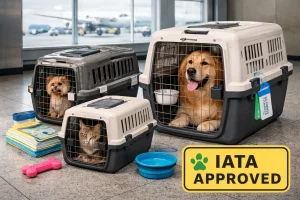
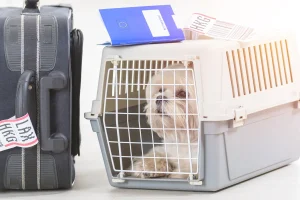
- Buy the right IATA -style travel crate and start crate training (your pet will thank you)
10 days before arrival in the EU (don’t miss this window)
- Get the EU animal health certificate issued/endorsed within the valid timing rules
Departure day (Korea)
- Go to the airport export quarantine office with documents + pet; obtain the quarantine certificate after inspection
Arrival day (France)
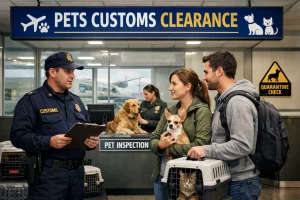
- Enter via a travellers’ point of entry for document + identity checks
Bringing more than 5 pets?
If you travel with more than five and you don’t qualify for the limited exemptions, the EU can treat it as a different (stricter) movement category. If you’re relocating with multiple animals, plan this early—don’t wing it.
Related Articles:
» Moving a cat from Netherlands to USA: stress reduction + paperwork checklist
» How do I prepare my pet for international relocation?
» Pet Shipping from UAE to Spain: Documents, Timeline, and Cost Factors
» Netherlands to USA Pet Relocation Step-by-Step Guide (Dogs & Cats)
» Moving a Dog from the Netherlands to Norway: Crate Rules, Airline Routing, and Arrival Steps
Cost factors: what changes the price the most
Let’s be honest—people search “how much does it cost to ship a pet from Korea to France” and expect one number. In reality, pet relocation pricing works like airfare: weight, season, route, and handling rules decide the final total.
Here’s what usually drives your quote:
|
Cost factor |
How it affects cost |
Why it matters |
|
Travel method (in-cabin / checked baggage / air cargo) |
Biggest swing |
Cargo costs more but fits larger pets and stricter airlines |
|
Crate size + pet weight |
High |
Airlines price by size/weight bands; larger crates take real aircraft space |
|
Route type (direct vs transit) |
Medium–High |
Transits add handling fees and stress; direct routes reduce risk |
|
Season & weather embargoes |
Medium |
Summer heat/cold restrictions can force route changes or delays |
|
Veterinary work (microchip, rabies, titer, exam) |
Medium |
Timing mistakes cause re-tests (extra cost + lost weeks) |
|
Documentation & endorsement |
Medium |
EU certificate timing is strict; corrections can mean re-issuing |
|
Pickup/delivery (door-to-airport / airport-to-door) |
Medium |
Ground transport, distance, and vehicle requirements add up |
|
Special handling (snub-nosed breeds, anxious pets) |
High (sometimes) |
Some breeds need cargo-only, special crates, or may face airline limits |
|
Arrival services |
Low–Medium |
Customs help, boarding, or vet visit after landing (optional but useful) |
A small “budget reality” tip
If your dates are flexible, you often save money by:
- avoiding peak holiday weeks,
- choosing a route with fewer transfers,
- and finalising documents early (last-minute changes are expensive… and stressful).
Common mistakes that delay clearance (and how to avoid them)
- Rabies vaccine before microchip
EU rules expect the vaccination to follow identification . If you did it backwards, talk to your vet—often you must re-vaccinate after chipping. - Doing the titer test too late
The blood sample must meet the timing rule: 30 days after vaccination and 3 months before movement. - Health certificate issued outside the allowed window
The EU animal health certificate must be issued close to travel; EU guidance states it must be issued not more than 10 days before arrival. - Mismatch in names/dates/chip number
One digit wrong can trigger re-checks. Always compare documents line-by-line. - Not planning Korea’s export quarantine step
Incheon airport notes you need to visit the export quarantine office with your pet and documents; they issue a quarantine certificate after inspection.
France-specific notes pet owners should know
Entering through the right checkpoint
The EU requires entry via a travellers’ point of entry for checks in many cases. Your relocation agent or airline route should align with that requirement.
Dog category restrictions (don’t ignore this)
France has rules for “categorized” dogs (Category 1 and 2). If your dog falls into these categories, you may face extra legal steps for keeping the dog in France. Also, French consular guidance warns that some “attack dog” types based on morphology may be forbidden to import. If your dog resembles these types, check this early, not after you book flights.
FAQs: South Korea → France pet shipping
Usually yes, because the EU titer exemption applies to Annex II “listed” countries, and South Korea (KR) does not appear on that Annex II list.
Often 3–4+ months mainly due to the EU requirement that the titer sample be taken not less than 3 months before movement.
EU rules require the sample be taken at least 30 days after vaccination.
A rabies virus antibody concentration of 0.5 IU/ml or higher.
According to E.U. guidance, it must be issued no more than 10 days before your pet arrives in the E.U.
Often yes—EU rules mention passing through a travellers’ point of entry for documentary and identity checks.
For instance, in some cases it depends on airline policy, size of the pet and route. (Larger pets, many owners find, must go by air cargo.)
Incheon Airport guidance says you should visit the airport export quarantine office with your pet and documents; after inspection they issue a quarantine certificate.
Primary vaccination timing differs from boosters; your vet should confirm. EU rules state the validity of primary vaccination starts not less than 21 days after completion.
If you move more than five, and you don’t meet the exemption conditions, the EU may require compliance with stricter import conditions .
The EU’s tapeworm treatment rule applies only when entering specific listed Member States. France is not generally the one people cite for this requirement, but confirm based on your exact route.
Document mismatch (microchip number errors, wrong dates) and timing errors on the titer test or EU certificate are the most common problems