What is a rabies titer test for pet travel?
It’s a blood test that measures rabies antibodies to prove vaccination protection
A rabies titer test for pet travel is a blood test that measures your pet’s rabies antibody level. In simple terms: it shows whether the rabies vaccination created enough immune protection.
Many countries require it before they approve pet import or reduce quarantine
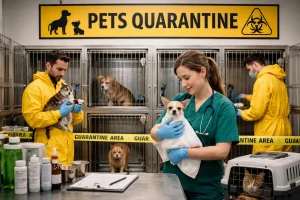
Many destinations use the titer test as part of their import safety rules. If your route requires it, authorities may not approve entry (or may require longer quarantine) without a valid titer result and correct waiting period.
Rabies Titer Test vs Rabies Vaccination (What’s the Difference?)
Vaccine = protection; titer test = proof of antibody level
-
Rabies vaccine helps protect your pet from rabies.
-
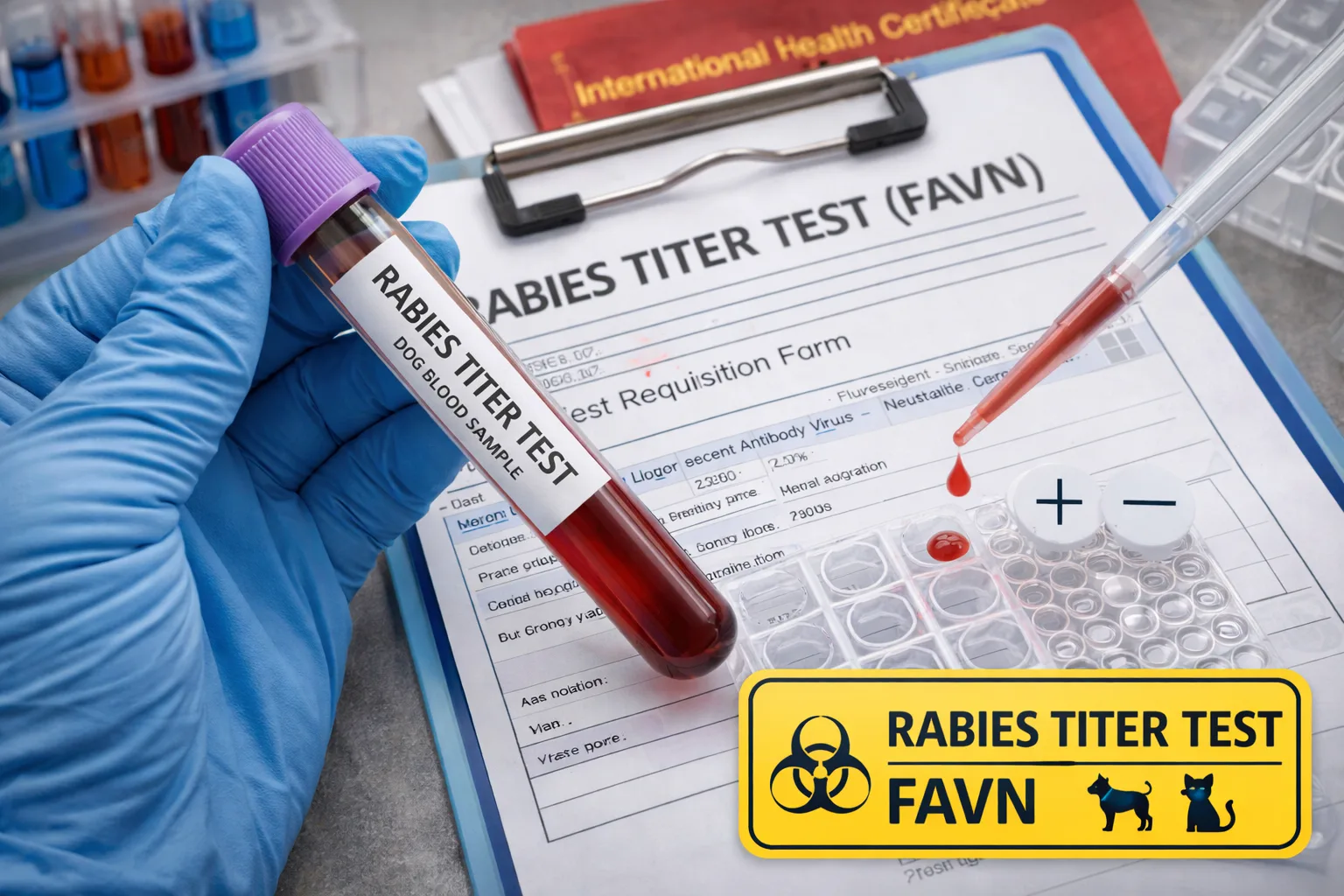
Rabies titer test (FAVN) proves the vaccine worked (by measuring antibodies).
Why some countries accept vaccination alone and others require a titer
Some countries accept only vaccination records (especially if you are coming from a low-risk origin). Others want extra proof, especially for strict biosecurity destinations or risk-based origins.
When boosters are needed before the test
A booster may be needed if:
-
Your pet’s vaccine history is incomplete
-
The last rabies shot is expired or unclear
-
The destination rules require a valid, recent rabies vaccination before blood draw
Your vet will confirm what’s safe and required (no guesswork here).
When Do You Need a Rabies Titer Test (FAVN) for International Pet Shipping?
Travel to strict biosecurity destinations
Strict destinations may require FAVN as a standard part of entry rules, often together with waiting periods and pre-approval steps.
Travel from certain countries or regions (risk-based rules)
Some destinations require a titer test only if you’re travelling from specific origin countries/regions considered higher rabies risk.
Pets with incomplete vaccine history or document gaps
If records are missing, dates are unclear, or boosters lapsed, the destination may require extra proof—or treat the vaccine as “not valid.”
When titer testing helps reduce or avoid quarantine (where applicable)
In some systems, correct titer testing + correct timing can reduce quarantine length or help qualify for low-quarantine entry pathways.
Countries That Require a Rabies Titer Test for Pet Import
High-control destinations (strict entry rules)
High-control destinations are more likely to require a titer test (and strict timelines). This is common with countries that strongly protect local animal health.
Countries that require a test for specific origin countries
Some countries require FAVN only if the pet is arriving from certain origins or has lived in those origins recently.
Why rules change and how to confirm your route
Rules can change due to outbreaks, policy updates, or country risk classification changes. So, always confirm your specific route (origin + destination + where your pet has been living).
Internal links (examples):
-
/destinations/australia/ -
/destinations/new-zealand/ -
/destinations/united-kingdom/ -
/destinations/canada/ -
/destinations/uae/
Rabies Titer Test (FAVN) Timeline – How Long Does It Take?
Blood draw → lab processing → results
The basic flow is:
-
Vet draws blood
-
Sample is shipped to an approved lab
-
Lab tests and issues the report
-
You store the report for permits/entry approvals
Waiting periods after the test (depends on destination rules)
Many destinations require a waiting period after the blood draw date (or after results). This is where people get stuck, because flights booked too early can become unusable.
How early you should start (recommended planning window)
A safe planning window for many routes is 6–12+ weeks, and for strict destinations it can be much longer. If you’re not sure, start early—starting early never hurts, starting late does.
Timeline planner (general guide):
| Stage | Typical time | What can slow it down |
|---|---|---|
| Vet appointment + blood draw | 1–7 days | Vet availability, missing microchip/vaccine |
| Lab shipping + processing | 1–4 weeks | Courier delays, lab backlog, wrong paperwork |
| Waiting period (route-based) | Weeks to months | Destination rule (no shortcut) |
| Permit/quarantine approvals | 1–6+ weeks | Application errors, missing attachments |
Step-by-Step: How the Rabies Titer Test Works
Step 1: Confirm microchip + vaccination dates
First, confirm:
-
Microchip is present and scannable
-
Microchip number matches your records
-
Rabies vaccination dates meet the destination rules
Step 2: Vet blood sample collection
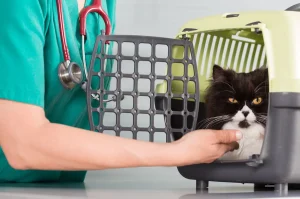
A vet collects the blood sample safely. For most pets, it’s quick—like a normal blood draw.
Step 3: Approved lab submission
The sample must go to a lab accepted by the destination’s rules (using the correct submission forms).
Step 4: Result report and document storage
You receive a report showing the antibody level. Keep:
-
Original report (digital + printed)
-
Courier receipts (sometimes useful)
-
Copies for airport check-in and customs
Step 5: Use results for import permit/quarantine approval
You use the titer test report as supporting evidence for:
-
Import permit applications (where required)
-
Quarantine approvals or reduced-quarantine pathways (where applicable)
What You Need Before the Titer Test
Microchip requirements (must match all documents)
The microchip number must appear the same on:
-
Rabies certificate
-
Health certificate
-
Titer test submission
-
Import permit forms
One digit wrong can cause rejection, seriously.
Rabies vaccination rules and timing
Most destinations require rabies vaccination to be valid and properly dated before the titer blood draw. Your vet can confirm the safe schedule.
Minimum age and health considerations (vet guidance)
Puppies/kittens have age limits for rabies vaccination. Also, pets with health issues may need vet clearance before travel planning.
Booster requirements (when needed)
Boosters may be needed when:
-
Vaccine is expired
-
Booster was missed (lapse)
-
Destination requires “current” rabies status
We help you plan boosters so the test is taken at the right time.
Rabies Titer Test Result Requirements (Pass/Fail Basics)
What the antibody level means
The antibody level indicates whether your pet has responded well to vaccination. Destinations may require a minimum threshold (set by their authorities).
What happens if results are low
If results are low, it doesn’t mean your pet is “in trouble.” It usually means:
-
A booster is needed, and then
-
Retesting is required after the proper wait time
It’s fixable, but it adds time.
Retesting timeline and booster planning
Retesting is usually planned after:
-
Booster vaccination, plus
-
A waiting period recommended by your vet and/or destination rules
We help you plan this so you don’t burn weeks unnecessarily.
Pass/fail outcome table (simple):
| Result status | What it usually means | Next step |
|---|---|---|
| Meets requirement | Antibodies sufficient | Proceed with permits/waiting period |
| Below requirement | Antibodies too low | Booster + retest + adjust travel date |
| Report not accepted | Format/lab issue | Resubmit via approved lab / correct docs |
Rabies Titer Test Cost (What Affects Price?)
Vet blood draw fee vs lab test fee
Costs usually split into:
-
Vet appointment + blood draw fee
-
Lab test fee (FAVN processing)
Courier/shipping to the lab
International courier + temperature-safe packing can add cost. Some clinics include it, some don’t.
Rush options (if available)
Some labs offer faster processing (not always). Rush options cost more and still may not bypass waiting periods.
Extra costs if retesting is required
Retesting adds:
-
Another vet visit
-
Another lab test
-
Another courier shipment
So it’s best to get the timing and paperwork right the first time.
Typical cost breakdown (illustration only, USD):
| Cost item | Typical range (USD) | Notes |
|---|---|---|
| Vet visit + blood draw | 40 – 200 | Depends on clinic/country |
| Lab titer test fee | 120 – 350+ | Depends on lab and destination |
| Courier/shipping | 30 – 150+ | Depends on distance/service |
| Rush processing | 50 – 250+ | Only if available |
| Retest (if needed) | Adds similar costs again | Booster + repeat test |
How We Help With Rabies Titer Testing for Pet Shipping
Destination-based titer requirement check
We confirm whether your route requires titer testing and what timeline rules apply.
Timeline planning (so results are valid for travel dates)
We help plan the schedule so your test, waiting period, and travel date all line up (this part is where many people mess up).
Document review to avoid mismatches
We review:
-
Microchip number consistency
-
Rabies certificate timing
-
Name/breed/DOB consistency
-
Lab submission form accuracy
Guidance for lab submission and report format
We guide which lab format is accepted for your route and how to store the report for airline and customs.
Support using results for permits and quarantine approvals
We help you use the titer report for:
-
Import permits
-
Quarantine approvals
-
Pre-arrival document packs for check-in and clearance
Common Mistakes That Delay Titer Test Approval
Microchip number mismatch
Mismatch between microchip number on the rabies record vs the lab submission is a classic delay reason.
Rabies vaccine given before microchipping (some countries reject this)
Some destinations require microchipping first, then rabies vaccination. If the order is wrong, they may treat the vaccine as invalid.
Blood drawn too early after vaccination
If blood is drawn too early, antibody level may be lower than expected—or the destination may not accept the timing.
Using a non-recognised lab
Even a correct result can be rejected if the lab isn’t accepted for that destination route.
Travel booked before waiting period ends
This is the biggest headache. People book flights first, then realise the waiting period pushes travel later. It’s painful and expensive.
Get Help With Rabies Titer Test Planning
What we need (origin, destination, travel date, vaccine date, microchip)
To guide you quickly, share:
-
Origin country/city + destination country/city
-
Your target travel date (or date range)
-
Microchip number (or confirmation it’s implanted)
-
Rabies vaccination date(s) + booster history
-
Dog/cat breed + age + weight
Request guidance + quote (form/WhatsApp/email/phone)
-
Form: Best for uploading rabies records and chip details
-
WhatsApp: Quick timeline discussion
-
Email: Easy for sending PDFs
-
Phone: Helpful for strict destinations and urgent planning