How it Works
Process of International Pet Shipping (Dogs & Cats)
International pet shipping is not a single booking. It’s a planned journey with clear steps: documents first, vet checks next, then an IATA-compliant crate, flight planning, and finally customs clearance after landing. When this order is followed, everything feels organised. When the order is wrong, delays can show up at the airport with no warning.
Below is our simple, honest guide on how international pet shipping works—from first message to final delivery.
How does international pet shipping work?
It’s a planned process: documents → vet checks → IATA crate → flight booking → customs clearance → pickup/delivery
Here’s the real flow, in human language:
We confirm your route and destination rules
You complete vet steps (microchip, vaccines, health certificate)
We size and set up the IATA pet crate
Flight booking is planned around airline rules and weather restrictions
Your pet checks in at the airport and clears export steps
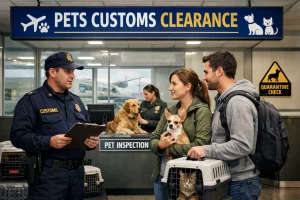
After landing, your pet completes arrival inspection and customs release
You pick up at the airport or we deliver door-to-door
Timelines depend on destination rules, permits, and rabies titer test requirements
Your timeline can be quick or long depending on:
Import permits (some countries need approvals before arrival)
Rabies titer test (FAVN) + waiting periods (for certain destinations)
Airline space availability
Temperature embargo periods (seasonal blocks)
What You Need Before You Start (Fast Checklist)
Pet details (breed, age, weight, size, temperament)
Send us:
Dog/cat breed and age
Current weight
Approx measurements (or we guide you)
Behaviour notes (calm, nervous, anxious, reactive)
Microchip + vaccination history
We need:
Microchip number (and confirmation it’s scannable)
Rabies vaccination date + booster history
Core vaccine record if available
Destination country + travel date
Share:
Origin city/country and destination city/country
Ideal travel date or date range
Owner documents (passport/ID and address details where required)
Some routes ask for:
Passport/ID copy
Local address at destination
Contact number (for customs and terminal communication)
Fast checklist table (quick view):
| What we need | Why it matters | Common problem |
|---|---|---|
| Breed + weight + size | Crate sizing + airline rules | Underestimated size |
| Microchip number | Document matching | Number mismatch |
| Rabies dates | Entry approval | Booster gap |
| Destination + date | Timeline planning | Booking too early |
| Owner ID/address | Customs clearance | Missing local address |
Step-by-Step International Pet Shipping Process
Step 1: Quote and route planning (direct vs transit)
We check direct flights first, then transit options if needed. We also consider:
Weather and temperature restrictions
Transit handling quality
Breed restrictions (especially snub-nosed breeds)
Step 2: Destination document checklist and timeline
You get a personalised checklist based on your route. No copy-paste checklist that ignores your destination.
Step 3: Microchip and vaccinations (rabies + core vaccines)
Usually the order is:
Microchip first
Rabies vaccine next
Core vaccines as required
This reduces the risk of document rejection later.
Step 4: Rabies titer test (FAVN) if the destination requires it
If your destination requires FAVN:
Vet draws blood sample
Sample goes to an approved lab
Results issued
Waiting period may apply (route-based)
This step often decides the whole timeline, so we plan it early.
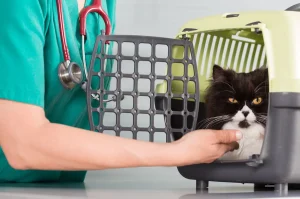
Step 5: Health certificate / Fit-to-Fly vet exam
A Fit-to-Fly certificate must be issued within a strict window before travel. If it’s too early or missing details, the airline may refuse acceptance.
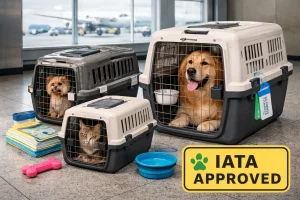
Step 6: IATA-compliant crate sizing and setup
We confirm:
Correct crate size (stand/turn/lie down)
Strong locks and door checks
Ventilation clear
Absorbent bedding + water bowl
Labels: Live Animal, arrows, contact info
Step 7: Crate training and travel preparation
A short routine helps a lot:
Feed in crate
Short closed-door sessions
Calm reinforcement
Even 7–14 days of practice can make a big difference.
Step 8: Flight booking and airline acceptance rules
We match your plan to airline rules:
Cargo vs checked baggage vs cabin
Crate requirements
Breed limits
Seasonal embargo restrictions
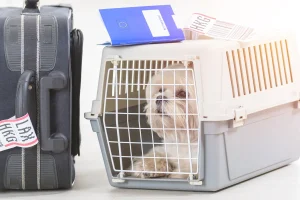
Step 9: Airport check-in, export clearance and handling
At the airport, staff check:
Original documents
Crate compliance
Pet condition
Then your pet goes through export processing and handling.
Step 10: Arrival clearance, inspection and customs release
After landing, authorities may:
Scan microchip
Review vaccines/permits
Collect fees (inspection/handling)
Release your pet for pickup or delivery
Step 11: Pickup at airport or door-to-door delivery
You choose:
Airport pickup (you handle local transport), or
Door-to-door delivery (we deliver where available)
Step 12: Post-arrival tips (settling in, vet visit, routine)
After arrival:
Keep food simple and familiar
Offer water and quiet rest
Keep walks short at first
Schedule a vet visit if your destination recommends it (or if anything seems off)
Door-to-Door vs Airport-to-Airport (Which Should You Choose?)
Door-to-door: best for busy families and first-time pet travel
Door-to-door is easier because we coordinate pickup, airport handling support, arrival steps, and final delivery.
Airport-to-airport: best for lower cost and flexible owners
Airport-to-airport can be cheaper, but you handle:
Origin airport drop-off
Destination pickup
Local transport
Key differences: responsibilities, pricing, and time
Timelines are often similar (documents decide). The big change is convenience and responsibility.
| Category | Door-to-door | Airport-to-airport |
|---|---|---|
| Convenience | High | Medium |
| Owner work | Low | High |
| Typical cost | Higher | Lower |
| Best for | First-timers, busy families | Experienced owners |
Where Pets Travel (Cabin vs Checked Baggage vs Cargo)
When cabin travel is possible
Cabin travel is usually only for small pets and depends on airline route rules.
Checked baggage rules (limited availability)
Checked baggage is limited and not offered everywhere. Some airlines stopped it on many routes.
Cargo travel explained (common for international pet shipping)
Cargo is common for international pet shipping because it supports:
Larger pets
Regulated routes
Structured terminal handling
Cargo sounds scary to people, but when it’s handled properly it can be safe and controlled.
Temperature embargo and seasonal restrictions
Airlines may block pets during extreme heat or cold. That’s why route timing matters a lot.
Documents Required for International Pet Shipping
Microchip certificate
Microchip number must match every document exactly.
Rabies vaccination certificate
Rabies proof is a main entry requirement for most countries.
Core vaccination record
Core vaccines vary by destination, but clean records help reduce questions.
Fit-to-Fly health certificate
Issued within the valid time window, with correct details and vet signature/stamp.
Import permit / export permit (destination-based)
Some countries require permits before travel. Others don’t. We confirm by route.
Rabies titer test report (when required)
FAVN report is required for certain destinations and may include waiting periods.
Airline forms and airway bill (AWB) for cargo shipments
For cargo shipments, AWB (Air Waybill) is used to track and release the shipment at the cargo terminal.
Document table (quick reference):
| Document | Who issues it | Used for |
|---|---|---|
| Microchip proof | Vet/registry | Identity verification |
| Rabies certificate | Vet | Entry compliance |
| Core vaccines | Vet | Destination rules |
| Fit-to-Fly certificate | Vet | Airline + customs |
| Import/export permit | Govt authority | Legal approval |
| FAVN titer report | Approved lab | Strict routes |
| AWB + airline forms | Airline/cargo | Terminal processing |
IATA Pet Crate Requirements (Why Crates Matter)
How to measure your pet for the correct crate
Measure:
Nose to base of tail (length)
Floor to top of head/ears (height)
Shoulder width (turning space)
Ventilation, locks, labels, bedding, bowls
Airlines look for:
Clear ventilation
Strong door + lock system
Leak-proof base + absorbent bedding
Water bowl attached (often refillable from outside)
Labels and contact details
Common crate mistakes that cause rejection
Crate too small
Blocked vents
Weak locks
Wheels attached
Missing labels
Timeline: How Long Does International Pet Shipping Take?
Fast routes (simple requirements)
Simple routes can be planned in 1–3 weeks if:
No permits needed
No titer test needed
Vaccines are already valid
Regulated routes (permits + titer tests)
Regulated routes can take 4–12+ weeks, and sometimes months, because:
Permits take time
FAVN test has lab time + waiting periods
What can delay timelines (paperwork, lab results, embargoes)
Common delays:
Document mismatches
Rabies timing errors
Lab processing delays
Airline embargo due to temperature
Limited cargo space during peak periods
Timeline guide table (general):
| Route type | Typical planning time | Why |
|---|---|---|
| Simple routes | 1–3 weeks | Basic docs + fit-to-fly |
| Permit routes | 4–10 weeks | Approvals + endorsements |
| Titer routes | 2–7 months | Lab + waiting period rules |
Cost: What Affects International Pet Shipping Price?
Pet size/weight and crate size
Larger pets need larger crates, and airlines charge based on size/weight rules.
Origin and destination rules (permits, tests, quarantine)
Strict destinations cost more because permits, tests, and quarantine coordination add fees.
Direct vs transit flight routes
Direct flights can cost more, but they reduce handling and stress. Transit can be cheaper but adds risk.
Airline handling fees and airport charges
Airport charges may include:
Handling fees
Inspection fees
Storage (if pickup is delayed)
Door-to-door distance and delivery requirements
Door pickup and home delivery distance affects the total cost.
Cost ranges (illustration, USD):
| Cost component | Typical range (USD) | Notes |
|---|---|---|
| Vet documents + certificates | 50 – 400+ | Varies by country |
| IATA crate | 60 – 900+ | Depends on size/material |
| Airline transport + handling | 800 – 6,000+ | Route + airline dependent |
| Permits/quarantine fees | 50 – 3,000+ | Destination dependent |
| Delivery (door-to-door) | 100 – 1,500+ | Distance + city |
Customs Clearance & Quarantine (What Happens After Landing)
Arrival inspection and document verification
Authorities may scan microchip, check documents, and sometimes inspect the pet.
Customs fees and handling charges
You may pay inspection/handling charges at the airport or cargo terminal (depends on route).
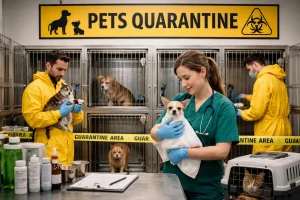
When quarantine applies (and how to plan for it)
Quarantine applies only when destination rules require it or when compliance is incomplete. Planning early reduces surprise quarantine.
How to avoid storage fees
Plan arrival during clearance hours
Have documents ready and correct
Arrange pickup quickly after release
Safety & Pet Welfare During Travel
Feeding and hydration timing
Avoid heavy meals close to travel. Offer water as advised and keep routine calm.
Stress reduction and crate training
Crate training and familiar bedding can reduce stress a lot.
Why sedation is usually discouraged (vet advice only)
Sedation can be risky during air travel. Only follow your vet’s guidance, never self-decide.
Choosing safer routes and avoiding long layovers
Direct routes reduce handling points. When transit is needed, we choose safer airports and reasonable connection times.
Popular Routes and Destinations
UAE ↔ UK pet shipping process
UAE ↔ Canada pet shipping steps
India ↔ UAE pet relocation process
UK ↔ USA pet travel process
UAE ↔ Australia/NZ planning
FAQs – How International Pet Shipping Works (AEO Q&A)
How early should I start international pet shipping?
Start as early as possible. Simple routes can be 1–3 weeks. Titer-test routes may need months.
Can I ship my pet without an agent?
Yes, sometimes. However, many owners use an agent to avoid document mistakes, crate rejection, and clearance delays.
Will my pet be quarantined?
Only if the destination requires it or documents/timing are not compliant.
How do I know if I need a rabies titer test?
It depends on your destination and sometimes your origin country. We confirm your route rules before you book travel.
What is an AWB and when do I need it?
An AWB (Air Waybill) is the cargo tracking document used when pets travel as cargo.
What can cause airport rejection?
Most common reasons: wrong crate size, blocked ventilation, weak locks, missing documents, or certificate timing issues.
Is cargo safe for pets?
Cargo can be safe when airline rules, crate setup, and routing are planned correctly.
Can two pets travel together?
Sometimes, but many airlines require one pet per crate. Rules vary by airline and route.
What happens if my flight changes?
We adjust schedules and document timing if required. Some documents may need re-issue depending on the new date.
What do I do after my pet arrives?
Give rest, water, light meals, and quiet time. Then follow any destination guidance and book a vet check if needed.
How does international pet shipping work?
It follows a planned process: documents, vet checks, IATA crate, flight booking, customs clearance, then pickup/delivery.
How long does it take to ship a pet internationally?
Simple routes can take 1–3 weeks. Regulated routes with permits/titer tests can take weeks to months.
How much does it cost to ship a dog internationally?
Cost depends on pet size, route, permits, titer tests, airline charges, and delivery needs. Total can vary widely.
Do pets fly in cargo on international flights?
Many do, especially medium/large pets. Cargo is common for international pet shipping.
What documents do I need to ship a pet overseas?
Microchip proof, rabies certificate, health certificate, permits (if required), and titer test report for certain destinations.
Do I need a rabies titer test for my destination?
Some destinations require it. We confirm based on origin + destination rules.
Will my pet be quarantined after arrival?
Only where required or if compliance is incomplete.
How do I choose an IATA-approved pet crate?
Choose a crate that allows stand/turn/lie down, with good ventilation, strong locks, labels, and bowls.
Can I ship my pet door-to-door internationally?
Yes. Door-to-door service manages pickup, documents support, flight coordination, clearance guidance, and delivery.
What causes pets to be rejected at the airport?
Wrong crate size, blocked ventilation, weak locks, missing paperwork, and expired certificates.
Can I track my pet during shipping?
Cargo shipments can often be tracked by AWB number, depending on airline systems.
Is international pet shipping safe for cats and dogs?
Yes, when planned properly with correct documents, crate setup, routing, and stress-reduction preparation.