Spreading Pet from India to France seems easy at first glance — book the flight, bring along papers, and you’re set. But France has very strict E.U. entry regulations for dogs, cats and ferrets, so the paperwork and timing are critical. If even a single piece of paper is forgotten, Customs can deny entry, turn the pet around or subject it to checks (and yes, that escalates quickly).
In this guide, I’ll break down the real-world documents, the step-by-step timeline, and the main cost factors—in a way you can actually use.
Quick overview: what France/EU usually requires
For most personal (non-commercial) moves with dogs/cats/ferrets to France, you’ll typically need:
- Microchip (ISO 11784/11785) done before rabies vaccination
- Rabies vaccination (valid and in-date)
- Rabies antibody titration test (RNATT) + mandatory waiting time (commonly required when entering the EU from countries not on the “listed” group)
- EU health certificate (issued close to travel)
- India export clearance / AQCS NOC + export certificate
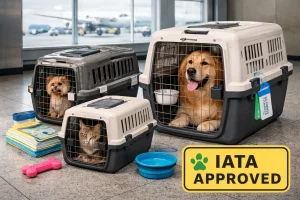
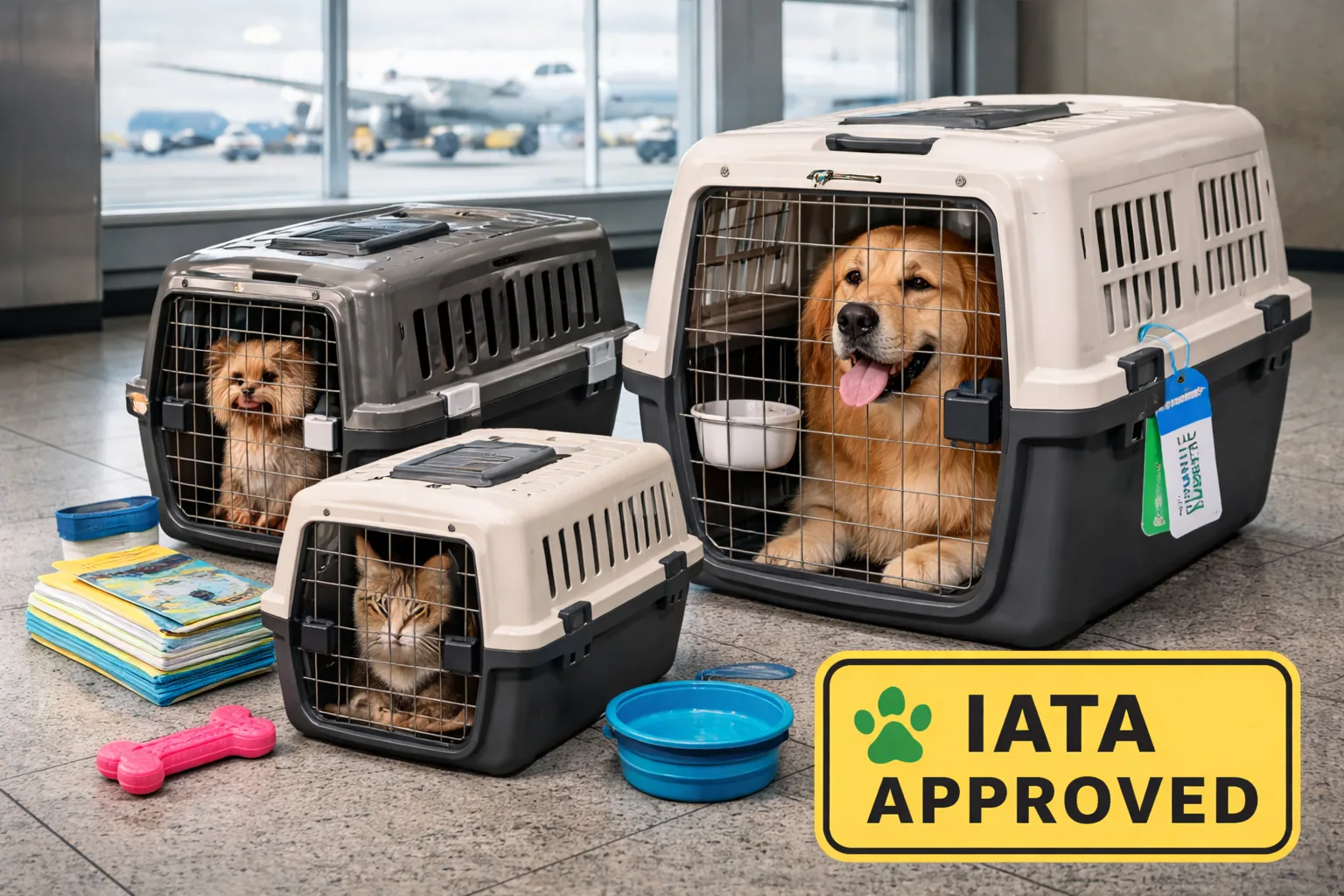
- Airline booking approval + IATA -compliant crate (if traveling in hold/cargo)
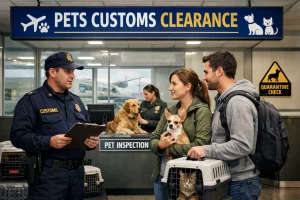
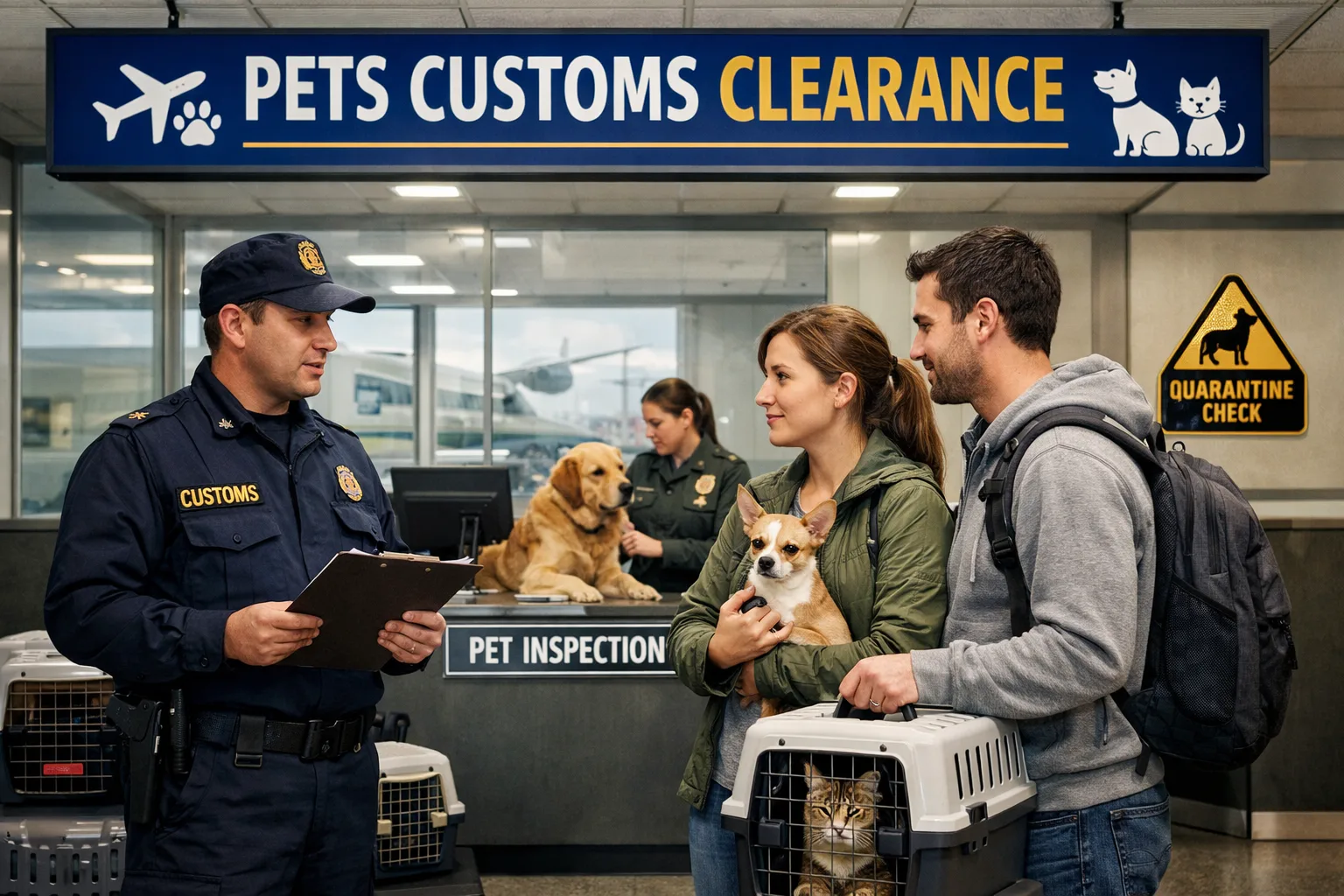
Also, France expects you to declare and present your pet to Customs for document/identity checks upon arrival.
Documents checklist (India → France)
1) ID + ownership proofs
- Your passport/visa/tickets (owner or accompanying person)
- Pet ownership proof (adoption papers, purchase invoice, local registration—anything official helps)
2) Microchip certificate
- Microchip implantation record with chip number
- Make sure the chip is scannable and matches every document (no typos, please)
3) Vaccination book/records
- Rabies vaccination certificate (chip number must be on it)
- Core vaccines (recommended): DHPPiL (dogs), FVRCP (cats), etc.
4) Rabies antibody titration test (RNATT)
This is the part people underestimate.
Common EU process:
- Rabies shot → wait at least 30 days → blood sample → lab test showing ≥ 0.5 IU/ml → then wait 3 months after the blood sample date before entry (typical requirement for “non-listed” origin routes).
5) EU health certificate for entry
- A vet-issued health certificate made for EU entry (done near departure)
- It must align with EU non-commercial movement rules
6) AQCS NOC + India export certificate
For export from India, the AQCS process is key:
- AQCS appointment + document verification + pet examination
- Export certificate validity is short (commonly 10 days), so schedule this close to your flight.
7) Airline documents
Depending on airline and route:
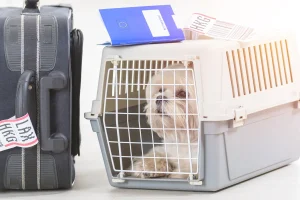
- Flight booking confirmation for pet (PETC/AVIH/cargo)
- Crate details + weight
- Fit-to-fly note sometimes requested
- Breed restrictions (especially snub-nosed breeds in cargo/hold)
Timeline: how early should you start?
If you want a realistic plan, assume 3–5 months minimum for most cases, mainly because of the rabies titer + 3-month wait.
Typical timeline table (most common path)
|
Step |
What happens |
Suggested time before flight |
|
Microchip |
Implant + record |
4–5 months |
|
Rabies vaccination |
After microchip (important) |
4–5 months |
|
Wait period |
Minimum wait before blood draw |
~30+ days after rabies |
|
RNATT (titer test) |
Blood sample + EU-approved lab result |
3–4 months |
|
Mandatory wait |
Often 3 months from blood sample date |
3 months |
|
EU health certificate |
Final vet check + certificate |
7–10 days |
|
AQCS NOC + export certificate |
India export clearance |
3–10 days (close to flight) |
|
Fly + France Customs check |
Declare pet on arrival |
Travel day |
Good to know:If you’re in a hurry, the paperwork doesn’t bend at all, so it’s better to prepare early than to worry later.

Pet travel options: in-cabin vs checked baggage vs manifest cargo
Your choice affects both comfort and cost.
Option A: Pets in Cabin (PETC)
- Best for small pets (airline limits apply)
- Usually calmer, and you can monitor your pet
- Air India, for example, allows cats/dogs in cabin up to a certain weight category and subject to approvals.
Option B: Checked baggage / hold (AVIH)
- For medium pets (within weight limits)
- Requires correct crate sizing and strong booking coordination
Option C: Manifest cargo
- Often used for large pets, some route restrictions, or airline policy needs
- Usually higher paperwork and handling fees, but sometimes it’s the only option
Related Articles:
» Moving a dog from France to South Korea: crate rules, airline routing, and arrival steps
» Pet shipping from South Korea to France: documents + timeline + cost factors
» Sweden to Australia pet relocation rules update (dogs \& cats)
» Moving a cat from Netherlands to USA
» Pet Shipping from South Korea to UK: Documents, Timeline & Cost Factors
Cost factors: what actually changes the price?
There isn’t one flat “India to France pet shipping cost” because pricing is built from multiple moving parts. Here’s what influences the total the most:
1) Route + airline availability
Direct routes reduce handling risk. Meanwhile, multiple transits increase stress, time, and cost.
2) Travel mode (PETC vs hold vs cargo)
Cargo is typically the most expensive; PETC can be cheaper but only works for small pets.
3) Crate type and size (IATA compliant)
- Bigger crate = higher freight charge
- Add-ons: absorbent bedding, water bowls, fasteners, labels
4) Vet work in India
- Microchip + vaccines
- RNATT/titer test
- Pre-travel checkups and parasite prevention
These can stack up quickly, especially if boosters are needed.
5) Government/export processing
- AQCS NOC/export certificate steps
- Courier/printing/translation (if needed)
6) Pet relocation service vs DIY
And while it’s more expensive, using a professional to get your pet where you are can prevent mistakes — especially when it comes to timing of certificates, how to select a lab for titer tests and getting the airline on board.
Indicative cost ranges (guidance only)
These are ballpark figures to help you budget (prices vary by city, season, airline and pet size). Take it as a planning range and not a promise.
|
Cost component |
Typical range (INR) |
Notes |
|
Microchip |
1,000 – 3,000 |
Varies by clinic |
|
Rabies + core vaccines |
1,500 – 6,000 |
Depends on what’s pending |
|
RNATT (titer test) |
8,000 – 20,000 |
Lab + vet draw + shipping |
|
Health certificate & pre-flight exam |
2,000 – 6,000 |
Close to departure |
|
AQCS processing + local handling |
1,000 – 5,000 |
Varies by airport /city |
|
IATA crate |
4,000 – 25,000 |
Size/quality changes cost a lot |
|
Flight/transport (small–large pets) |
45,000 – 2,50,000+ |
Biggest variable: mode + size + route |
|
Full-service relocation (optional) |
60,000 – 3,50,000+ |
Depends on inclusions |
Arrival in France: what to expect at Customs
When you land, France requires pets coming from non-EU countries to be declared and presented to Customs for document and identity checks before entry is allowed.
So, keep these handy (not in checked baggage):
- Microchip details
- Rabies records
- Titer report (if applicable)
- EU health certificate
- Your travel documents
If something doesn’t match (like chip number mismatch), it can cause delays and extra costs.
Common mistakes (that cause delays)
- Rabies vaccine done before microchip (this can invalidate the “chain”)
- Taking the titer test too early (before the minimum waiting period)
- Not waiting the required time after the blood sample before entering the EU
- Booking flights first and doing documents later (wrong order, honestly)
- Choosing a non-approved lab for the titer test (always verify through your vet/agent)
- Crate too small or not IATA -compliant (airlines reject at check-in)
How Pet Shipping can help (optional service angle)
At Pet Shipping, we can manage the end-to-end move—microchip and vaccine plan, titer test coordination, AQCS NOC, airline approvals, crate sizing, and arrival guidance—so you don’t get stuck at the last step. Moreover, we keep the process clear, with checklists you can follow.
FAQs: India → France pet shipping
Normally 3-5 months, if a rabies titer test + 3 month waiting period are involved plus final certificates near to travel.
Normally yes when travelling into the EU from non-qualified sources; check for your exact situation and current listing rules.
Usually 30+Days post rabies vaccine, add waiting for results and the wait period above.
In most instances entry is restricted to 3 months from the date of sampling for successful titer testing.
When papers are right, there’s generally no such thing as quarantine; when they’re wrong, authorities may limit movement or refuse entry.
Most often AQCS NOC/export certificate + vet records and travel certificates.
AQCS export certificates can have short validity (commonly around 10 days), so do it near your departure date.
Occasionally yes for small animals on airlines that allow them and have granted approval.
A lot of airlines do not allow snub nosed breeds to fly in cargo/hold because it is a health risk (policies are subject to change)
ATA Sizing Airline pet carrier dimensions are based on IATA’s sizing guidelines and need to be of a size that the pet can stand, lay down, turn around with relative ease. Airlines may reject undersized crates.
This largely depends on the size of your pet, how you will travel with them (in cabin/hold/cargo) and where you’re heading. It can cost anywhere from ₹45,000 to ₹2,50,000+ (it’s more for larger animals).
France may impose additional checks, refuse entry or take another enforcement action for undisclosed/incorrect entry — so the accuracy of documents is critical.