Moving your dog or cat from Qatar to India is a big move, and the paperwork is every bit as important as the flight itself. However, it is very manageable if you can follow the right process in proper order for pet shipping from Qatar to India. For that you’ll need only three things:
The right documents, a manageable timeline and a good grasp of the cost factors that affect the final price.
In this guide, you’ll find out the way it usually goes between Doha and major airports in India, what documents you will need to have ready, how long it might take and what your budget should depend on — free from confusing jargon.
How pet shipping from Qatar to India usually works
Most families choose one of these options:
1) Pet travels with you (accompanied baggage)
If you can get away with this (extra or unoccupied seat), it’s often the easiest. You travel on the same flight, and your pet follows airline travel policies. This makes coordination easier and the process of arrival usually feels more seamless.
2) Pet travels as manifest cargo
If your pet is large, if the route has restrictions, or if the airline requires it, your pet may travel as air cargo. Cargo shipping can still be safe and professional, however it involves extra handling and extra paperwork steps.
3) Cabin travel (rare on many routes)
Some people ask about cabin travel. In reality, it depends fully on the airline, route, and current policy. So, always confirm before you plan around it.
Best Indian airports for pet arrival (plan this first)
One little error can lead to a lot of trouble: mistakenly flying into the wrong airport . For entry with pets, it’s best to plan on arrival through major airports equipped to clear AQCS and process incoming pets (Delhi, Mumbai, Chennai, Bengaluru, Hyderabad and Kolkata). In other words, you have to be careful about which city you enter before you book the flights.
Documents required for pet shipping from Qatar to India
Let’s make this easy. Think of your paperwork in two sets:
A) Qatar side: export and veterinary documents
You typically need:
- Pet microchip details (microchip number must match all paperwork)
- Vaccination card / vaccine history (especially rabies vaccination)
- Veterinary health certificate (issued close to travel date)
- Any required Qatar export permissions / approvals (depending on the process used)
Tip: Keep 2–3 printed copies of everything, plus a scanned folder on your phone. Because when you’re tired at the airport, paper saves time.
B) India side: import approval and clearance documents
Commonly required documents include:
- AQCS NOC / approval (pre-arrival submission is often expected)
- Official health certificate stating your pet is healthy and fit to travel
- Owner passport + ticket copy (names should match exactly)
- Declaration that your pet is a bona fide pet and not for sale
- Supporting vaccination and microchip records
Very important: If your name is spelled one way on the ticket and another way on the certificate, clearance can be delayed.Even one missing middle name causes confusion.
Timeline: how long does it take from Qatar to India?
The flight time is short. The one thing most people underestimate is the preparation time.
Here’s a practical timeline that works for most pet moves:
6–8 weeks before travel
- Decide: baggage vs cargo
- Choose the Indian arrival airport
- Confirm airline pet rules and crate requirements
- If needed, speak with a pet relocation agent
3–5 weeks before travel
- Book your flight (and reserve pet space if required)
- Do a vet check and confirm vaccinations are current
- Make sure the microchip number reads correctly
2–3 weeks before travel
- Start AQCS paperwork steps (NOC process where applicable)
- Prepare your document folder and scanned copies
5–7 days before travel
- Confirm booking again (airlines sometimes change rules by season)
- Finalize your crate and labels
- Plan airport transport to avoid last-minute stress
1–3 days before travel
- Get the final health certificate and fit-to-fly confirmation if required
- Recheck that all dates and microchip numbers match
Related Articles:
» Pet shipping from Sweden to Oman: documents + timeline + cost factors
» Pet shipping from Thailand to Bahrain: documents, timeline & cost factors
» Australia to New Zealand pet relocation timeline (dogs & cats)
» Moving a dog from New Zealand to Singapore: crate rules, airline routing, and arrival steps
» Moving a dog from France to South Korea: crate rules, airline routing, and arrival steps
Step-by-step process (simple checklist)
Step 1: Confirm airline rules and pet acceptance
First, confirm:
- Do they accept pets on your flight date?
- Do they require cargo for your pet size?
- Do they allow snub-nosed breeds?
- What are their temperature and seasonal restrictions?
Once you know this, the rest becomes easier.
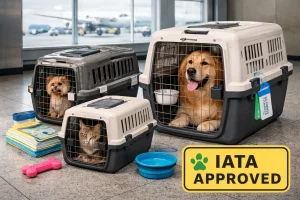
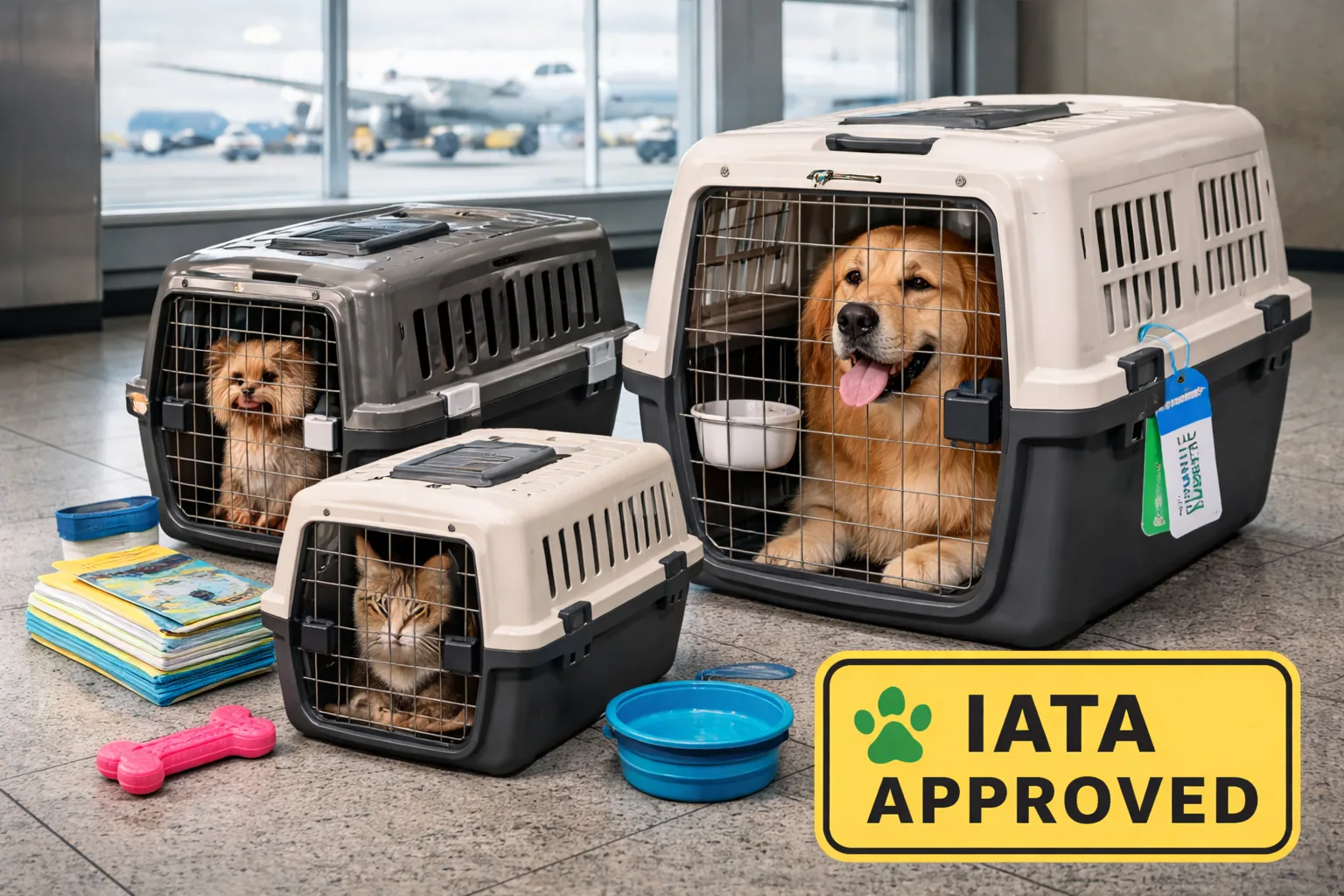
Step 2: Choose the correct crate (don’t guess)
Your crate affects both approval and cost. Airlines expect:
- Hard-sided crate (usually)
- Proper ventilation
- Secure door and locks
- Water bowl attachment
- Enough space for your pet to stand and turn
Pick the wrong size crate, and airlines might not accept it. If you go to big, cost can increase because of volumetric weight.
Step 3: Prepare documents with matching details
Before travel, cross-check:
- Owner name spelling
- Pet name spelling
- Microchip number digits
- Vaccine dates
- Health certificate dates
It sounds basic, but this is where many delays happen.
Step 4: Departure procedures in Qatar
On travel day:
- Reach earlier than normal
- Keep original documents in hand (not in checked luggage)
- Ensure crate has labels: “Live Animal”, owner details, feeding instructions
- Keep small essentials: leash, wipes, pee pads, water bottle
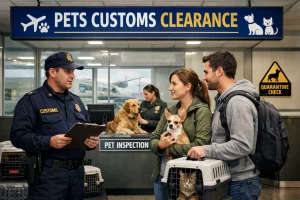
Step 5: Arrival in India (AQCS + customs release)
In India, the usual flow is:
- Document check
- AQCS inspection/verification
- Customs clearance (process depends on airport)
- Release of your pet
If your paperwork is clean, this step can be straightforward. If documents are missing or mismatched, it can take longer.

Cost factors: what changes the price the most?
Pet shipping costs vary a lot, and that’s normal. The final amount depends on several moving parts.
Here are the main cost factors:
|
Cost Factor |
Why it matters |
What you can do |
|
Baggage vs Cargo |
Cargo usually includes handling and terminal fees |
Choose baggage if eligible |
|
Crate size (volumetric weight) |
Large crate can cost more than pet’s actual weight |
Use the smallest compliant crate |
|
Pet size and breed |
Some breeds need special handling or restrictions |
Confirm early with the airline |
|
Direct vs transit flights |
Transit adds stress and handling points |
Prefer direct/shortest routing |
|
Season & temperature rules |
Peak season can increase rates |
Book early, avoid extreme heat |
|
Vet services |
Health certificate, exams, any updates |
Plan in advance to avoid rush fees |
|
Clearance support |
Agents reduce mistakes but add service fees |
Use agents for complex cases |
Quick reality check: in air cargo, airlines often bill the “chargeable weight,” which can be based on crate dimensions. That’s why the crate matters so much.
Common mistakes that delay pet clearance
If you want a smooth move, avoid these:
- Health certificate issued too early (timing matters)
- Microchip number mismatch (even one digit)
- Owner name mismatch (passport vs ticket vs certificate)
- Choosing an airport that doesn’t handle pet clearance properly
- Incorrect crate size or missing crate features
Last-minute booking (pet slots can fill fast)
FAQs: Pet Shipping Qatar to India
Prep usually takes a few weeks. Flight time is hours, but approvals and documents take time.
In many cases, yes. Forward your plans to AQCS for approval before you arrive.
Pet processing is already in place for major airports – Delhi, Mumbai, Chennai, Bengaluru, Hyderabad and Kolkata.
Yes for domestic, but on international routes many airlines restrict cabin pets. Always confirm with your airline.
Microchipping is highly recommended) for identification and documentation matching, and Additionally it can prevent a delay.
Rabies vaccination is essential. Your vet may also suggest core vaccines based, in part, on what kind of pet you have and its life stage.
Usually within a few days of travel. If it’s too old, airlines or authorities may reject it.
It depends on the case and officer checks. Clean documents reduce the risk of extra holding.
Yes, when handled professionally with the right crate, routing, and documentation.
Crate size (volumetric weight), cargo handling fees, peak season, and transit routing.
Yes at times, but there are crate and airline rules. Some airlines also mandate that you transport adult pets in their own crates.
If your case is time sensitive, for cargo or you need clearance help, an agent can reduce mistakes.