Moving a pet from Switzerland to the UK sounds straightforward until you’re actually doing it. Then you realise it’s all about tiny details—dates, chip numbers, and the exact route you book. And one small disconnect can become a missed ferry or a rebooked flight. So here goes the practical, human-style guide to shipping your pet from Switzerland to UK with all the documents, the real timeline and avoidable cost factors that spike up a quote.
Quick overview: what the UK checks first
For most dogs, cats, and ferrets, Great Britain requires:
- Microchip (ISO) and it must be readable
- Rabies vaccination (performed after microchip implant)
- A proper pet passport or AHC/GB health certificate depending on your case.
- Dogs only: recorded tapeworm treatment given 24–120 hours before entry
- Travel using an approved carrier/route when entering GB
If you follow those correctly, the entry process is usually smooth. If you don’t… it can become messy fast.
Key documents needed for pet shipping Switzerland to UK
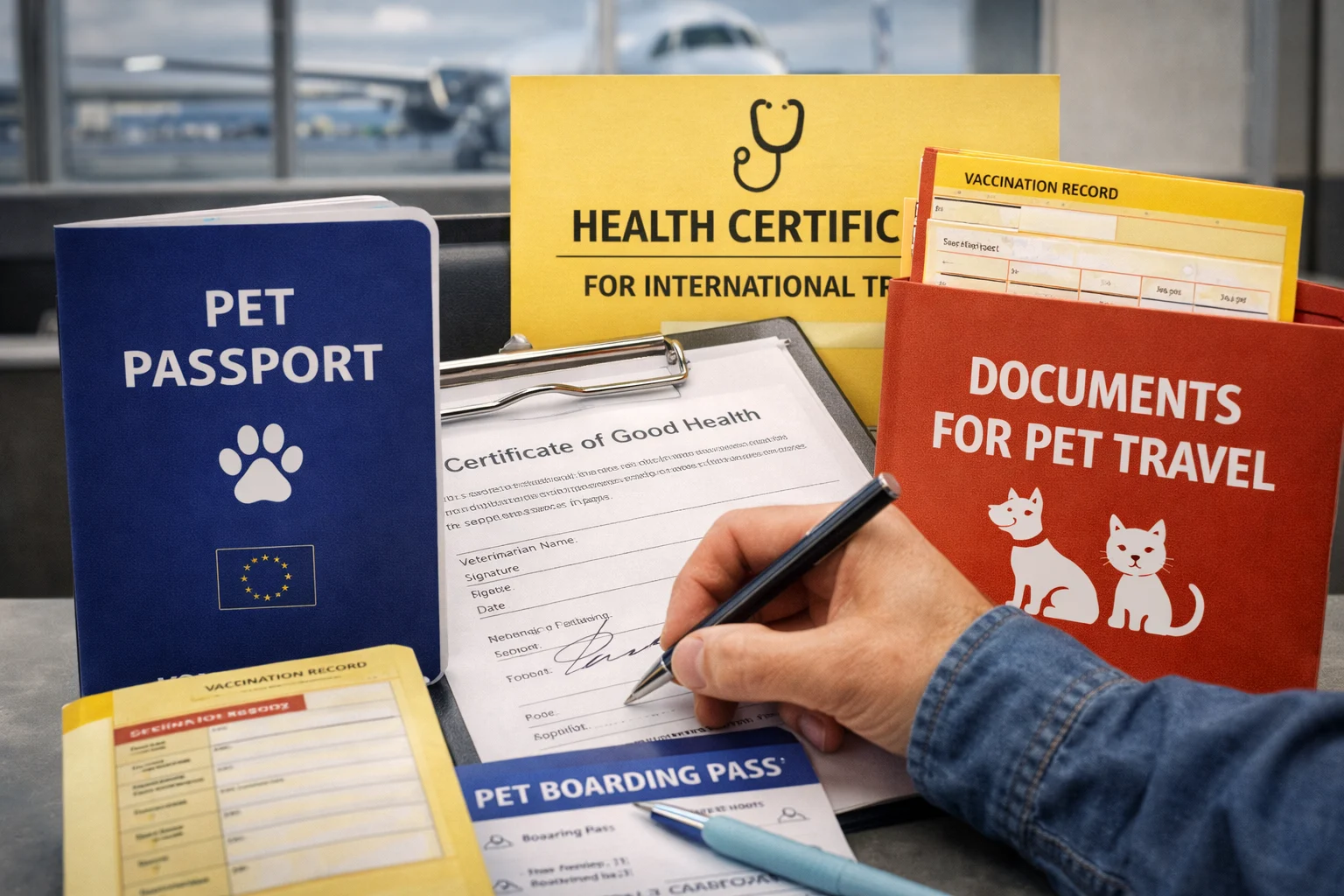
1) Microchip proof (and chip scan)
This sounds basic, but it’s the number-one thing that causes trouble. The chip number must match every paper exactly. Even a single wrong digit becomes a problem at check-in.
Tip: ask your vet to scan the chip and print the chip number on the same visit where they check the travel paperwork.
2) Rabies vaccination certificate
They also need to be microchipped before being vaccinated against rabies. If it’s your pet’s first rabies vaccination, you must also wait at least 21 full days before traveling to Great Britain.
If it’s a booster and was timely (no break in coverage) it is usually easier but double-check dates.
3) Pet travel document (passport / certificate)
For Switzerland to UK travel, you’ll need one of these (depending on the situation):
- Pet Passport, or
- Animal Health Certificate (AHC), or
- GB pet health certificate (sometimes used based on travel circumstances)
This is basically the “main file” the UK wants to see—chip number, rabies details, and vet confirmation all in one place.
4) Tapeworm treatment (dogs only)
This one is strict. If you’re shipping a dog, it must get tapeworm treatment:
- No less than 24 hours
- No more than 120 hours
before entering Great Britain.
The vet must record the product and time properly. If the timing is off, they may not allow entry.
5) Route confirmation (approved entry routes)
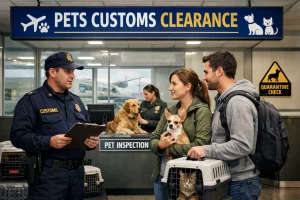
This is where many people get confused. The UK expects pets to arrive using approved routes/carriers, and this affects whether you can do road + ferry/Eurotunnel, or whether air arrival must be planned through specific channels.
So before you pay for anything, confirm your route is an accepted one for pet entry.
Timeline: when to start planning (easy plan)
Here’s a timeline that works for most owners. You can compress it if your pet is already fully compliant, but you should still plan early because bookings and documents take time.
Switzerland to UK pet shipping timeline
| When | What you do | Why it matters |
| 6–8 weeks before | Scan chip, check rabies dates | Fix problems early (chip/rabies errors are common) |
| 4–6 weeks before | Rabies shot if needed + start route planning | First rabies vaccine needs 21+ days before entry |
| 2–4 weeks before | Book approved route, confirm travel method | Route choice affects cost and entry acceptance |
| 1–2 weeks before | Crate selection + crate practice | Reduces stress and avoids refusal at check-in |
| 5–7 days before | Final document review, print copies | No last-minute surprises |
| 1–5 days before (dogs) | Tapeworm treatment within 24–120 hours | Timing must be correct |
| Travel day | Check-in / handover / entry processing | Smooth handling = calmer pet |
If you’re doing this for the first time, honestly, don’t leave it to “the last week.” That’s when mistakes happen.
Related Articles:
» Australia to New Zealand pet relocation timeline (dogs & cats)
» Sweden to Australia pet relocation rules update (dogs \& cats)
» Pet Shipping from South Korea to UK: Documents, Timeline & Cost Factors
» Moving a dog from France to South Korea: crate rules, airline routing, and arrival steps
» Pet shipping from Sweden to Oman: documents + timeline + cost factors
Best travel options: Switzerland to UK with pets
Option A: Air cargo (common for long moves)
For some pets—especially larger dogs—air cargo is often the practical option. It’s quicker, but it can be more expensive. Also, airlines have their own rules about crates, check-in hours, and paperwork formats.
Air cargo works well if:
- you want speed,
- your route is long,
- you need door-to-door handling.
Option B: Road + ferry / Eurotunnel
This can be a calmer option for pets that hate airports . You drive from Switzerland through France, then cross to Great Britain via ferry or Eurotunnel (depending on rules/routes available at the time).
Road travel works well if:
- your pet gets stressed in airports,
- you prefer staying with your pet most of the journey,
- you have flexibility with travel days.
Cost factors: what changes the quote (and why)
People always ask: “What is the cost for pet shipping from Switzerland to the UK?”
The real answer is: it depends on your pet, your route, and the service level.
Here are the cost drivers we see most often.
Pet shipping Switzerland to UK cost factors table
| Cost item | What increases cost | Notes |
| Route type | Air cargo usually higher than road | Road can still add up with hotels + ferry |
| Pet size/weight | Bigger pet = bigger crate + handling | Crate size affects freight charges a lot |
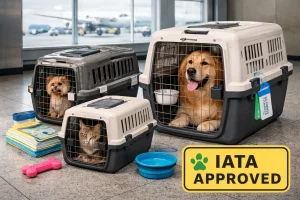
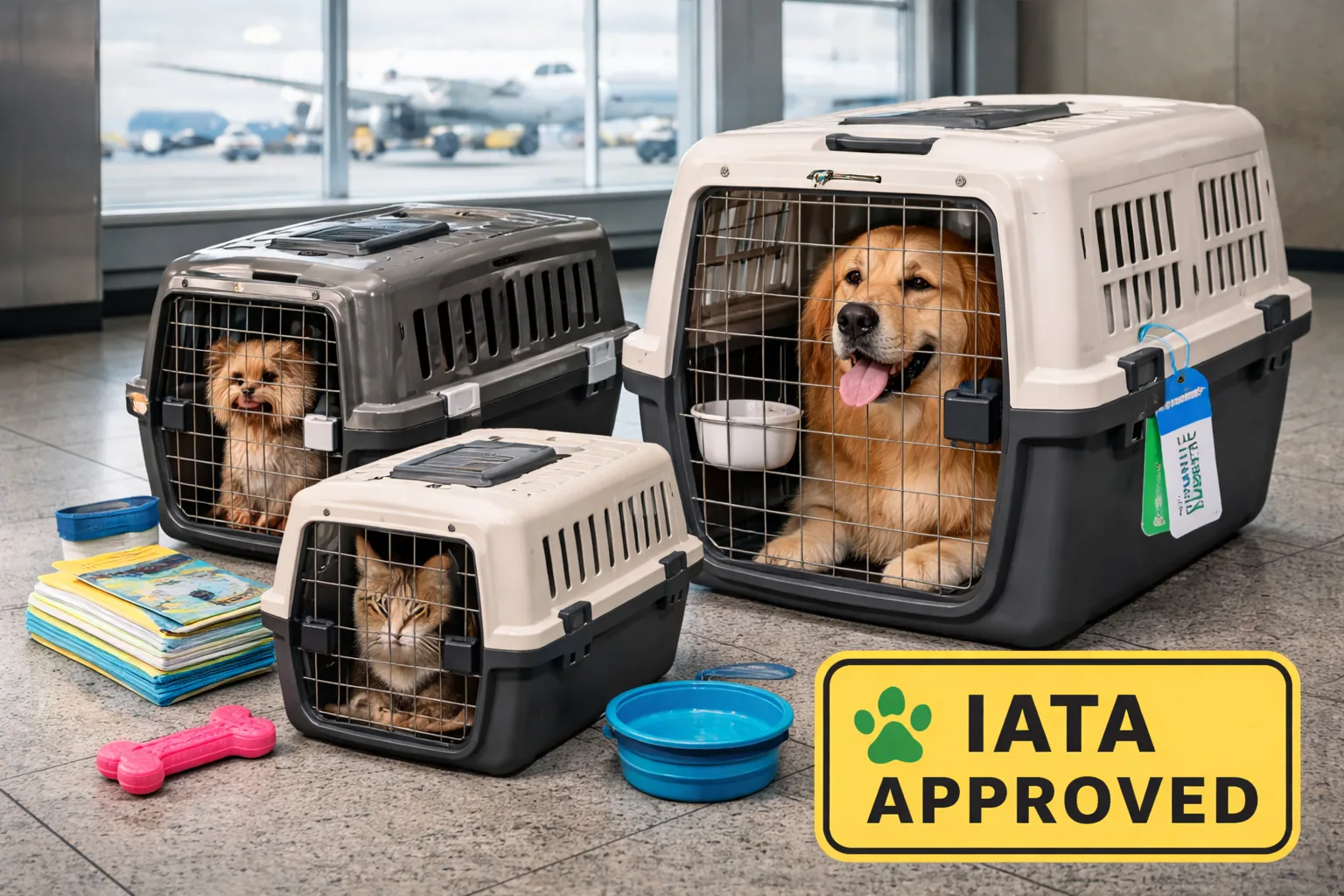
| Crate purchase | IATA crate + water bowls + bedding | Must meet airline requirements |
| Vet & paperwork | New rabies shot, health checks | Costs drop if everything is up to date |
| Tapeworm (dogs) | Vet visit + recording | Small cost, big importance |
| Door-to-door service | Pickup + delivery + handling support | More convenience, higher total |
| Seasonality | holiday periods, summer demand | Booking costs often rise |
| Rebooking risk | incorrect dates, missing records | A mistake can cost more than the paperwork |
A simple “budget feel” (planning only)
- Vet + paperwork: can be modest if your pet is already compliant, higher if you need new rabies or document re-issue
- Crate: small pets cost less, big dogs cost much more (crate size is a real price changer)
- Transport: usually the largest cost, especially for air cargo
- Extras: pickup/delivery, boarding, or assisted handling increase total
Even when owners try to do everything “cheap,” the crate and routing still decide most of the price.
What can go wrong (so you can avoid it)
Here are the most common mistakes we fix:
- Chip number mismatch
One wrong digit on a certificate causes delays. - Rabies timing miscalculated
First rabies vaccine requires 21 full days before entry. People count it wrong. - Tapeworm window missed (dogs)
Too early or too late = problem at entry. - Wrong route booked
Some routes look fine online, but don’t meet UK pet entry requirements. - Crate problems
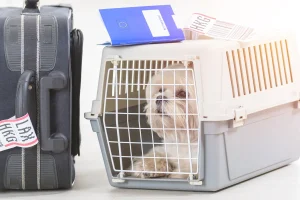
Crate too small, broken locks, or missing bowl attachments—yes, they check these things.
How Pet Shipping can help with Switzerland → UK pet relocation
If you want support, Pet Shipping can assist with:
- document checking (chip, rabies, passport/certificates)
- correct tapeworm timing plan for dogs
- crate sizing and crate setup checklist
- route planning (air cargo or road options)
- coordination so the travel day is not chaos
A calm plan = a calmer pet. It’s that simple.
FAQs: Pet shipping from Switzerland to UK
Microchipped and rabies vaccination certificate, valid pet travel document. Dogs also require treatment for tapeworms to be recorded.
At least 21 days after the first rabies vaccination (if it’s the animal’s first).
No tapeworm treatment is necessary for cats, only dogs.
Dated between 24 and 120 h prior to entry by a veterinarian.
Typically, there are a lot of pets going in in certain ways and conditions. It’s conditional on the carrier and the prescreened entry method.
Cost can vary, depending on size of pet, crate size and type of route (that’s a one-way/fresh air or round trip), as well as whether you opt for door-to-door service.
Road + ferry/Eurotunnel can sometimes work out cheaper, but it depends on length and day of travel.
Ideally 6–8 weeks before travel, especially if rabies timing is tight.
An IATA-standard crate in which your pet can stand up, turn around and lie down in comfort.
You may have delays, extra vet’s visits, rebooking charges or you may not be allowed to fly — depends on the mistake.
It’s not always required on every route, yet it is strongly advised to prevent surprises.
Yes, we are often able to schedule pick up, transport arrangement and arrival support according to your pet & route.