Door-to-Door Pet Relocation
Pet Relocation (International) – We Handle the Whole Move for Your Pet
Moving to another country is already a big job. So, when you add a dog or cat into the plan, it can feel confusing very fast. That’s why our door-to-door pet relocation service exists.
With door-to-door, you don’t have to run between vets, permits, airports, and customs offices. Instead, we manage the full process—pickup, pet travel documents, IATA crate, flight planning, export clearance, arrival customs, and delivery to your new home. You stay informed, and your pet stays safe.
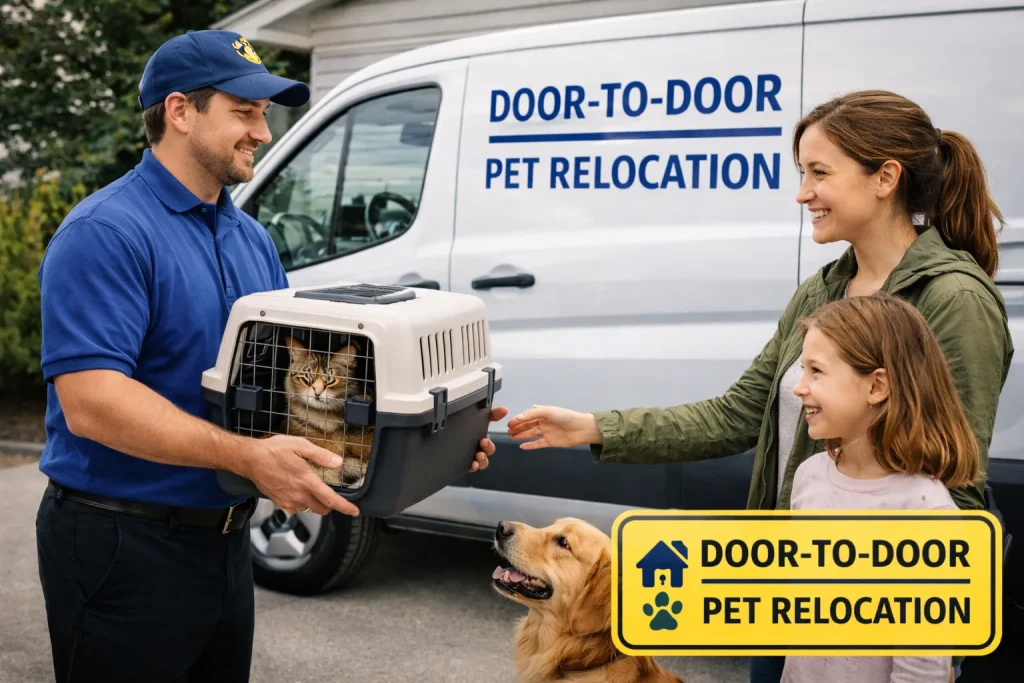
What is door-to-door pet relocation?
It means we manage pickup, documents, crate, flight planning, customs, and final delivery
Door-to-door pet relocation is the end-to-end service where we coordinate every key step from your current home to your destination address. That includes:
Home pickup (where allowed)
Document and permit support
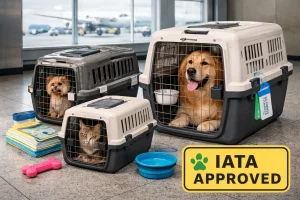
Crate supply and sizing (IATA-compliant)
Flight planning and booking coordination
Export clearance and airport handling
Arrival customs clearance (where available)
Final delivery to your new home
Best for families relocating, busy pet owners, and first-time international pet travel
Door-to-door is ideal if you:
Are relocating with family and luggage (and no extra time)
Are travelling for the first time with a pet internationally
Want reduced risk of mistakes and airport rejection
Need support for strict destinations, large breeds, or complex paperwork
Door-to-Door vs Airport-to-Airport Pet Shipping
What’s included in door-to-door
Door-to-door covers the complete journey coordination:
Pickup and local transport to departure airport
Document pack preparation and review
Airport handling support
Arrival clearance guidance/support
Delivery from arrival airport to your home
What you handle with airport-to-airport
With airport-to-airport, you generally handle:
Getting your pet to the origin airport terminal
Picking up your pet at the destination airport
Local transport to your final home
Some airport visits and payment handling
Which option is cheaper, faster, and safer (depending on route)
It depends on your route and your situation, honestly.
| Factor | Door-to-Door | Airport-to-Airport |
|---|---|---|
| Cost | Higher | Usually lower |
| Convenience | Highest | Moderate |
| Owner responsibility | Low | High |
| Risk of missed pickup windows | Lower | Higher |
| Best for | Busy families, first-timers | Experienced owners, tight budgets |
| Speed | Similar (documents decide speed) | Similar (documents decide speed) |
Important: The timeline is usually decided by documents (permits, titer tests), not by service type alone.
What’s Included in Our Door-to-Door Pet Relocation Service
Home pickup and pre-travel checks
We arrange pickup and confirm basic readiness: crate setup, document pack, and travel-day preparation.
Pet travel documents and permit support
We guide and support the full pet travel documentation process, including checklists, timelines, and reviews.
Rabies titer test guidance (FAVN) where required
If your destination requires rabies titer test (FAVN), we guide the steps and timeline so you don’t miss waiting periods.
IATA-compliant crate supply and sizing
We provide IATA-compliant pet crates and ensure sizing is correct for airline acceptance (and your pet’s comfort).
Flight planning (direct vs transit)
We plan routing based on:
Airline rules
Temperature embargo risks
Breed restrictions
Transit handling and overall safety
Export clearance and airport handling
We coordinate with airport handling partners where applicable and guide export documentation flow.
Arrival customs clearance and delivery to your new home
We support arrival clearance steps (and clearance support where available), then coordinate final delivery to your address.
Updates and support throughout the journey
You receive clear updates during key stages: pickup, terminal handover, flight status, arrival, and delivery.
How Door-to-Door Pet Relocation Works (Step-by-Step)
Step 1: Share pet details + destination + preferred travel date
You share:
Dog/cat, breed, age, weight
Microchip status
Origin and destination city/country
Preferred travel date or date range
Step 2: Get your personalised checklist and timeline
We build a route-based checklist with a timeline, so you know what happens first and what can’t be rushed.
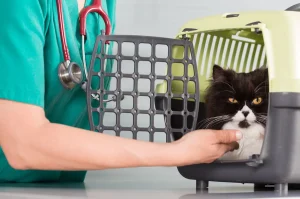
Step 3: Vet visit scheduling (microchip, vaccines, health certificate)
We guide scheduling for:
Microchip (if required)
Rabies vaccination / boosters
Fit-to-Fly health certificate timing
Parasite treatments (if required)
Step 4: Crate fitting + crate training
We confirm crate size and give crate-training tips so your pet feels more comfortable before travel.
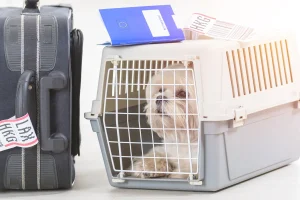
Step 5: Pickup, airport handling, and flight departure
We handle pickup and coordinate airport terminal procedures so your pet moves smoothly into the travel chain.
Step 6: Arrival inspection, customs clearance, and release
At arrival, documents are checked. If inspections are required, we guide the process so release happens faster.
Step 7: Final delivery and post-arrival guidance
We deliver your pet and share post-arrival tips (rest, food, water, and settling in).
Documents Required for Door-to-Door Pet Shipping
Microchip certificate
A scannable microchip is commonly required. Many destinations prefer ISO 11784/11785 format.
Rabies vaccination record + core vaccines
Rabies is the key. Core vaccines may vary by destination, but clean records always help.
Fit-to-Fly health certificate
A vet certificate issued within a strict validity window. If it’s outside that window, airlines/customs can reject it.
Import permit / export permit (country-based)
Some routes need permits. Some don’t. We confirm based on destination and origin rules.
Rabies titer test (FAVN) for certain destinations
Required for regulated destinations with rabies control policies and waiting periods.
Airline forms and shipper declarations
Airlines may require shipper declarations, contact details, and crate compliance notes.
Document summary table:
| Document | Required for | Timing risk |
|---|---|---|
| Microchip proof | Identity verification | Wrong number = major delay |
| Rabies certificate | Most countries | Wrong timing = rejection |
| Fit-to-Fly certificate | Airline + customs | Valid only for short window |
| Import/Export permits | Some countries | Can take weeks |
| FAVN titer test | Regulated countries | Waiting period adds months |
| Airline forms | Transport compliance | Missing signatures cause issues |
IATA Crate Requirements (Avoid Airport Rejection)
How to measure your pet for the right crate size
Your pet must be able to stand, turn, and lie down naturally. Measure:
Nose to base of tail (length)
Floor to top of head/ears (height)
Shoulder width (width)
Ventilation, locking, labels, bedding and water bowls
Most airlines require:
Ventilation on multiple sides
Secure locking door (often stronger hardware)
Absorbent bedding (not messy)
Water bowl attached
“LIVE ANIMAL” labels + arrows + contact details
Common crate mistakes that cause delays
Crate too small (most common)
Weak door/lock system
Missing labels or arrows
Wheels left attached
No absorbent bedding
Wrong crate type for airline route
Customs, Clearance & Quarantine Support
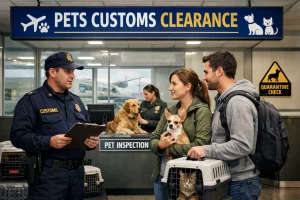
What happens at the origin airport
At origin, the airline/terminal checks:
Document pack
Crate compliance
Pet readiness
Then your pet is accepted for travel and moved into secure handling.
What happens at the destination airport
At destination, authorities may do:
Microchip scan verification
Document review (rabies, health certificate, permits)
Inspection (sometimes)
After approval, your pet is released for pickup/delivery.
Quarantine rules: when it applies and how to plan
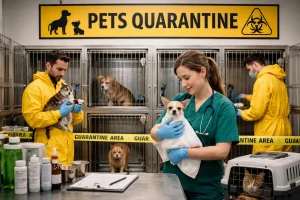
Quarantine applies only where destination rules require it, or when documentation is incomplete. If quarantine is part of the process, we plan it early so there is no panic later.
Tips to avoid storage fees and clearance delays
Ensure documents are correct before travel day
Confirm pickup/delivery timing windows
Avoid late arrival at the facility
Keep phone reachable (some airports call before release)
Door-to-Door Pet Relocation Cost (What Affects Price?)
Pet size, weight, breed and crate size
Bigger pets need bigger crates, and airline charges often depend on crate dimensions and weight.
Destination rules (permits, tests, quarantine)
Strict destinations cost more because permits, tests, and long timelines add work and fees.
Flight type (direct vs transit) and season
Direct flights can be more expensive but reduce handling and stress. Peak seasons can raise costs too.
Home pickup and delivery distance
Longer pickup/delivery distance increases local transport cost.
Additional services (boarding, urgent travel, multi-pet)
Extra services may include:
Boarding (if timing needs it)
Urgent travel planning
Multi-pet coordination and staged travel
Sample cost ranges (illustration only, USD):
| Service level | Typical suitable for | Example range (USD) |
|---|---|---|
| Door-to-door (standard routes) | Most family relocations | 2,500 – 6,500 |
| Door-to-door (large dog / long-haul) | Big breeds, limited airlines | 4,000 – 9,000 |
| Regulated destinations (permits + FAVN) | Strict rules & waiting periods | 5,000 – 12,000+ |
| Multi-pet relocations | 2+ pets | Varies by pet count |
How Long Does Door-to-Door Pet Relocation Take?
Typical timelines by destination type
Standard routes: 2–6 weeks planning
Permit destinations: 4–10 weeks
Titer test destinations: 3–7 months (due to waiting periods)
Why titer tests and permits can add weeks
FAVN tests require lab processing and, in many cases, mandatory waiting time. Permits can also take weeks depending on government processing.
What can delay door-to-door pet shipping
Missing or incorrect documents
Late booster or wrong rabies timing
Airline temperature embargoes
Limited pet cargo space during peak periods
Crate not compliant or wrong size
Special Pet Travel Cases We Handle
Brachycephalic (snub-nosed) breeds
Many airlines restrict snub-nosed breeds due to breathing risk. We plan safer timing and airline options based on real policy.
Large dogs and giant breeds
We handle large-crate requirements and early planning to secure airline space.
Senior pets
We guide calm routes and travel-day prep, and we strongly recommend vet clearance early.
Nervous pets and travel stress
Crate training and stable routines help. We share simple steps you can actually follow.
Multi-pet family relocations
We coordinate multiple pets as one move: aligned documents, sensible routing, and organised arrival delivery.
Pet Welfare & Safety During International Travel
Stress-reduction steps before pickup
Start crate training early (short daily sessions)
Keep feeding and walking routines stable
Avoid last-minute changes in food
Keep your tone calm (pets feel your stress, yes they do)
Feeding and hydration guidance
General guidance (vet advice first):
Avoid heavy meals close to travel
Offer water in the hours before pickup
Use attached bowls and correct bedding
Travel-day comfort tips
Familiar bedding (if airline allows)
A favourite toy (only if allowed)
Clear labels and emergency contact numbers
Vet advice and sedation policy (vet guidance only)
Sedation is not commonly recommended for flying due to risks at altitude. Only a vet should advise medication—never guess this.
Popular Door-to-Door Pet Relocation Routes
Door-to-door pet relocation UAE ↔ UK
Door-to-door pet shipping UAE ↔ Canada
Door-to-door pet shipping India ↔ UAE
Door-to-door pet relocation UK ↔ USA
Door-to-door pet relocation UAE ↔ Australia
FAQ : Door-to-Door Pet Relocation
Wrong document timing, missing permits, titer test waiting periods, airline embargoes, and crate non-compliance.