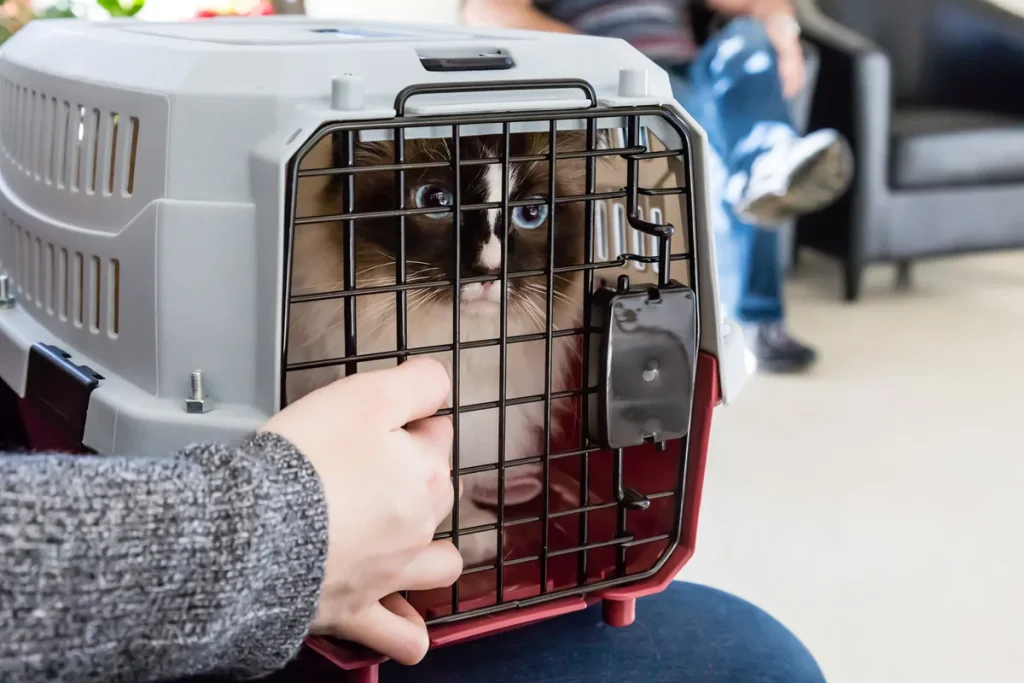
What is an IATA pet crate?
It’s a travel kennel that meets IATA Live Animals Regulations for safe air transport
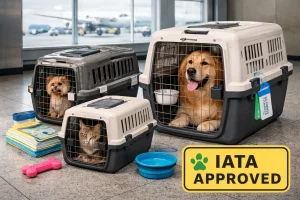
An IATA pet crate is a travel kennel that meets the standards set under IATA Live Animals Regulations (LAR) for transporting live animals by air. In simple words: it’s the crate style airlines expect for safe handling, stacking, and movement through airports.
A correct crate reduces rejection risk at airline check-in and protects your pet
When you use a correct, compliant crate:
Airline acceptance becomes smoother
Handling becomes safer during loading and unloading
Your pet stays more secure and more comfortable
And yes, it reduces the chances of last-minute “sorry, we can’t take this crate today.”
Why IATA Crate Compliance Matters (Avoid Rejection)
Airlines can refuse pets with wrong crate size or setup
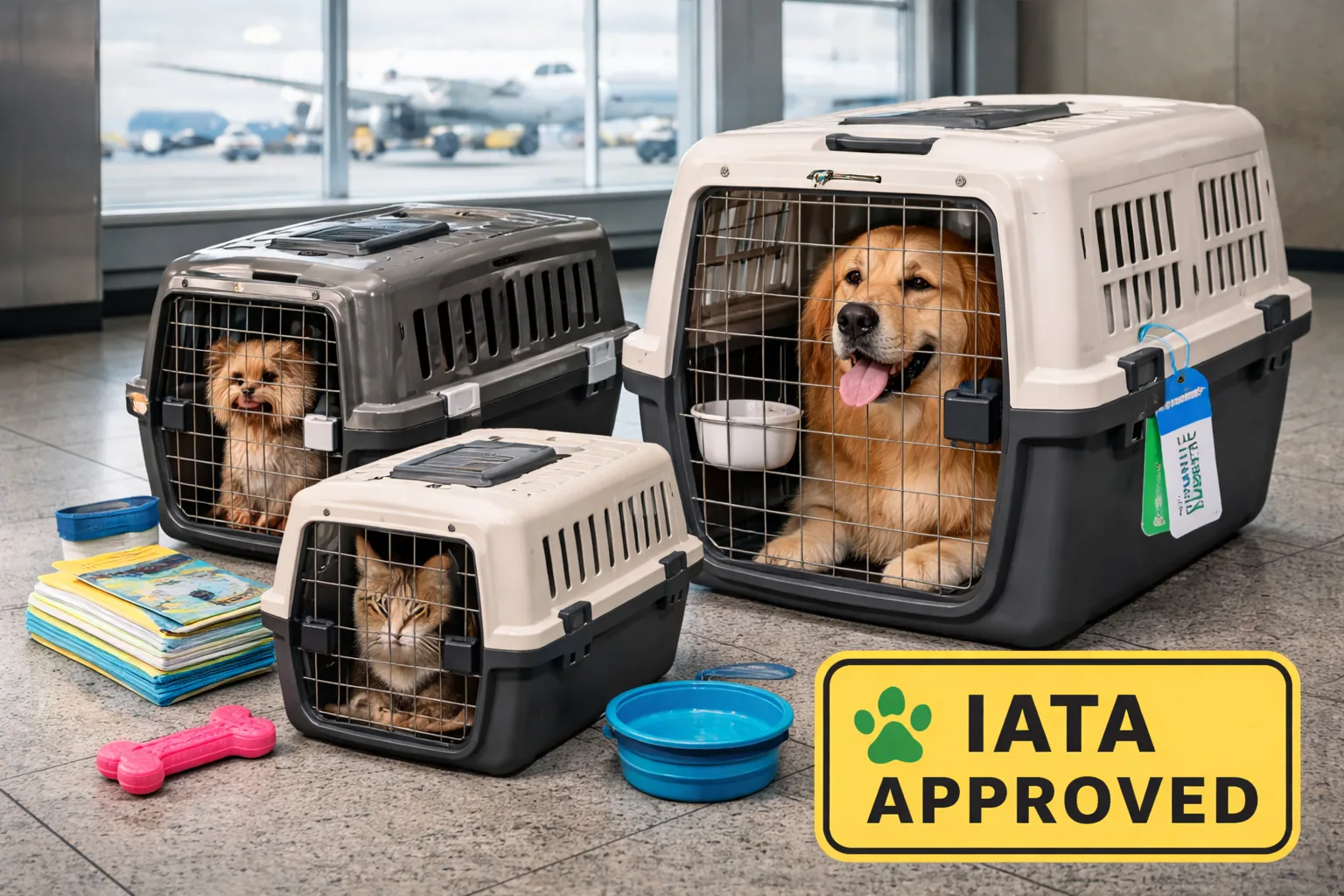
Airlines can reject if:
The crate is too small (pet can’t stand or turn)
The door/locks don’t meet rules
Ventilation is blocked
Wheels are attached or loose
So compliance is not optional, it’s required.
Correct ventilation and locks keep pets safe during handling
Airport staff move crates through conveyors, trolleys, and ramps. Strong locks, secure doors, and correct airflow protect your pet during all that movement.
Labels and documentation help faster airport processing
Proper labels and clear contact details help staff identify:
Which side is up
Who to call if needed
That it’s a live animal shipment
This can reduce confusion and speed up processing.
IATA Pet Crate Requirements (Core Rules)
Below are the most important IATA pet crate requirements airlines check.
Size and posture rules (stand, turn, lie down comfortably)
Your pet must be able to:
Stand naturally (no crouching)
Turn around fully
Lie down comfortably
Ventilation and airflow requirements
Airlines expect strong ventilation so your pet can breathe easily. Vent openings must be clear (not blocked by stickers, bowls, blankets, or tape).
Secure door and locking mechanism
The door must be strong, close properly, and lock securely. Many airlines prefer or require metal fasteners/bolts depending on crate type and route.
Strong base + leak-proof flooring and bedding
The base should be strong and stable. Add absorbent bedding to control leaks. A leaking crate is a fast way to get rejected.
Food and water bowls (accessible from outside)
Most airlines want bowls that staff can refill from the outside, without opening the crate door.
Correct labels (Live Animal, This Way Up, contact details)
Common labels include:
“LIVE ANIMAL”
“THIS WAY UP” arrows
Shipper/owner name + phone
Consignee/destination contact details (if applicable)
Core rules table (quick scan):
| Requirement | What airlines look for | Why it matters |
|---|---|---|
| Size | Stand/turn/lie down | Welfare + acceptance |
| Ventilation | Airflow on required sides | Safe breathing |
| Door & locks | Secure, strong, not flimsy | Prevent escape/injury |
| Base & bedding | Stable + leak control | Hygiene + safety |
| Bowls | Refillable from outside | Hydration support |
| Labels | Live animal + arrows + contacts | Smooth handling |
How to Measure Your Pet for the Right Crate Size
Measuring correctly saves you from rejection and saves your pet from discomfort.
Length measurement (nose to base of tail)
Measure from the tip of the nose to the base of the tail (not the end of tail hair). This gives you the core body length.
Height measurement (top of head / ears)
Measure from the floor to:
the top of the head (for normal ears), or
the top of the ears (if ears stand upright)
Width and turning space
Measure shoulder width, then make sure crate width gives enough turning space. A crate that’s too narrow is a common failure point.
Choosing the correct crate size for growing puppies
If your puppy is still growing, don’t guess. Choose based on expected adult size (breed pattern) or talk to us for sizing help. A “just okay for now” crate can be rejected on travel day if the puppy grew fast (and they do grow fast).
Simple measurement guide table:
| Measurement | How to measure | Tip |
|---|---|---|
| Length | Nose → base of tail | Pet standing naturally |
| Height | Floor → top of head/ears | Add a little comfort clearance |
| Width | Shoulder width | Crate should allow turn-around |
| Weight | Pet weight (and crate weight) | Used for airline handling/fees |
Dog Crates vs Cat Crates (What Changes?)
Dog crate sizing, strength, and breed considerations
Dogs often need:
Stronger crates (especially medium/large dogs)
Better locking systems
More careful sizing for tall ears and long legs
Also, some breeds have special airline restrictions (especially snub-nosed).
Cat crate setup and stress reduction tips
Cats travel better when you:
Keep the crate quiet and covered lightly (if allowed)
Use familiar bedding with your scent
Avoid extra items that can move around
Cats are sensitive to new smells and sudden sounds, so comfort setup matters.
When double crates are allowed (and when not)
Most airlines prefer one pet per crate. Some airlines allow two small compatible pets (same species, same size range), but rules vary widely. When in doubt, use separate crates—simpler and safer.
Best IATA Pet Crates for International Flights
Hard plastic vs heavy-duty vs aluminium (pros and cons)
You’ll see different crate styles. Each has trade-offs.
| Crate type | Pros | Cons | Best for |
|---|---|---|---|
| Hard plastic (quality brand) | Lighter, common, affordable | Not ideal for giant breeds | Small to medium pets |
| Heavy-duty plastic | Stronger, better hardware | Costs more, heavier | Medium to large dogs |
| Aluminium | Very strong, secure | Expensive, can be heavy | Large dogs, frequent travel |
Crates for large dogs and giant breeds
Large dogs need:
Correct “giant” sizing
Strong doors and locks
Extra ventilation planning
We also consider aircraft space availability, because giant crates don’t fit everywhere.
Crates for anxious pets (comfort setup)
For anxious pets, focus on:
Correct size (not too tight, not too huge)
Stable bedding
Calm crate training routine
A crate won’t fix anxiety alone, but correct setup helps a lot.
Airline-specific preferences (why “approved” still varies)
Important: “IATA compliant” is a standard, but airlines can still apply additional preferences. One airline may accept a crate that another airline rejects due to:
door type
fastener style
ventilation design
route-specific rules
So we always match the crate choice to your booking and airline.
Brachycephalic (Snub-Nosed) Breeds – Crate & Airline Rules
Why snub-nosed breeds have extra restrictions
Brachycephalic breeds (snub-nosed dogs/cats) can have breathing challenges under heat or stress. That’s why airlines often add restrictions or seasonal limits.
Larger crate sizing and ventilation planning
Many airlines prefer:
a slightly larger crate for better airflow
stronger ventilation and open space
We plan crate sizing carefully here (no shortcuts).
Safer routing and seasonal travel considerations
For snub-nosed breeds, we often recommend:
cooler travel months or cooler flight times
direct routes when possible
avoiding hot transit airports
This reduces risk and improves comfort.
IATA Crate Setup Checklist (Before You Fly)
Door bolts, cable ties, and lock checks
Ensure door closes properly and locks securely
Tighten bolts and check all fasteners
Use cable ties only if the airline allows (some do, some don’t)
Absorbent bedding and leak control
Use absorbent bedding that stays in place. Avoid loose materials that can scatter. Leak control is a big acceptance point.
Water supply for long journeys
Attach a water bowl that staff can refill from outside. For long journeys, ask airline rules about water level at acceptance.
Comfort items (what’s allowed and what isn’t)
Allowed items vary. Some airlines allow a small blanket, others restrict items that could be chewed or create choking risk. Keep it simple.
Photo check: what airline staff look for at acceptance
Before you go to the airport, do a “photo check” for yourself:
Pet standing inside crate comfortably
Door locked and secure
Labels visible
Bowls attached correctly
This small step avoids embarrassing rejection.
Pre-flight setup checklist table:
| Item | Check | Why |
|---|---|---|
| Door locks | Secure, no weak clips | Prevent escape |
| Fasteners | Tight, complete | Compliance |
| Bedding | Absorbent, stable | Leak control |
| Bowls | Attached, accessible | Hydration |
| Labels | Live Animal + arrows + contacts | Handling clarity |
| Wheels | Removed/secured | Common rejection reason |
Crate Training Tips (Reduce Travel Stress)
7–14 day training routine
A simple routine works best:
Day 1–3: crate open, treats inside, no closing door
Day 4–7: short door-close sessions (1–5 minutes)
Day 8–14: longer calm time inside, add normal daily routine around it
Feeding in the crate and positive association
Feed meals near the crate, then inside the crate. This builds a positive association: “crate = good things.”
How to reduce barking/panic during confinement
Don’t force long sessions suddenly
Reward calm behaviour, ignore noisy drama (within reason)
Keep the room quiet
Use short practice trips in the car (if your pet tolerates)
Day-of-travel tips (no last-minute surprises)
Don’t introduce new foods on travel day
Keep routines normal
Give your pet time to toilet before you leave
Arrive early (rushing makes pets anxious)
Common Reasons Pets Get Rejected Due to Crates
Crate too small or wrong height
If your pet cannot stand naturally, the airline can refuse immediately.
Inadequate ventilation or blocked sides
Blocked vents happen when people tape paperwork over vents or cover the crate too much.
Weak door or non-compliant locks
Doors that bend, snap, or use weak clips are a problem.
Wheels not removed or not secured
Wheels are a classic rejection reason. Remove them unless the airline explicitly allows them.
Missing labels or incorrect paperwork match
Missing contact info or mismatched details (pet name, microchip number) can slow acceptance or cause refusal.
IATA Pet Crate Cost (What You’re Paying For)
Crate size and material impact
Bigger and stronger crates cost more because of:
materials
reinforced doors
heavy-duty fasteners
Custom sizing for large breeds
Some large breeds need extra-large crates or special strength requirements. That can increase cost.
Delivery, assembly, and fitting support
Costs can include:
delivery to your home
assembly support
fitting and measurement guidance
Rental vs purchase (if you offer it)
If you offer rental, it can be cheaper short-term. However, purchase makes sense if you travel often or want to keep the crate for future moves.
Example crate price ranges (illustration, USD):
| Crate size/type | Typical range (USD) | Notes |
|---|---|---|
| Small (cats/small dogs) | 60 – 180 | Good quality matters |
| Medium | 120 – 280 | Strong locks recommended |
| Large | 220 – 450 | Heavy-duty often preferred |
| Giant / heavy-duty | 350 – 900+ | Route and airline dependent |
| Aluminium (premium) | 600 – 1,800+ | Strong but costly |
These are general ranges. Real pricing depends on brand, size, and destination airline expectations.
IATA Crates for Cargo vs Checked Baggage vs Cabin
Which travel method uses IATA crates
Cargo: Most commonly uses IATA-style crates
Checked baggage (AVIH): Often uses IATA-style crates, airline dependent
Cabin: Usually uses soft carriers (not hard IATA crates), and size limits apply
Airline differences in crate acceptance
Even with an IATA-style crate, airlines may require:
specific crate brands
metal nuts/bolts
extra ventilation
stronger doors for certain breeds
How to match crate choice to your booking
We match crate selection to:
pet breed and size
travel method (cargo vs baggage)
airline acceptance rules
route climate and season
Our IATA Pet Crate Service (What We Provide)
Crate sizing support using pet measurements
You send measurements (length/height/weight), and we recommend the correct crate size for your pet and route.
Supply and delivery of IATA-compliant crates
We supply IATA-compliant pet crates and can arrange delivery (where available).
Setup support, labels, and documentation checklist
We help with:
correct bowl placement
bedding guidance
label placement
checklist for acceptance day
Coordination with flight booking and acceptance rules
Crate choice should match your airline and route. We help coordinate so you don’t buy the wrong crate and regret it later.