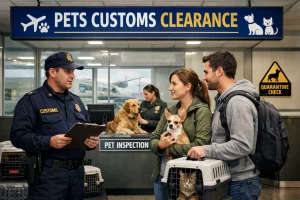
Pets Quarantine Assistance
Quarantine Assistance (Dogs & Cats) – Booking, Documents, Arrival & Release Support
If your pet is moving to a country with strict biosecurity rules, quarantine might be part of the process. And even when quarantine is “not required,” paperwork mistakes can still trigger it. That’s why our pets quarantine assistance service focuses on one main goal: reduce quarantine risk, and manage quarantine smoothly when it’s unavoidable.
We help with eligibility checks, booking guidance, document preparation, arrival coordination, and release planning—so your dog or cat stays safe, calm, and well cared for.
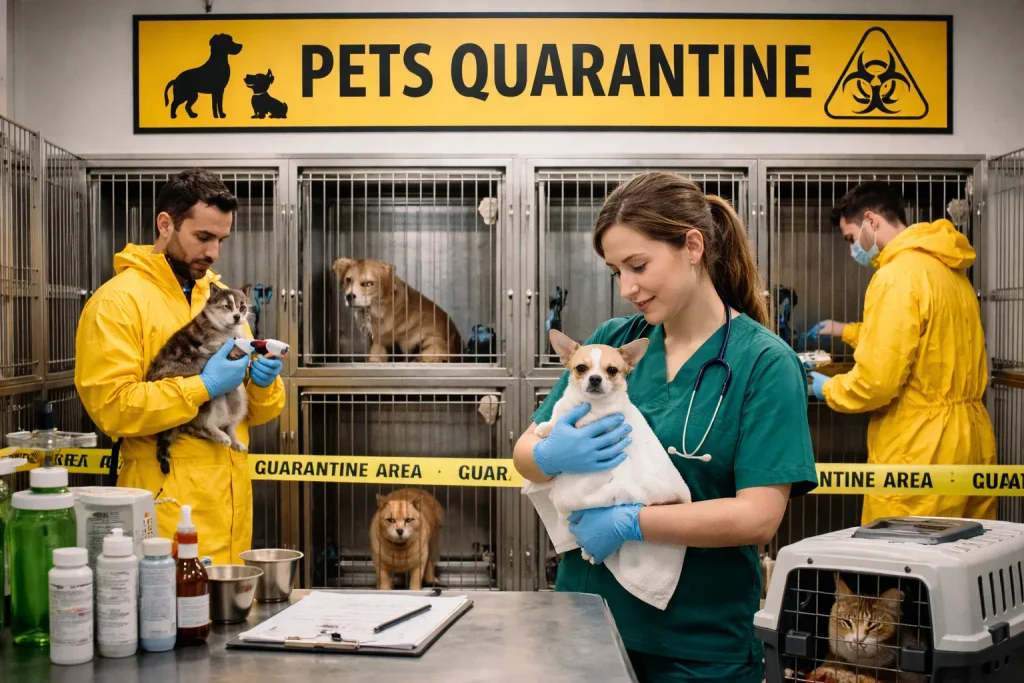
What is pet quarantine and when is it required?
Quarantine is a controlled isolation period to protect local animal health
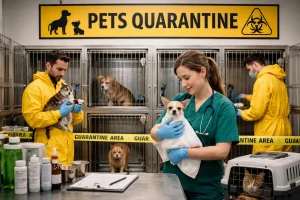
Pet quarantine is a controlled isolation period where authorities monitor pets after arrival to prevent diseases from entering the country. It’s not a “punishment.” It’s just biosecurity.
It depends on destination rules, vaccination history, and import documents
Whether your pet needs quarantine depends on:
The destination country’s import rules
Microchip and vaccination history (especially rabies)
Health certificate timing and endorsements
Import permits and approvals
So yes, two people going to the same country can have different outcomes if their paperwork and dates differ.
Pet Quarantine Rules (Dogs & Cats) – How It Works
Quarantine can be facility-based or home-based (country dependent)
Depending on the destination, quarantine may be:
Facility-based quarantine (government-approved centre)
Home quarantine (only in some countries and under conditions)
No quarantine (when all rules are met)
Some pets qualify for reduced or zero quarantine with correct prep
Some destinations offer reduced or zero quarantine when:
Vaccines are done on time
Titer tests (FAVN) are completed correctly
Waiting periods are respected
Documents are endorsed and consistent
Basically: correct preparation can save weeks.
Common triggers: missing documents, incomplete vaccines, wrong timing
Quarantine often happens when:
Rabies timing is wrong (or booster gaps exist)
Microchip number mismatches paperwork
Health certificate is expired at arrival
Permit approvals aren’t ready
Arrival happens outside intake hours
These are avoidable most of the time, but people miss small details.
Countries That Commonly Require Pet Quarantine
Strict entry destinations (high biosecurity countries)
High biosecurity countries commonly have quarantine rules or strict entry procedures. Some are known for more controlled processes and longer timelines.
Quarantine rules by country can change—confirm before booking
Rules can change due to disease outbreaks, government updates, or policy changes. So, always confirm before booking flights and making promises to your landlord (yes, it happens).
Link: destination pages for your top markets
Use internal destination hubs such as:
/destinations/australia//destinations/new-zealand//destinations/united-kingdom//destinations/canada//destinations/uae//destinations/india/
(Use your own list based on your markets.)
How Our Pet Quarantine Assistance Service Helps
Pre-travel checklist to reduce quarantine risk
We provide a route-based checklist to help reduce quarantine risk by getting documents and timing correct from the start.
Quarantine facility booking support (where applicable)
Where quarantine booking is required, we guide the booking process and timeline so your pet doesn’t arrive without a confirmed place.
Coordination for arrival, inspections, and transfer
We coordinate the arrival plan around:
Clearance hours
Inspection steps
Transfer arrangements to quarantine facility (if required)
Updates during quarantine and release planning
We keep you updated on:
Intake confirmation
Inspection outcomes (where shared)
Expected release timelines
Pickup/delivery planning for release day
Support with customs clearance and post-release delivery
Quarantine often sits close to customs clearance steps. We support the whole flow so your pet doesn’t get stuck in “waiting mode” longer than needed.
Pet Quarantine Booking (Step-by-Step)
Step 1: Confirm destination quarantine eligibility
We confirm if your pet qualifies for:
No quarantine / reduced quarantine / full quarantine
based on the destination rules and your pet’s vaccination history.
Step 2: Verify documents (microchip, rabies, health certificate)
We verify consistency across all documents:
Microchip number match
Rabies dates and booster logic
Health certificate validity window
Step 3: Book quarantine slot and confirm timelines
If a facility booking is required, we help you plan it correctly. Timing is everything here—booking late causes major stress.
Step 4: Plan flight arrival windows (clearance hours matter)
Arrival time matters because:
Quarantine intake hours can be limited
Customs/inspection offices may have cut-off times
So we plan flights around realistic processing time.
Step 5: Arrange transport to quarantine facility
We guide the transfer process after landing, including handling requirements and documentation.
Step 6: Release process and pickup/delivery after quarantine
We plan the release day, pickup window, and delivery option so your pet goes home smoothly after quarantine.
Simple planning table:
| Step | What we check | Why it matters |
|---|---|---|
| Eligibility | Rules + history | Avoid unnecessary quarantine |
| Document match | Chip + vaccines | Prevent holds and extensions |
| Booking | Slot + dates | No “arrival without space” |
| Arrival window | Office hours | Reduce storage and delays |
| Transfer | Handling plan | Safe movement to facility |
| Release | Pickup timing | Fast exit after quarantine |
Documents Required for Pet Quarantine Approval
Microchip certificate (matching the paperwork exactly)
The microchip is the identity anchor. Every paper must match it perfectly.
Rabies vaccination record + core vaccines
Rabies is usually the key requirement. Core vaccines depend on country rules.
Health certificate (Fit-to-Fly / veterinary certificate)
This must be within the required validity window at arrival and properly stamped/signed.
Import permit / export permit (where required)
Some destinations require permits before travel. If it’s missing, quarantine or refusal can happen.
Rabies titer test (FAVN) for certain destinations
Some countries use FAVN titer test + waiting periods to reduce or eliminate quarantine.
Parasite treatments (ticks/tapeworm) where required
Certain destinations require parasite treatments in a specific time window, and officers check the dates.
Airline booking / AWB details for cargo arrivals
For cargo travel, AWB (Air Waybill) details are used for terminal processing and transfer.
How Long is Quarantine for Dogs and Cats?
Typical quarantine durations (varies by destination)
Quarantine durations can range from:
0 days (no quarantine)
toa few days, weeks, or longer (strict destinations / non-compliance)
What can shorten quarantine (correct titer test + timelines)
Correct prep can reduce quarantine, especially when:
Titer test results meet requirements
Waiting periods are met
Documents are complete and endorsed
What can extend quarantine (document mismatch, failed checks)
Quarantine may be extended if:
Microchip mismatch is found
Required treatments are missing or late
Documents are incorrect or incomplete
Additional checks are required by authorities
Duration guide table (general):
| Scenario | Possible quarantine outcome |
|---|---|
| Perfect documents + eligible route | Zero or reduced quarantine |
| Permits pending / missing | Higher quarantine risk or entry issues |
| Titer test required but not done | Longer quarantine or refusal (depends on country) |
| Arrival outside intake hours | Holding/storage first, then quarantine intake |
Pet Quarantine Costs (What You Might Pay For)
Facility stay, inspection fees, handling and transfers
Costs can include:
Facility boarding fee (per day or fixed package)
Government inspection fee
Transfer/handling charges
Vet checks during quarantine (if required)
Some facilities require vet monitoring or checks. If extra treatment is needed, costs can increase.
Storage/holding charges if clearance is delayed
If customs clearance is delayed before quarantine intake, storage fees may apply at the airport terminal.
How to avoid unnecessary extra fees
Prepare documents early and correctly
Choose arrival times within processing hours
Book quarantine slots in advance (if needed)
Avoid last-minute flight changes (when possible)
Illustration cost table (USD ranges vary by country):
| Cost type | Typical range (USD) | Notes |
|---|---|---|
| Quarantine facility stay | 20 – 150+ per day | Depends on country and facility |
| Intake/inspection fees | 50 – 400+ | Government/facility fees |
| Transfer/handling | 80 – 600+ | Airport to facility |
| Vet checks/medications | Varies | Only if required |
| Storage/holding | 40 – 250+ per day | If clearance/pickup delayed |
These are example ranges only. Actual costs depend on destination rules and facility pricing.
Pet Welfare During Quarantine (Care and Comfort)
Feeding routines and medication
We guide you on:
Approved food types (where facility allows owner supply)
Medication schedules and documentation
Special diet notes (if permitted)
Exercise, enrichment and stress reduction
Facilities may provide limited exercise routines depending on biosecurity rules. We share preparation tips so your pet handles the change better.
Visiting rules (if permitted)
Some facilities allow visits, some do not. Rules depend on destination and facility policy.
What items you can send (blankets, toys—destination rules apply)
In some cases you can send:
Blanket with familiar smell
Approved toys
However, strict destinations may limit items due to contamination control, so we always check first.
Quarantine vs Isolation vs Holding (What’s the Difference?)
Quarantine = biosecurity requirement
Quarantine is a planned, rule-based biosecurity step for entry control.
Holding = short-term wait for clearance
Holding is usually a short waiting period at the airport/terminal while documents are reviewed or offices open.
Isolation = medical or compliance issue
Isolation is used when there is a health concern, illness suspicion, or a compliance issue that needs separate control.
This section matters because people search these terms and get confused (very normal).
Common Quarantine Problems (And How to Avoid Them)
Vaccinations done too late
Some destinations require waiting periods after vaccination. Doing vaccines late can trigger quarantine or travel delays.
Microchip number mismatch
Even one digit wrong can cause a hold. We always check consistency before travel.
Health certificate expires before arrival
If validity expires before landing/clearance, quarantine or delays can happen.
Import permit approval not ready
If permits are required, they must be approved before travel. No shortcuts here.
Arrival outside quarantine intake hours
Arriving late night may lead to holding/storage until the next working window.
Breed restrictions and documentation gaps
Breed rules mostly affect dogs and can trigger extra checks. Clear declarations help reduce confusion.
Transit and Connecting Flights (Quarantine Risk)
Direct routes usually reduce risk
Direct flights reduce handling steps and reduce the chance of document re-check problems.
Transits can add handling steps and paperwork checks
Transit routes can increase risk due to:
Extra handling points
Missed connections
Re-check procedures at transit hubs
Best practices for safer routing
Prefer direct flights when possible
Avoid very tight connections
Use transit airports known for pet handling
Keep all documents organised and accessible
FAQ : Pets Quarantine Assistance
Flight changes can affect intake windows and booking dates. We help you adjust the plan and minimise penalties where possible.