Moving your pet from Sweden to India can feel like a paperwork marathon. Still, once you understand how India’s animal quarantine clearance actually works, it becomes far more manageable. In this guide, I’ll break down the real-world meaning of quarantine, what triggers it, what most pets experience on arrival, and how to plan a smooth Sweden to India pet relocation for dogs and cats.
What “quarantine” really means when flying pets into India
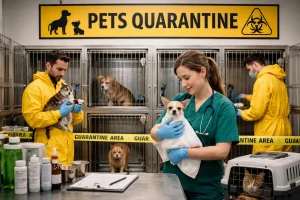
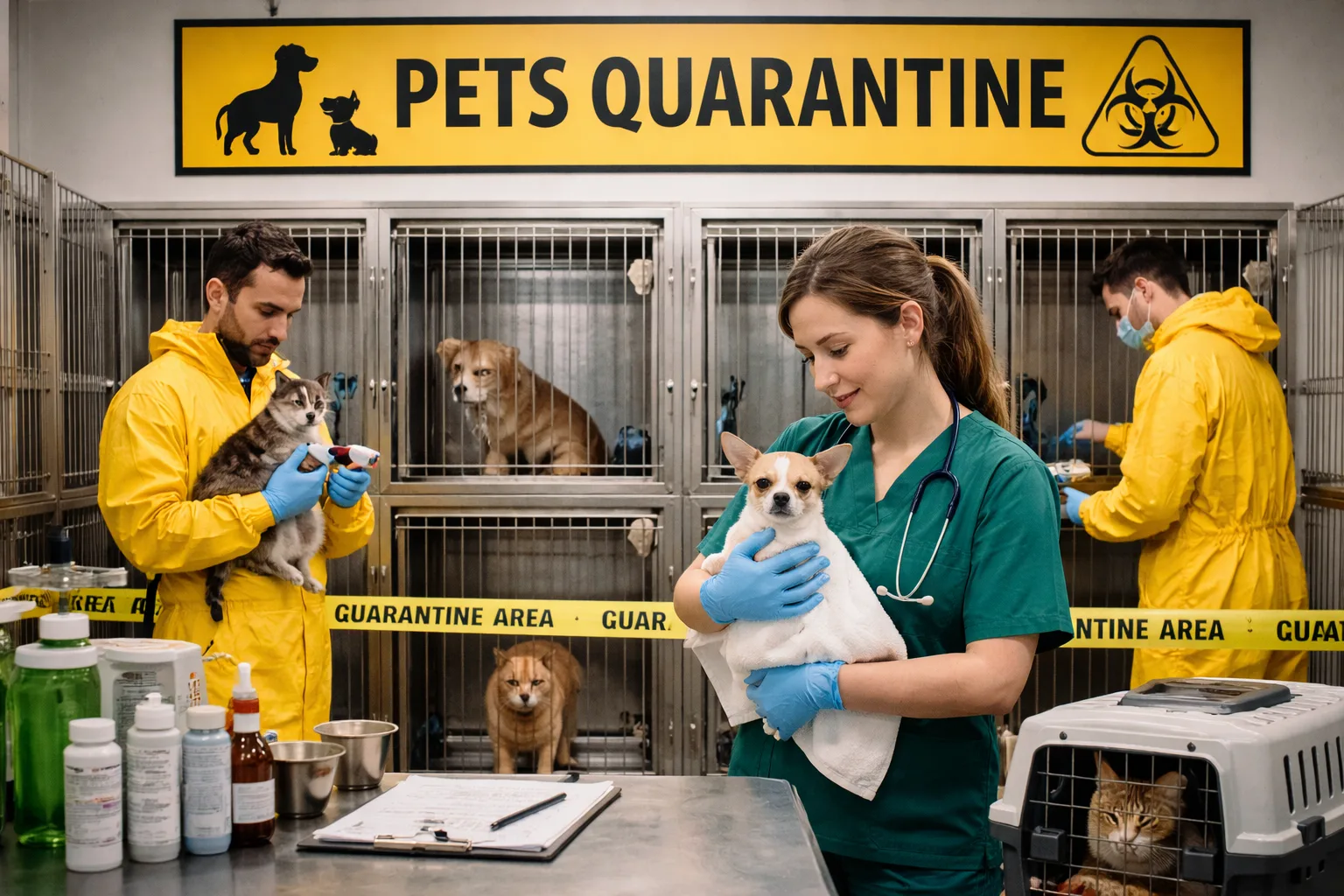
When people say “quarantine”, they often imagine weeks in a facility. In practice, India’s AQCS (Animal Quarantine & Certification Services) process is closer to an arrival inspection plus document verification. If everything is in order and your Pet looks clinically healthy, you’ll usually proceed to clearance.
However, India can quarantine animals when required, and the decision is typically based on documentation gaps, health concerns, or suspicion of disease. A DGFT Trade Notice also states that animals may be quarantined in a government quarantine station for a stipulated period where required.
For pet dogs specifically, AQCS guidance shows a clear scenario: if a dog is deemed “unfit” and is showing clinical signs, it can be quarantined for 15 days at the respective AQCS, with testing and daily records.
So, the aim is simple: arrive as a “fit” case with correct documents, and quarantine becomes unlikely.
Step 1: Confirm which import route applies (this changes your paperwork)
India’s pet import pathway commonly depends on your situation:
1) Transfer of Residence (ToR)
If you’re moving back to India after living abroad for 2+ years, you may be able to import pets under baggage rules (common approach), with supporting proofs required by AQCS procedures.
2) Short stay / not eligible for ToR
If you’re not meeting the ToR conditions, you’ll typically need DGFT import authorisation, then apply for an Advance NOC from AQCS before travel. AQCS dog guidance also tells applicants to ensure they have a valid DGFT licence before applying.
Step 2: Sweden-side prep that helps you avoid “quarantine risk” in India
India checks identity, vaccination history, and overall health status. So your Sweden-side prep matters a lot.
Microchip first, always
Your pet should be microchipped and the number must match every document. (A microchip-before-rabies sequence is a common compliance expectation in international moves.)
Rabies vaccination timing: don’t cut it too close
Sweden’s agriculture authority notes that after a primary rabies vaccination, you must wait 21 days before travel.
Even if India’s rules don’t say “21 days” in the same way, this timing helps keep your export and airline checks clean, and avoids last-minute surprises.
Step 3: The two approvals that most people confuse (DGFT vs AQCS)
Think of it like this:
- DGFT authorisation = permission to import (needed in several cases, especially when not qualifying under baggage/ToR route).
- AQCS Advance NOC = quarantine pre-clearance for the port/airport you’ll land in, obtained before travel. It must be applied for in advance (often around 7 days before travel, with some relaxations).
Also important: AQCS dog/cat guidance states airlines may refuse uplift until advance NOC is obtained.
Which Indian airports can clear pets?
AQCS operates at multiple stations (the application forms list New Delhi, Mumbai, Bangalore, Hyderabad, Chennai, Kolkata).
Separately, DGFT trade notice notes specific airports/ports for pet imports and mentions quarantine “where required”.
Practical tip: choose a landing airport with established AQCS handling and reliable airline pet support. It reduces stress on the day.
Related Articles:
» Sweden to Australia pet relocation rules update (dogs & cats)
» Pet shipping from Sweden to Oman: documents + timeline + cost factors
» Moving a dog from New Zealand to Singapore: crate rules, airline routing, and arrival steps
» Pet Shipping from South Korea to UK: Documents, Timeline & Cost Factors
» Pet shipping from South Korea to France: documents + timeline + cost factors
Documents checklist for Sweden to India pet relocation (dogs & cats)
Here’s a clean checklist you can follow:
|
Document |
Why it matters |
Notes |
|
Microchip details |
Links pet identity to paperwork |
Same number everywhere |
|
Rabies vaccination record |
Core health requirement |
Don’t do it too close to travel |
|
Pet passport / health book |
Proof of ongoing care |
Keep originals |
|
Official veterinary health certificate |
Key clearance document |
Issued by exporting country vet |
|
DGFT import authorisation (if required) |
Legal permission to import |
Needed for several scenarios |
|
AQCS Advance NOC |
Pre-import clearance |
Apply before flying |
|
Flight ticket / airway bill |
Confirms arrival details |
Listed in AQCS forms |
What happens on arrival in India (the “quarantine” moment explained)
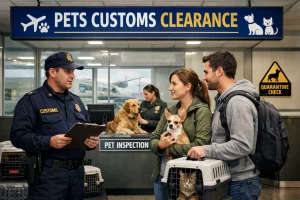
When you land, the AQCS team typically:
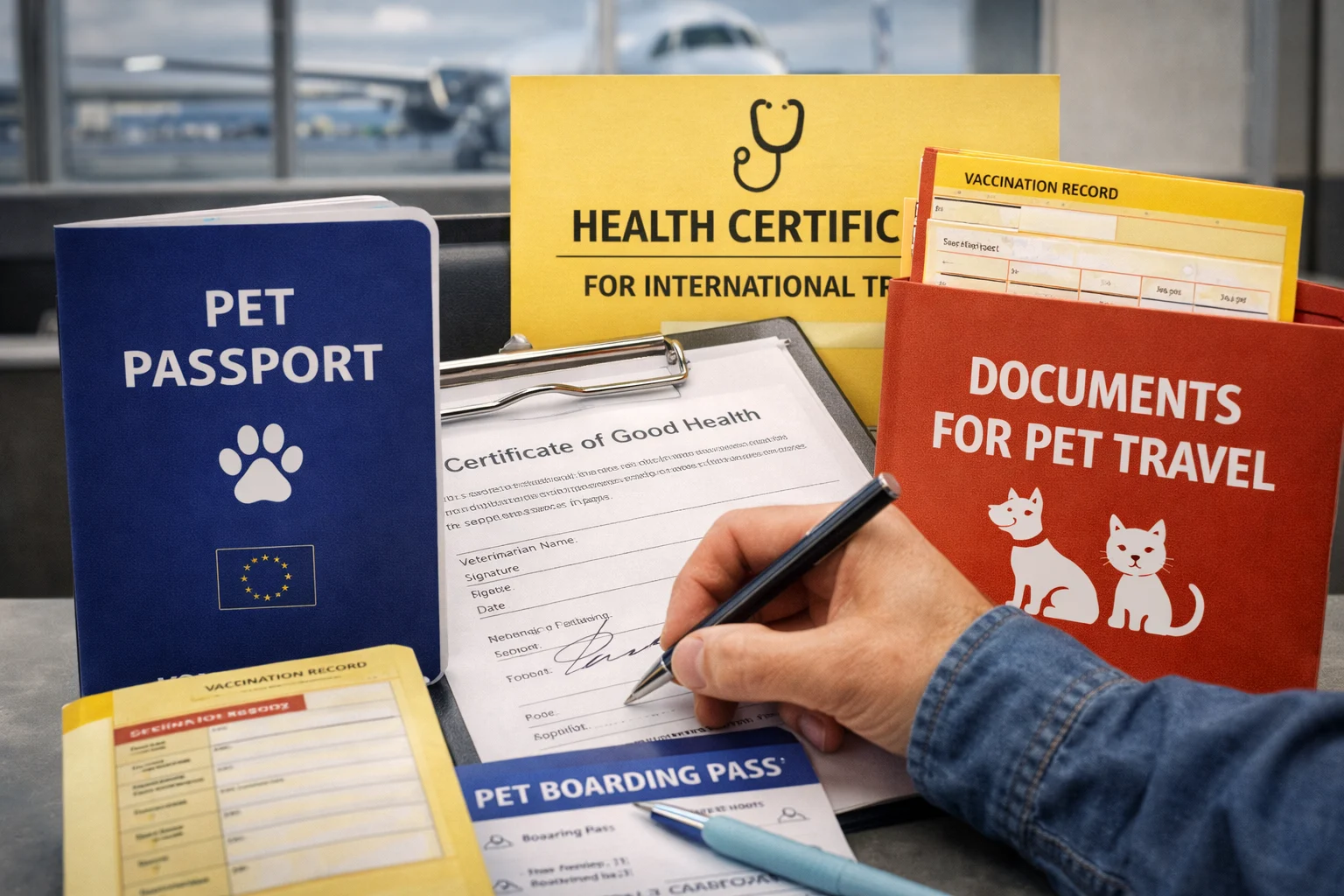
- Checks documents (NOC, health cert, vaccination proof, identity)
- Scans microchip (or matches identity details)
- Performs a basic health assessment
Fit vs Unfit: the key decision
AQCS dog guidance describes that unfit cases (especially clinical signs) may be quarantined for 15 days with testing and daily examination records.
If “fit”, the process moves toward clearance without facility quarantine.
Here’s a simple view:
|
Outcome |
What it means |
Likely next step |
|
FIT |
Documents OK + clinically healthy |
Clearance / final steps |
|
UNFIT |
Clinical signs or major issues |
Quarantine + testing (dogs: 15 days noted) |
So yes — quarantine exists, but most prepared pets won’t trigger it.
Timeline planner (realistic, low-stress)
|
When |
What to do |
|
6–8 weeks before |
Vet check, microchip verification, rabies review |
|
4–6 weeks before |
Confirm route (ToR vs DGFT), shortlist airline |
|
2–3 weeks before |
Gather certificates, finalise flight plan |
|
~7 working days before travel |
Apply for AQCS Advance NOC (and ensure DGFT docs if needed) |
|
Travel week |
Final vet checks, crate comfort, copies of all documents |
|
Arrival day |
AQCS check + clearance; quarantine only if required |
Common mistakes that cause delays (and make quarantine more likely)
- Missing or late Advance NOC (some airlines won’t uplift without it)
- Rabies timing miscalculated (Sweden export timing matters)
- Microchip number mismatch across papers
- Landing at an airport not aligned with your AQCS plan
- Health certificate not detailed enough (or not properly endorsed)
Quick comfort tips for dogs & cats (small things, huge difference)
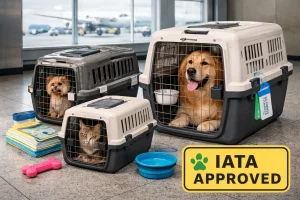
- Use an IATA -compliant crate and let your pet practise in it daily.
- Freeze a small water dish (reduces spills during transit).
- Put a worn T-shirt inside the crate (smells like home).
- Keep your tone calm on travel day — pets read your mood, honestly.
FAQs: Sweden to India Pet Relocation & Quarantine
Not always. Quarantine can apply “where required”, and pets may be quarantined if issues are found.
If a dog is assessed as “unfit” or shows clinical signs, AQCS guidance indicates quarantine (15 days) and testing may be done.
Cats also go through post-arrival examinations. If documentation or health concerns appear, the clearance can be delayed and further steps may be required.
It’s pre-import clearance from India’s quarantine office for your port/airport and is applied for before travel.
Guidance commonly references about 7 days before travel (with limited relaxations).
Not in every case, but DGFT authorisation applies in multiple scenarios (especially outside transfer-of-residence baggage route).
AQCS dog/cat guidance indicates airlines may not lift pets until the advance NOC is obtained.
The AQCS forms lists stations like Chennai, Mumbai, New Delhi, Bangalore, Hyderabad and Kolkata.
After a primary rabies vaccination, Sweden notes you must wait 21 days before travel.
Yes—microchip identification is a standard expectation for international movements and helps match your pet to the paperwork.
It varies by airport, flight timing, and document readiness. With correct documents, it’s usually an inspection-and-clearance flow rather than long holding.
Get the DGFT/AQCS path right, apply for Advance NOC on time, ensure rabies timing is correct, and travel with a clean, complete document set.