Relocating a pet internationally is not just “book a flight and go.” Move a dog or cat from South Africa to India and you’re dealing with timelines, vet paperwork, airline regulations, crate specifications and arrival clearance scrutinies. The good news: If you do it in the right order, it’s eminently achievable — and your pet remains cool as a cucumber, safe and ready for his new home.
This guide covers South Africa to India pet relocation in a clear step-by-step format, including the most searched questions owners ask when planning pet shipping to India.
Step 1: Plan early (because paperwork never moves fast)
Begin planning six to 10 weeks before your flight. Yes, you can do it more quickly at moments but the rush usually creates trouble the wrong documents; fewer flights; higher fees; and stress on your pet.
A realistic timeline helps you handle:
- Vet appointments and vaccinations
- Microchip confirmation
- Crate training
- Airline approval and booking
- India import clearance (AQCS NOC process)
If you’re relocating during peak travel months, start even earlier. It saves headaches, honestly.
Step 2: Choose the right arrival airport in India
Where you enter is important because pet clearance is by Airport (with quarantine /inspection jurisdiction). So, before you book flights, verify where your pet will enter and how its clearance will be handled there.
Tip: Go for the simplest route possible. Fewer transits = lower risk of delays, mishandling, or missed connections.
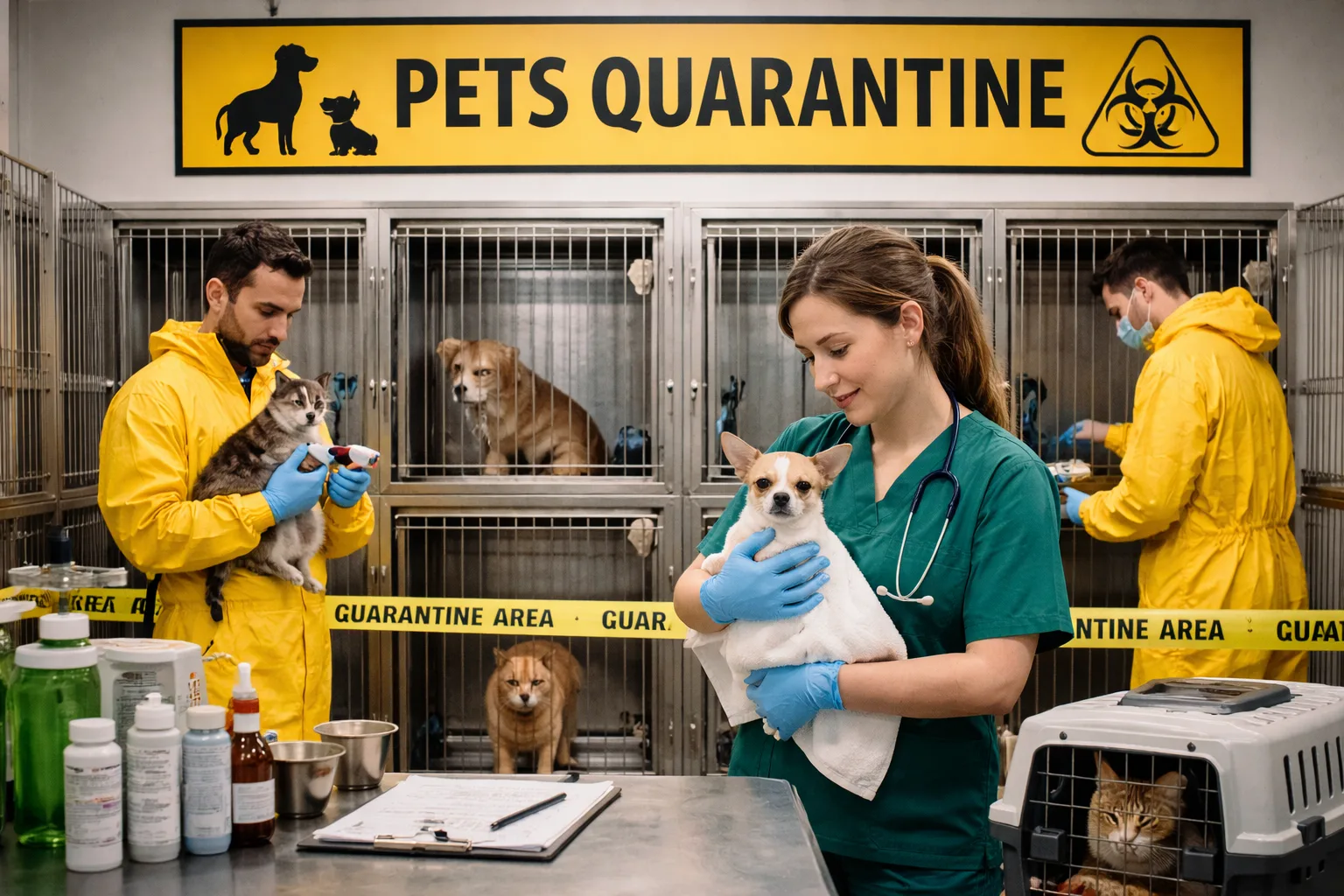
Step 3: Microchip + vaccinations (build your pet’s “identity file”)
The most common mistake people make is thinking vaccines are “done” without checking dates and proof. For international travel, you want your pet’s records neat and easy to read.
Your checklist here should include:
- Microchip (make sure it scans properly)
- Rabies vaccination (updated and clearly recorded)
- Routine vaccines for dogs/cats as advised by your vet
Keep it simple: Make one folder (printed + digital) with:
- Microchip number page
- Vaccination pages
- Vet receipts and visit notes
- Any lab reports (if your vet gives them)
Airlines and quarantine officers love clean paperwork. Messy papers cause delays.
Step 4: Understand India’s pet import clearance (AQCS NOC)
India typically requires import clearance through AQCS (Animal Quarantine & Certification Service). In many cases, owners arrange the NOC / advance NOC process before travel, and originals get checked after arrival.
This is exactly where many relocations get stuck—because people book flights first and worry about clearance later. Flip that approach. Plan the clearance early, then book confidently.
Step 5: Vet health certificate (timing is everything)
Close to departure, you’ll need a formal Veterinary Health Certificate stating your pet is healthy and fit to travel.
Your health certificate should clearly mention:
- Pet details + microchip number
- Rabies vaccination details
- “Fit to fly” statement
- No signs of infectious/contagious disease
- Owner name + destination country
Important: The certificate is usually required within a short time window before travel. So don’t do this too early and find that it has expired by the time of your flight.
Step 6: Decide how your pet will travel (cabin / baggage / cargo)
The method of travel is going to depend on your pet’s size, the airline policy and your route.
Typically:
- In-cabin: only for small pets, with strict weight + carrier size rules
- Checked baggage: sometimes allowed for medium pets on certain airlines
- Manifest cargo: common for larger dogs and some routes
If your pet is large, cargo can actually be safer and more controlled—when done correctly. What matters is airline approval, correct crate, and proper handling.
Pro tip: Confirm pet acceptance in writing (email confirmation helps). Don’t rely on “the agent said it’s okay.”
Related Articles:
» Moving a dog from France to South Korea: crate rules, airline routing, and arrival steps
» Pet shipping from Thailand to Bahrain: documents, timeline \& cost factors
» Australia to New Zealand pet relocation timeline (dogs \& cats)
» Moving a dog from New Zealand to Singapore: crate rules, airline routing, and arrival steps
» Pet Shipping from South Korea to UK: Documents, Timeline & Cost Factors
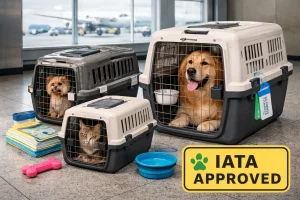
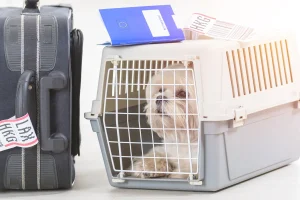
Step 7: Crate requirements + crate training (don’t skip this)
Your crate is not just a box. It’s your pet’s “safe room” for the journey.
A compliant crate should allow your pet to:
- Stand naturally (not crouching)
- Turn around comfortably
- Lie down fully stretched
Also ensure:
- Strong ventilation on multiple sides
- Leak-proof base
- Absorbent bedding
- Secure door and fasteners
- Proper “Live Animal” labels if the airline asks
Now, the big truth: crate training reduces travel stress more than anything else.
Start early—feed meals near the crate, let them sleep inside, and keep it a calm place. A pet that trusts the crate travels better.
Step 8: Flight week checklist (the practical stuff people forget)
In the last 5–7 days before flying:
- Recheck all documents (names, dates, microchip numbers)
- Print extra copies (at least 2–3 sets)
- Confirm check-in rules for pets (some require earlier arrival)
- Confirm transit requirements if you have a stopover
On travel day:
- Light meal a few hours before check-in
- Water offered regularly (don’t overdo right before handover)
- Attach a small pouch to the crate with copies of key documents
- Add a worn t-shirt/cloth with your scent (comfort helps)
Try to stay calm yourself too. Pets read your energy quickly.

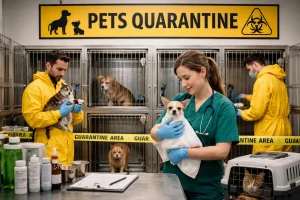
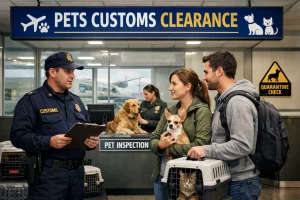
Step 9: Arrival in India: inspection + clearance process
After landing, your pet goes through verification and inspection. Officers may review:
- Health certificate
- Vaccination record
- NOC/clearance paperwork
- Microchip confirmation (sometimes)
Most healthy pets with correct documents are clear without drama. Still, keep a buffer in your schedule. Don’t schedule a wedding or any kind of large to-do on the same day you’re scheduled to arrive. Give yourself breathing room.
Step 10: First week after arrival (help your pet settle)
Relocation stress often shows up after the journey. So the first week matters.
For dogs:
- Short walks, same routine daily
- Avoid too many visitors at once
- Keep feeding times consistent
For cats:
- Quiet room setup for 2–3 days
- Litter + food + water in fixed places
- Gradual introduction to new rooms
Some pets eat less for a day or two. That can be normal. However, if your pet refuses food for long, vomits repeatedly, or seems very weak—visit a local vet quickly.
Quick Tables (easy for readers)
Suggested timeline for South Africa → India pet relocation
|
Time before travel |
What to do |
|
8–10 weeks |
Decide route, shortlist airlines, buy crate, start crate training |
|
6–8 weeks |
Vet visit, microchip scan confirmation, update vaccinations |
|
2–4 weeks |
Prepare AQCS NOC documents + flight planning |
|
7–10 days |
Final vet check + official health certificate |
|
Travel day |
Early check-in, calm handover, document copies ready |
|
Arrival week |
Settling routine, local vet registration |
Basic document checklist (dogs & cats)
|
Document |
Why it’s needed |
|
AQCS NOC / clearance paperwork |
Required for entry clearance |
|
Vaccination record |
Rabies + routine vaccines proof |
|
Vet health certificate |
Fit-to-fly + health confirmation |
|
Microchip details |
Confirms identity with records |
|
Flight booking/AWB |
Needed for airline and handling |
|
Crate compliance |
Helps avoid airline refusal |
FAQs : South Africa to India Pet Relocation
Usually 6–10 weeks if you plan properly.
Often yes, depending on airline and clearance process.
In most cases, India import clearance is handled through AQCS procedures.
Microchips are strongly recommended and commonly required for smooth verification.
Not always. Quarantine depends on document clarity and health assessment.
Sometimes, but only if size/compatibility rules are met and airline permits it.
Avoid sedation unless your vet specifically advises it.
Large enough for stand-turn-lie down comfortably, with strong ventilation and secure closure.
Wrong crate, missing documents, mismatch in dates/microchip number, or airline not properly confirmed.
Costs vary widely based on size, crate, airline/cargo route, and handling.
If you have transits, a large pet, or tight timeline—yes, a pet shipping company can reduce risk.
Sometimes, if your cat fits airline size/weight limits.