Having a dog in your hands when you move is one part very emotional, and also all the technicalities of actually moving this furry creature from Saudi Arabia to South Korea requires more than some ticket booking and crate buying. Care, export approval, airline checks and IATA crate rules apply as do rabies documents, microchip details, transit planning (if applicable), and inspection on arrival in Korea. So as a pet owner you should see it more like a controlled relocation project than an emergency travel chore, therefore start early.
For most families, the longest journey does not lie ahead of them. Rather, it is timing, documentation and airline routing. For example, a missing test result, an incorrect crate size, or an unclear transit plan can all cause your dog to be delayed at the airport . However, dog shipping from Saudi Arabia to South Korea can be stress-free, efficient and safe if we plan well.
The following explains the key points, including dog crate regulations, flight routes for dogs, required Saudi export papers and what happens once your dog is in South Korea.
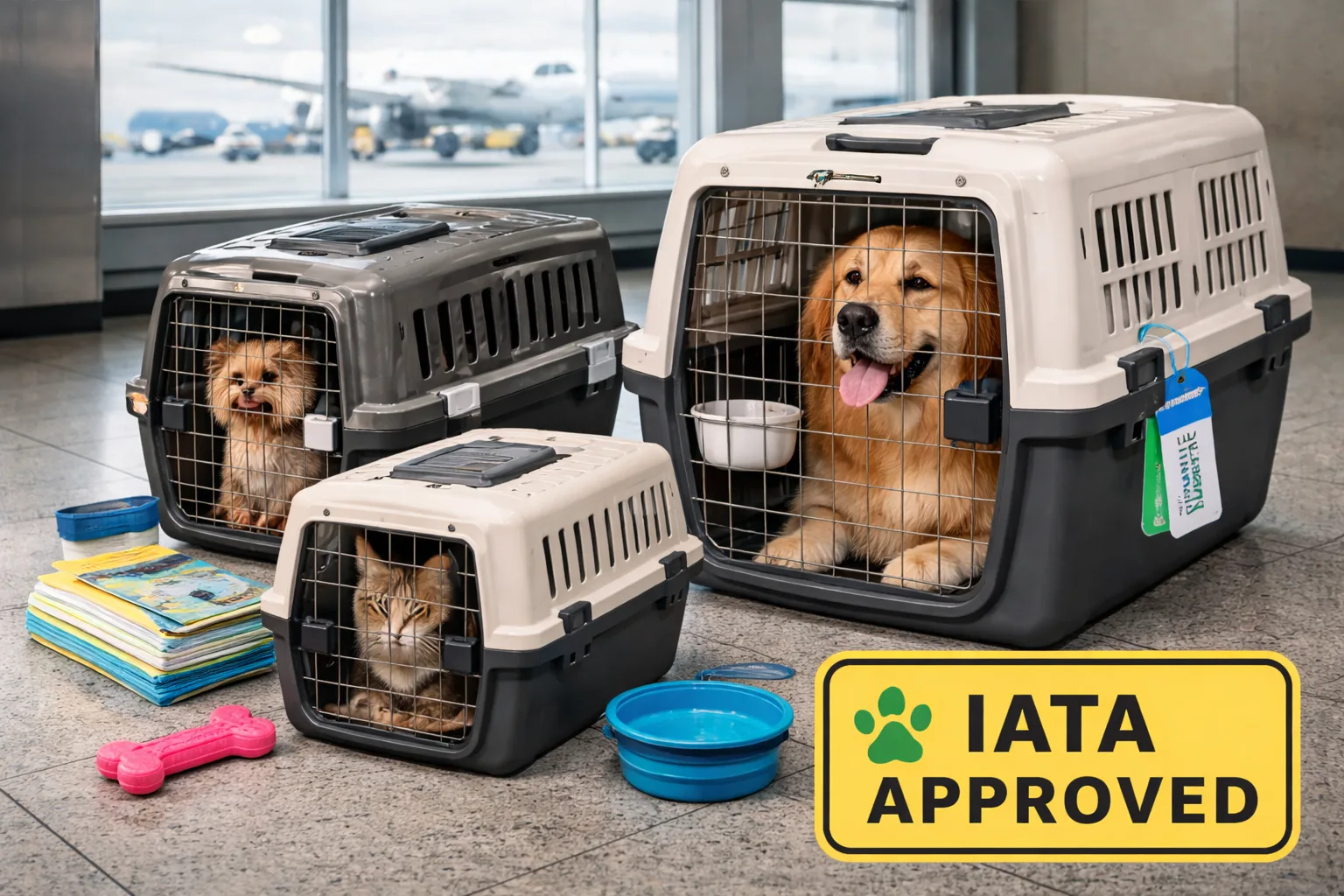
Why Dog Relocation from Saudi Arabia to South Korea Needs Careful Planning
Saudi Arabia and South Korea follow official animal movement procedures. Saudi authorities require export preparation, while Korea checks import documents and animal health conditions on arrival. Saudi export guidance asks owners to submit export applications through the Anaam platform and attach documents such as the import permit, destination requirements, owner ID or passport, accredited veterinary health certificate, vaccination booklet, and microchip details. The Saudi export permission period is listed as 30 days.
In South Korea too, there are such harsh entry checks for dogs. Microchip, vaccination rabies, test antibodies regarding rabies and health certificate are common requirements. You should verify the most current Korean Animal and Plant Quarantine Agency procedure prior to travel since rules can vary with age, breed, airline and well being.
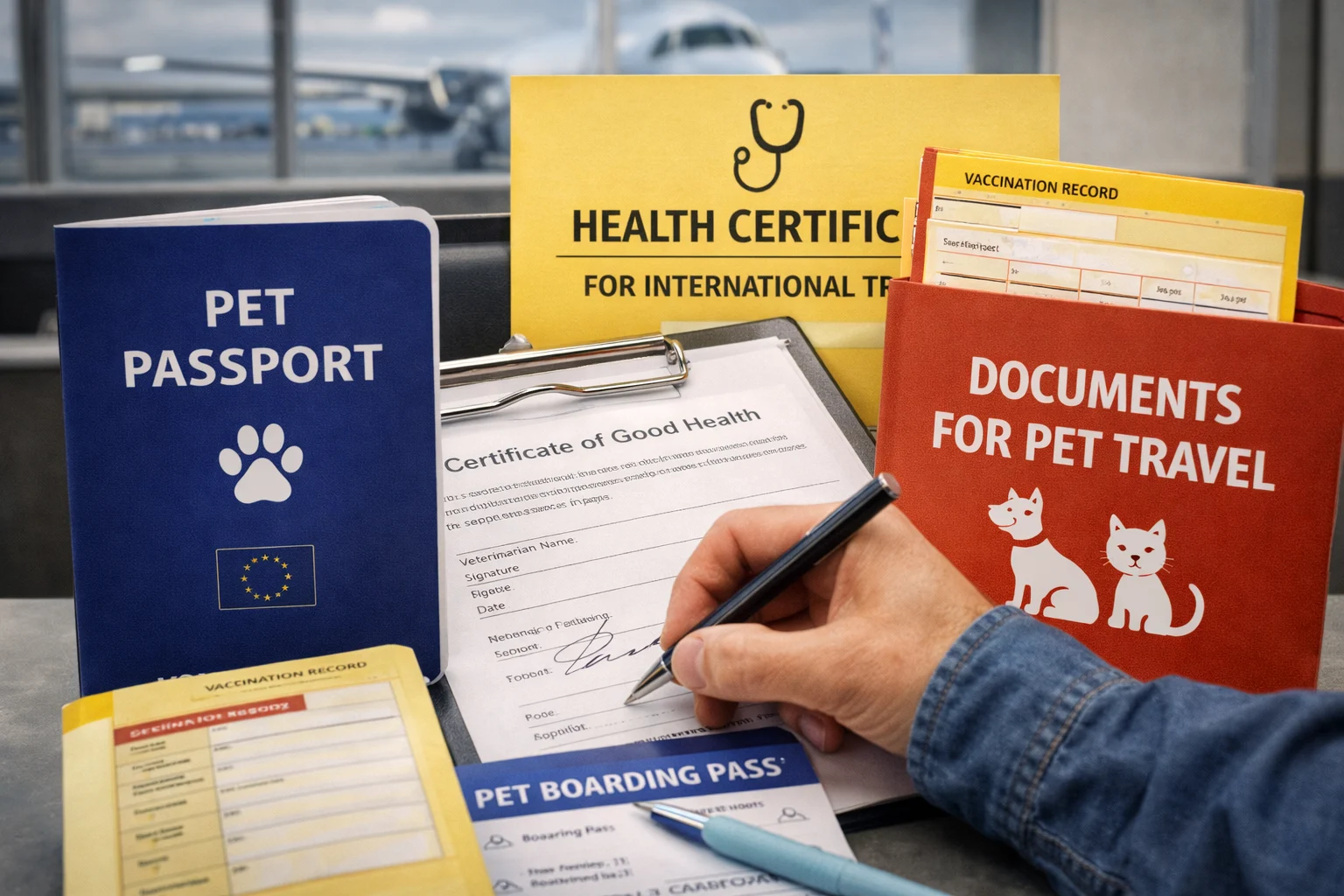
Main Documents Required for Moving a Dog to South Korea
Before booking a flight, prepare the documents in the right order. Generally, pet owners need:
|
Requirement |
Why It Matters |
Practical Tip |
|
Microchip |
Confirms your dog’s identity |
Use ISO-compatible microchip where possible |
|
Rabies vaccination |
Shows protection against rabies |
Ensure vaccine is valid at travel time |
|
Rabies antibody test |
Often needed for Korean entry |
Result should match microchip number |
|
Veterinary health certificate |
Confirms fitness to travel |
Usually issued close to departure |
|
Saudi export permit |
Required to leave Saudi Arabia |
Apply through the official process |
|
Airline booking confirmation |
Confirms live animal acceptance |
Get written confirmation, not verbal only |
|
Owner passport / ID copy |
Links pet movement to owner |
Keep digital and printed copies |
Saudi guidance also mentions the need for an accredited veterinary health certificate showing clinical and laboratory examination, disease-free status, vaccination booklet, and electronic chip number.
Microchip and Rabies Preparation
The microchip should be readable and should appear exactly the same on every document. Even one digit error can create trouble. Therefore, ask your vet to scan the chip before blood testing, before the health certificate, and again before travel.
Next, check the rabies vaccination. Your dog should have a valid rabies vaccine, and the vaccine details must appear in the vaccination booklet or pet passport. Saudi export rules specifically state that the rabies vaccination should be valid.
For South Korea, dogs aged 90 days or older are commonly expected to meet rabies antibody testing rules. Many current pet relocation guides note that Korea generally requires a rabies neutralising antibody titre of at least 0.5 IU/ml, with results linked to the microchip number. Because laboratory timing can vary, start this step early rather than close to departure.
Crate Rules for Dogs Travelling by Air
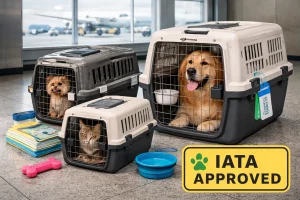
The crate is not only a box. Let’s say it is your dog’s travel cabin; during handling, loading, transit and at her arrival. IATA Live Animals Regulations represents one of the fundamental standards for airline transportation of live animals. The 2026 edition of the Live Animals Regulations, issued by IATA as the global standard price for transporting live animals in commercial air transport roles, took effect as of January 1, 2026.
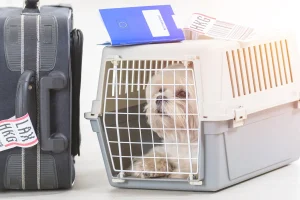
As per IATA container guidance, an animal must be able to stand, sit erect within the container and lie in a normal position as well as turn around normally while standing. Internal crate size is based on dog measurements, and for brachycephalic breeds (snub-nosed) you need 10% more space in the crate.
IATA-Style Crate Sizing Formula
|
Measurement |
Meaning |
Use in Crate Size |
|
A |
Nose tip to base of tail |
Length calculation |
|
B |
Ground to elbow |
Half added to length |
|
C |
Shoulder width / widest point |
Width calculation |
|
D |
Floor to head or ear tip |
Height calculation |
|
Bedding |
Absorbent base layer |
Added to height |
Minimum internal crate size for one dog:
Length = A + ½ B
Width = C × 2
Height = D + bedding
IATA lists this formula in its container guidance.
Crate Construction: What Airlines Check
A compliant dog travel crate should be strong, secure, ventilated, and escape-resistant. IATA container guidance says the interior must be smooth, with no sharp protrusions, and openings must be nose-and-paw proof. Dog openings should be no larger than 25 mm × 25 mm, although smaller openings may be needed for safety. If the crate has wheels, they must be removed or made inoperable.
A good crate should include:
- Strong rigid plastic, wood, plywood, fibreglass, or approved material
- Metal bolts securing the top and bottom sections
- A strong metal door with working locking pins
- Ventilation on all four sides
- Leak-proof solid floor
- Absorbent bedding
- Water bowl fixed inside with outside refill access
- “Live Animals” and “This Way Up” labels
- Dog’s name and owner contact details
IATA guidance also says ventilation must cover at least 16% of the total surface area of the four sides, with ventilation on all four sides of the container.
One Dog or Two Dogs in the Same Crate?
In the end, the most successful international relocations see each dog traveling individually. IATA only permits transporting a maximum of two compatible adult animals of similar size (14 kg each max) in the same container if they are used to living together! Animals above 14 kg must still be created, but separately from one another.
To avoid any complications with the airlines, when transporting dogs to South Korea use one crate per dog unless specifically noted otherwise. Traveling can cause friendly dogs to panic; separating them reduces the risk of injury.
Airline Routing from Saudi Arabia to South Korea
There may not always be a simple direct flight option suitable for live animals. Therefore, route planning matters. Your dog may travel as manifest cargo, excess baggage, or in some rare cases cabin baggage, depending on size, airline policy, aircraft type, and season.
For Saudi Arabia to South Korea, routing may include airports such as:
|
Possible Route Style |
Example Routing |
Best For |
|
Direct or near-direct |
Riyadh/Jeddah/Dammam to Seoul |
Shorter travel time |
|
Gulf transit |
Saudi Arabia to Doha/Dubai/Abu Dhabi, then Seoul |
Better cargo handling options |
|
Asian hub transit |
Saudi Arabia to regional hub, then Seoul |
Useful if airline accepts pets well |
|
Cargo-specialist route |
Cargo terminal to cargo terminal |
Larger dogs and restricted breeds |
However, never choose a route only because it is cheaper. Instead, check live animal handling reputation, transit time, temperature controls, cargo acceptance rules, and arrival timing in Korea.
Weather and Seasonal Travel Risks
Saudi summer heat and tips for travelling with pets. Live animal movement might also be restricted amidst high temperatures, particularly under conditions where loading areas or exposure on the tarmac creates risk. As a result, departures in the mornings or late at night can be more secure during warm months.
South Korea has seasonal extremes as well. While short-haired breeds may need additional planning for winter arrivals, summer arrival can be uncomfortable to snub-nosed dogs. Hence, opt for the ones that have also been verified as having a high level of short duration comfort by ground servicing providers.
Should Your Dog Be Sedated?
Generally, no. According to IATA, tranquillisation and sedation in dogs and cats should only be considered under veterinary instruction. The advice goes on to highlight the fact that many tranquillising drugs can also lower blood pressure, which could be exacerbated by aircraft cabin pressure at altitude – especially in older, stressed or unwell animals.
Instead, help your dog learn to enjoy the crate before traveling in it. Feed meals next to the crate, put bedding in there and do short closed door exercises. Hence, getting accustomed to the crate and not being scared of it.
Pre-Flight Checklist Before Departure from Saudi Arabia
Use this checklist one week before departure:
|
Task |
Recommended Timing |
|
Confirm airline live animal booking |
2–4 weeks before travel |
|
Check microchip scan |
Before final vet visit |
|
Review rabies certificate |
Before export application |
|
Prepare rabies antibody test result |
Well before flight |
|
Get official health certificate |
Close to departure |
|
Apply for Saudi export permit |
Within valid permit period |
|
Confirm crate size and labels |
3–7 days before flight |
|
Freeze water bowl or prepare refill access |
Night before flight |
|
Feed light meal |
At least 2 hours before dispatch |
IATA advises feeding a light meal at least two hours before dispatch, giving a short drink, and exercising the animal before crating. It also says animals should not fly within two hours after their meal.
Arrival Steps in South Korea
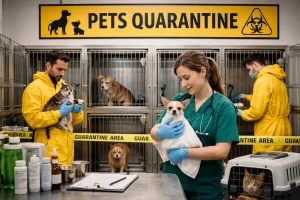
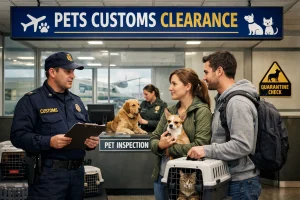
When your dog arrives in South Korea, the process usually includes document review, microchip scan, health inspection, and quarantine clearance decision. If documents are correct and the rabies antibody result meets requirements, clearance may move faster. However, if paperwork is missing, the microchip does not match, or the rabies result is not accepted, your dog may face extra holding or quarantine.
After arrival, you may need to:
- Meet the airline or cargo handling agent
- Submit original documents
- Allow microchip scanning
- Complete Korean quarantine inspection
- Pay applicable handling or inspection fees
- Collect your dog after release approval
- Offer water, toilet break, and quiet rest
Do not plan a long road trip immediately after release. Your dog may feel tired, confused, thirsty, or restless. So, keep the first day calm.
Related Articles:
» Pet shipping from South Korea to France: documents + timeline + cost factors
» Moving a dog from New Zealand to Singapore: crate rules, airline routing, and arrival steps
» Sweden to Australia pet relocation rules update (dogs & cats)
» Moving a cat from Netherlands to USA
» Australia to New Zealand pet relocation timeline (dogs & cats)
Common Mistakes to Avoid
Many delays happen because owners underestimate the details. Avoid these common errors:
- Buying a crate based on breed, not body measurements
- Using plastic clips instead of metal bolts
- Forgetting the microchip number on the titre test
- Booking flights before checking pet acceptance
- Choosing long layovers without live animal handling support
- Travelling during extreme Saudi summer heat
- Giving sedatives without proper veterinary advice
- Carrying only digital documents, not printed copies
- Assuming Korea will accept incomplete paperwork
Although the process looks complex, a clear timeline makes it manageable.
Final Thoughts
When you want to move your dog from Saudi Arabia to South Korea, there is no need to panic but planning. These include the microchip, rabies vaccine, antibody test and export documents for Saudi. Then pick a line your dog will be secure and comfortable on. Finally, buy the correct crate ahead of time and use it for training your dog pre-flight!
Relocating to a new city without problems boils down to the little things: precise sizes, corresponding certificate numbers and numbers on papers, validated certificates and flight scheduling. Provided you have the right support your dog can arrive in South Korea and there will be less stress in making a new home together.
FAQs: Moving a Dog from Saudi Arabia to South Korea
Yes, you can move a dog from Saudi Arabia to South Korea, provided your dog meets export, airline, and Korean import requirements.
Yes, you usually do need a microchip. This number is referred to on vaccination records, test results and the health certificate.
Yes, your dog should be vaccinated against rabies. According to official Saudi export guidelines, rabies vaccination must also be valid.
Many dogs older than 90 days require a rabies neutralising antibody test pass on arrival in South Korea. Confirm the latest on official Korean quarter travel quarantine requirement
Your dog needs to be able to stand, sit, lay (lay natural) or turn in their crib. IATA offers a formula for measuring the inside of crates.
Small dogs may or may not be allowed in the cabin, depending on airline rules & policy/dog weight limit; route; aircraft type; and entry protocols by Korea. Of course, larger dogs typically travel as cargo or checked pet baggage.
Mostly, but only in certain circumstances. IATA does permit 2 compatible adult animals 14 kg must be transported individually.
Typically, no. IATA discourages sedation (unless under veterinary supervision) as it can cause health and safety risks during air travel.
Start at least 8–12 weeks before travel, especially if a rabies antibody test, route approval, or special cargo booking is needed.
Your dog goes through document checks, microchip scanning, and quarantine inspection. Release depends on complete and accepted paperwork.
Yes, Saudi Arabia requires an export process for pets, including documentation through the official system. Saudi guidance lists the Anaam platform and supporting documents.
The safest route is not always the shortest or cheapest. Choose a route with confirmed live animal acceptance, shorter layovers, good cargo handling, and suitable weather conditions.