Relocating abroad with a kitty is emotional and exhilarating: not to mention somewhat gnarly. However, shipping a cat from India to Australia requires more preparation than a regular international pet move due to Australia’s strict biosecurity regulations. Cats cannot just fly from India and get into Australia like another piece of luggage. Instead, the process typically requires an approved destination country for preparation, proper rabies testing, an Australian import permit, airline reservation accommodation and a post-entry quarantine period.
Australia’s Department of Agriculture, Fisheries and Forestry says cats and dogs must arrive with a valid biosecurity import permit and meet all import requirements. It also advises owners to allow at least 6 months for the process, and notes that pets from non-approved countries must complete steps in an approved country.
But the paperwork is only half the work for pet parents. Your cat requires a tranquil schedule of daily activities, an appropriate travel crate, sufficient vet stage preparation and you have to have a plan in the area for minimizing anxiety. Well, this guide is all about that since it explains both the cat shipping paperwork checklist and the emotional care your pet requires before relocation beforehand.
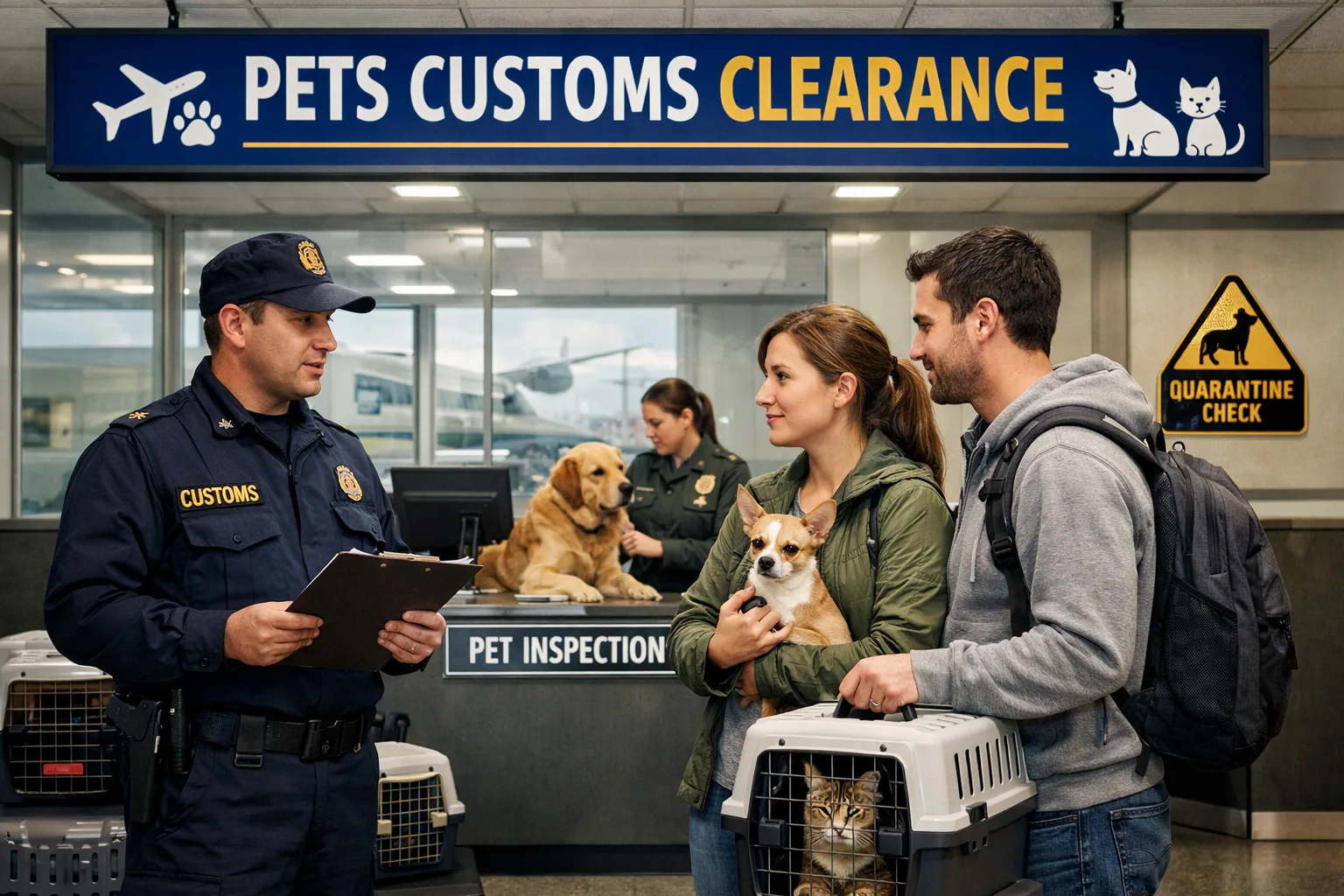
Why Moving a Cat from India to Australia Needs Early Planning
Australia’s strict import rules to preserve its animal health status Due to that, the last minute friendly process is out the window. The vaccinations to be planned, microchip checks, rabies titre test, export certification from India, residence in an approved country approval letter for the import permit quarantine booking and the travel arrangements.
In short, dog or cat relocation from India to Australia happens with a systematic plan. Moreover, every date matters. Having an incorrect microchip number, or having an expired rabies vaccine, a late blood test or an untraceable certificate can lead to delays (+54 days), extra quarantine time (up to 21d), entry refusal and/or re-export.
This you will have to organize in addition to the steps of the aforementioned Australian step-by-step guide for Group 3 cats, which involves that microchips must be verified at least180 days before export, and they require rabies vaccination, and RVNT testing, plus an import permit prior to travel. The RNATT must be collected no earlier than 12 months and no later than 180 days prior to export.
Can Cats Travel Directly from India to Australia?
Generally, cats from India cannot enter Australia directly under the standard approved-country pathway because India is not listed as an approved country for direct cat imports. The Australian Government states that if a country is not on the approved list, the animal must reside in an approved country while completing the import steps.
So, most families use a two-stage route:
|
Stage |
What Happens |
Why It Matters |
|
India to approved country |
Cat travels from India to a country accepted by Australia’s import system |
The Australian preparation process must happen there |
|
Approved country to Australia |
Cat completes tests, permit steps and final export |
This allows entry into Australia if all rules are met |
|
Australia quarantine |
Cat arrives at Australia’s post-entry quarantine facility |
Documents are checked and biosecurity monitoring is completed |
This is why an experienced pet shipping service is useful. A professional team can coordinate vets, flights, government paperwork, crate rules and timing. However, owners should still understand the process because small mistakes can become costly.
Main Paperwork Checklist for Cat Shipping from India to Australia
The exact documents may vary depending on your route and approved country, but these are the common paperwork areas you should prepare.
|
Document / Requirement |
Purpose |
Practical Tip |
|
ISO microchip certificate |
Confirms your cat’s identity |
Scan it before every vaccine, test and certificate |
|
Rabies vaccination proof |
Required for rabies control |
Keep vaccine valid without gaps |
|
RNATT laboratory report |
Shows rabies antibody level |
Must match microchip number exactly |
|
RNATT declaration |
Official endorsement of rabies test |
Usually completed by government authority in approved country |
|
Australian import permit |
Allows legal entry into Australia |
Apply through BICON after required rabies documents |
|
Veterinary health certificate |
Confirms final health status |
Must follow the country-specific format |
|
Internal parasite treatment record |
Required before export |
Australia requires two treatments within strict timing |
|
Pre-export clinical exam |
Confirms cat is fit and free from signs of disease |
Usually done close to departure |
|
AQCS export certificate/NOC from India |
Needed to legally export pet from India |
AQCS says export certificate is valid for 10 days from issue/examination |
|
Airline booking and airway bill |
Required for cargo or checked pet movement |
Confirm airline rules before booking your own ticket |
India’s Animal Quarantine and Certification Service lists export requirements such as the pet examination, local vet health certificate, microchip certificate, vaccination details, owner passport copy, ticket/airway bill, importing-country requirements and pet photographs. It also states the export certificate is valid for 10 days from issue/examination.
Step-by-Step Cat Relocation Process from India to Australia
1. Start with a microchip check
Your cat needs a readable, ISO-compliant microchip. This is the identity link for every vaccine, blood test and certificate. Therefore, ask your vet to scan it and record the number properly. If even one digit is wrong, the paperwork may fail.
2. Confirm the approved-country route
Since India is not normally a direct import country for Australia, you need to plan the approved-country stage. This may involve moving your cat first to a country where the Australian import process can be completed. Also, check whether the country accepts cats from India and what its own import rules are.
3. Keep rabies vaccination valid
Your cat’s rabies vaccination must remain valid from the RNATT blood sampling date until export. If the vaccination expires, the process can restart, and that is the kind of delay nobody wants.
4. Complete RNATT testing
The Rabies Neutralising Antibody Titre Test proves your cat has adequate rabies antibodies. Australia’s guidance says the sample must be collected in an approved country, and it must be taken within the correct timing window before export.
5. Apply for the Australian import permit
Once the rabies documents are ready, apply for the Australia pet import permit through BICON. The official guide says most permits are issued in 20–40 business days, though some cases can take longer.
6. Book quarantine and flights
After permit approval, book Australia’s post-entry quarantine and arrange flight routing. Do not book flights too early unless your pet shipper confirms the timeline, because the vet checks and treatments must fall within exact windows.
7. Complete final treatments and health checks
For cats, Australia requires internal parasite treatment within strict timing. The official guide says cats must receive two internal parasite treatments within 45 days before export, spaced at least 14 days apart, with the second treatment within 5 days before export.
Stress Reduction Before the Flight
Cats like routine. Unfortunately, international relocation changes almost everything around them. However, you can reduce travel stress with slow preparation.
Start crate training at least 6–8 weeks before travel. Keep the crate open at home, place soft bedding inside, and feed treats near the entrance. After a few days, encourage your cat to nap inside. Later, close the door for short periods. This way, the travel crate feels familiar, not like a sudden trap.
Also, keep feeding times steady. If your cat uses a favourite blanket, place it near the crate during training. However, check airline rules before putting any blanket inside the travel crate on flight day. Some airlines allow absorbent bedding only.
Helpful Stress-Reduction Routine
|
Timeline |
What to Do |
Why It Helps |
|
8 weeks before travel |
Start crate training |
Builds comfort slowly |
|
6 weeks before travel |
Short car rides in the crate |
Helps your cat adjust to motion |
|
4 weeks before travel |
Keep vet visits calm and quick |
Reduces fear around handling |
|
2 weeks before travel |
Avoid major diet changes |
Prevents stomach upset |
|
48 hours before travel |
Keep home routine quiet |
Helps your cat stay settled |
|
Travel day |
Offer light food as advised by vet/airline |
Reduces nausea risk |
Should You Sedate a Cat for International Travel?
Most airlines and vets do not recommend sedating cats for air travel unless a veterinarian gives specific advice. Sedation can affect breathing, balance and temperature control during flight. Instead, ask your vet about safe calming options, pheromone support, crate training and travel behaviour planning.
A calm cat is not always a sleepy cat. Actually, the goal is a cat that feels secure enough to cope with the journey.
Choosing the Right Travel Crate
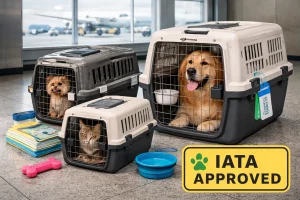
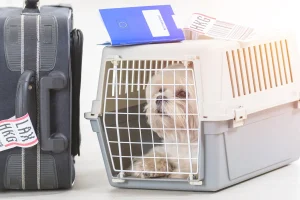
Your cat’s crate should meet airline and IATA -style live animal standards. It must be strong, escape-proof, ventilated and large enough for your cat to stand, turn and lie naturally. In addition, the door must lock securely, and food/water bowls should be accessible from outside when required.
|
Crate Feature |
Why It Matters |
|
Hard plastic or approved rigid build |
Prevents collapse during handling |
|
Ventilation on required sides |
Supports airflow |
|
Secure metal door |
Reduces escape risk |
|
Correct size |
Prevents cramped travel |
|
Absorbent base |
Handles small accidents |
|
Clear labels |
Helps handlers identify live animal cargo |
Do not choose a crate based only on price. A good crate is part of your cat’s safety plan.
Related Articles:
» Moving a cat from Netherlands to USA: stress reduction + paperwork checklist
» Pet shipping from Thailand to Bahrain: documents, timeline & cost factors
» Singapore to Malaysia Pet Relocation Step-by-Step Guide (Dogs & Cats)
» Moving a Dog from Philippines to Netherlands: Crate Rules, Airline Routing, and Arrival Steps
» India to Oman pet relocation rules update (dogs & cats)

Common Mistakes to Avoid
Many delays happen because owners underestimate the process. So, avoid these common issues:
- Booking flights before confirming the approved-country pathway
- Using a non-compliant microchip
- Letting rabies vaccination expire
- Missing the RNATT timing window
- Applying for the import permit with incomplete documents
- Forgetting India’s AQCS export certificate validity
- Buying a crate too late
- Changing the cat’s food just before travel
- Assuming all airlines accept pets on every route
- Not checking Bengal or hybrid cat restrictions
Important note: Australia changed its Bengal cat policy. The Department of Climate Change, Energy, the Environment and Water says Bengal cats are now treated like other hybrids and cannot be imported unless included in the Live Import List.
Final Pre-Travel Checklist
Before your cat leaves India or the approved country, confirm:
|
Checklist Item |
Done |
|
Microchip scans correctly |
☐ |
|
Microchip number matches all documents |
☐ |
|
Rabies vaccine is valid |
☐ |
|
RNATT report is correct |
☐ |
|
RNATT declaration is endorsed |
☐ |
|
Import permit is valid on arrival date |
☐ |
|
Quarantine booking is confirmed |
☐ |
|
Airline booking is approved for live animal transport |
☐ |
|
Final vet exam completed |
☐ |
|
Parasite treatments completed within correct dates |
☐ |
|
AQCS export certificate/NOC arranged from India |
☐ |
|
Crate is airline-approved and labelled |
☐ |
Conclusion
Transporting a cat from India to Australia is not a matter of hopping on the next flight. It was made as a planned move with regimented rules, meticulously filling out forms, products and methods that highlights the emotional — how you can help put your best foot forward. Get those prepared well ahead of time alongside the right approved-country route and appropriate paper work, document and stress-reduction steps, so your cat can travel safely and much more calmly.
Get started early, take proper care of all certificates in order, verify every microchip number and deal with others who know about pet transport to Australia. First and foremost, you should gently prepare your cat. And because it isn’t shipping for your cat. This is a huge life change, and it will require a small amount of understanding from everybody.
FAQs: Moving a Cat from India to Australia
Not usually, and India is not a normally approved direct import country into Australia for cats. Before your cat can complete the process of import preparation to Australia, they may need to do so in a country approved by Australian Quarantine.
Give it a stretch of at least 6 months. The timing is dependent on microchip checks, rabies vaccination, RNATT testing, residence in an approved country since import permit approval, quarantine booking availability and flight availability.
Yes. Cats entering Australia must have a valid biosecurity import permit unless a specific exemption applies. For India-origin moves, permit planning is essential.
RNATT means Rabies Neutralising Antibody Titre Test. It checks whether your cat has enough rabies antibodies after vaccination.
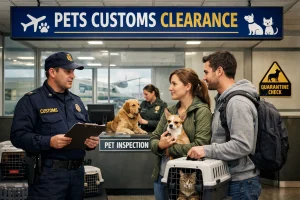
Yes, most imported cats must complete post-entry quarantine in Australia. The duration depends on the permit conditions and whether all identity and health requirements are met.
Common documents include microchip certificate, vaccination record, local vet health certificate, owner passport copy, ticket or airway bill, importing-country requirements and AQCS export certificate/NOC.
No. AQCS states the export certificate is valid for 10 days from the date of issue or examination, so timing is very important.
Be careful. Australia changed Bengal cat import policy, and Bengal cats are generally treated as hybrids. Check current official rules before planning travel.
Do not sedate your cat unless your veterinarian specifically advises it. Sedation can create travel risks. Crate training and calming routines are safer options in most cases.
Your cat needs a secure, airline-approved travel crate with proper ventilation, enough space, absorbent bedding and safe locking. Always confirm airline requirements before buying.
It is better to wait until the route, permit timeline and vet schedule are clear. Otherwise, one delayed document can force you to change flights.
A pet shipping company can coordinate route planning, government paperwork, vet timelines, airline rules, quarantine booking and crate guidance. This reduces mistakes and stress for both you and your cat.